Solar Street Light Cost-Benefit in Southeast Asia Analysis
Jul 09, 2026
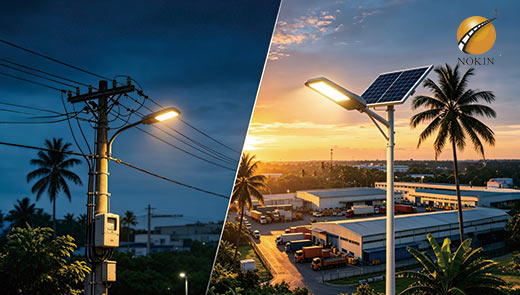
Currently, Southeast Asian enterprises are facing multiple pressures such as rising electricity prices, infrastructure expansion, unstable power grids, and ESG carbon reduction. According to authoritative reports from IEA and ADB, the long-term operating costs of traditional street lights have been continuously increasing. More and more local business enterprises are breaking away from the mindset of only considering low-price procurement, and using the total cost of ownership (TCO) as the core decision-making criterion, making solar street lights a high-quality green solution to replace electricity-based lighting.
Why More Southeast Asian Businesses Are Switching to Solar Street Lights
Rising Electricity Prices
The electricity prices for industrial and commercial enterprises in Southeast Asia have been increasing year by year. According to IEA data, the average regional electricity price is 120 US dollars per megawatt-hour, higher than the global average. Many countries in Southeast Asia, such as Vietnam and Thailand, have continuously raised industrial electricity prices, and the accumulated electricity expenses have continuously eroded enterprise profits. For all-day lighting scenarios in industrial parks, logistics terminals, ports, and resort areas, the cost disadvantage of traditional electricity-based lighting becomes increasingly obvious.
Infrastructure Expansion
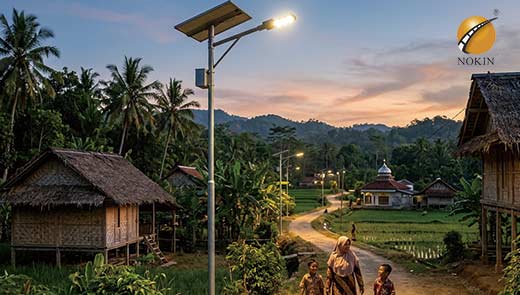
Based on regional industrial transfer and economic growth, Southeast Asian industrial parks, logistics centers, ports, and resort areas continue to expand. Most new projects are located in suburban areas and remote regions, with incomplete municipal power grid support, and traditional street lights have high connection costs and unstable power supply, making them difficult to meet the development needs of enterprises.
ESG Goals
The implementation of global carbon neutrality policies has made ESG performance a core assessment indicator for investment and brand cooperation in Southeast Asian enterprises. Solar energy, as the most regionally adaptable clean energy, can effectively reduce enterprise carbon emissions and help achieve green ratings, aligning with the local trend of green infrastructure investment.
Why TCO Matters
Street lights are long-term projects lasting 10-20 years. Low-price purchased traditional street lights have extremely high hidden costs for electricity, maintenance, and renovation in the later stages. TCO covers all expenses throughout the entire cycle and is the only precise standard for measuring the investment value of street light projects. The long-term TCO advantage of solar street lights far exceeds that of traditional street lights.
10-Year Total Cost of Ownership Comparison
Traditional Street Lights vs Solar Street Lights
|
Cost Item |
Traditional Street Light (10-Year Period) |
Solar Street Light (10-Year Period) |
|
Equipment Cost |
US$180 per light |
US$420 per light |
|
Installation Cost |
US$120 per light |
US$80 per light |
|
Excavation & Wiring Cost |
US$280 per light |
US$0 per light |
|
10-Year Electricity Cost |
US$950 per light |
US$0 per light |
|
10-Year Maintenance Cost |
US$320 per light |
US$120 per light |
|
Equipment Replacement Cost |
US$150 per light |
US$80 per light |
|
10-Year Total Cost of Ownership (TCO) |
US$2,000 per light |
US$700 per light |
The table data is clear, and the total cost of solar street lights over ten years is 65% lower than that of traditional street lights. The core advantage lies in zero electricity costs and no need for wiring construction, completely solving the biggest long-term cost pain point of traditional lighting.
Hidden Costs of Traditional Street Lights
Grid Infrastructure
Traditional street lights require cable excavation, line laying, transformer and distribution cabinet installation, and higher construction costs in remote areas. At the same time, enterprises need to bear the cost of power grid connection approval, and a large amount of hidden expenses are concealed by the initial low-price purchase.
Electricity Costs
IEA data predicts that the total energy import in the Southeast Asian region will reach a new high of 185 billion US dollars in 2026, and energy prices will remain in a fluctuating upward trend. Industrial and commercial street lights for long-term lighting have huge annual electricity expenses, and the fluctuation of electricity price policies is uncontrollable, making it impossible for enterprises to stabilize and control long-term costs.
Maintenance Costs
The lines of traditional street lights are exposed outdoors and prone to aging, short circuits, and require regular manual inspection, maintenance, and replacement of components. High-frequency maintenance not only continuously consumes funds but also causes power outages, affecting the safe production of enterprises.
Solar Street Light Cost Breakdown
Equipment Cost
The initial investment of solar street lights mainly focuses on core equipment, which is stable in configuration and has transparent costs.
|
Core Component |
Primary Function |
Value to Southeast Asian Industrial & Commercial Projects |
|
High-Efficiency Monocrystalline Solar Panels |
Collect solar energy and convert it into electricity |
Adapt to Southeast Asia's abundant sunlight, maximize power generation efficiency, and ensure a stable power supply. |
|
Long-Life Lithium Iron Phosphate (LiFePO4) Batteries |
Store solar energy for nighttime and rainy-day operation |
Offer a long cycle life, ensuring reliable and continuous lighting during the night and extended rainy periods. |
|
High-Brightness LED Light Sources |
Provide energy-efficient illumination with low power consumption and a long service life |
Deliver high-brightness lighting for industrial and commercial applications while reducing energy consumption and maintenance costs. |
|
Smart Controller |
Automatically manage light on/off operation and battery charging/discharging protection |
Enables intelligent system operation, minimizes manual intervention, and enhances system safety and operational efficiency. |
|
Hot-Dip Galvanized Steel Pole |
Support the lighting system with corrosion, rust, and wind resistance |
Withstands Southeast Asia's heavy rainfall, typhoons, and humid climate, improving overall durability and reducing replacement and maintenance frequency. |
Installation Cost
Solar street lights adopt independent off-grid design, completely get rid of dependence on municipal power grids, and do not require trenching, long-distance wiring, grid connection, etc. The entire installation process only requires light pole fixation and equipment debugging.
This design significantly saves mechanical construction, cable materials, grid approval, etc. costs, and has a short installation period, which can quickly meet the lighting needs of new industrial parks and logistics parks without delaying the overall construction progress.
Maintenance Cost
The maintenance cost of solar street lights throughout the entire life cycle is low, and daily maintenance is simple and convenient. Daily maintenance only requires regular cleaning of solar panels, without the need for professional technical operations, with extremely low labor costs.
Lifetime Operating Cost
Lithium iron phosphate batteries have a lifespan of 8–10 years, and only need to be replaced once in the ten-year cycle; LED bulbs have a lifespan of over 50,000 hours, and do not need to be replaced for ten years. The entire system has a very low failure rate, and there are no road maintenance costs.
Solar Street Light ROI and Payback Period
ROI Factors
The speed of return on investment mainly depends on local electricity prices, average daily lighting hours, regional sunlight resources, equipment quality, and maintenance plans. The abundant sunlight resources in Southeast Asia provide a natural advantage for the efficient return on investment of solar street lights.
ROI by Industry
Based on the operational characteristics of various industries in Southeast Asia, the investment return cycle for solar street light projects in different scenarios varies.
|
Industry Type |
Average Daily Lighting Hours |
Average ROI Payback Period |
Core Advantages |
|
Industrial Parks |
12 hours |
3.5–4 years |
Maximizes long-term energy savings and significantly reduces operating costs. |
|
Logistics Centers & Warehouses |
24 hours |
3–3.5 years |
Supports 24/7 operations and delivers the fastest return on investment. |
|
Tourism Resorts |
10 hours |
4–4.5 years |
Enables flexible off-grid deployment while enhancing the overall landscape. |
|
Manufacturing Factories |
12 hours |
3.5–4.5 years |
Provides stable illumination, reducing production interruptions and operational risks. |
|
Port Terminals |
24 hours |
3 years |
Eliminates high grid infrastructure costs and offers rapid investment payback. |
100-Light Case Study
We take a standard 100-light 100W street light project as an example to conduct a ten-year full-cycle cost-benefit comparison of the AC power and solar power schemes.
|
Cost & Benefit Item |
AC Power Lights (100 Lights) |
Solar Street Lights (100 Lights) |
|
Initial Total Investment |
$58,000 |
$42,000 |
|
10-Year Total Electricity Cost |
$95,000 |
$0 |
|
10-Year Total Maintenance Cost |
$32,000 |
$12,000 |
|
10-Year Equipment Replacement Cost |
$15,000 |
$8,000 |
|
10-Year Total Cost |
$200,000 |
$62,000 |
|
Total Cost Savings |
$0 |
$138,000 |
|
Investment Payback Period |
No Payback (Continuous Expenditure) |
3.2 Years |
ROI Calculation
From the case data, after enterprises replace with solar street lights, they can save $138,000 in costs over 10 years, and the investment can be fully recovered within 3.2 years. The system can operate at zero cost for 6 years or more, and enjoy the benefits of cost reduction.
Additional Business Benefits of Solar Street Lights
Energy Independence
Solar street lights adopt an independent power generation and energy storage system, and do not rely on municipal power grid. Enterprises can completely get rid of constraints of power shortage and policy adjustments on electricity prices, and achieve independent energy supply.
ESG Compliance
According to the SEIA carbon accounting standard, each 100W solar street light can reduce 0.12 tons of carbon emissions per year. A 100-light project can reduce 12 tons of carbon emissions annually, and a cumulative reduction of 120 tons over 10 years.
For Southeast Asian enterprises seeking ESG certification and green factory ratings, solar lighting is a low-cost, high-efficiency carbon reduction solution, which can effectively improve green assessment indicators and meet the low-carbon requirements of the government and partner brands.
Power Outage Protection
ADB and World Bank data show that Southeast Asia frequently experiences extreme weather such as typhoons, floods, and heavy rain. Regional power grid failures and power outages occur frequently.
Traditional city street lights stop working immediately when there is a power outage, causing significant safety hazards for night patrols, logistics transportation, and scenic area operations. Solar street lights have built-in energy storage equipment, which can work normally for 5-7 days in cloudy and rainy weather without sunlight.
Effectively solve the problem of lighting blankness after power grid outages, ensure the safety of personnel and property, and maintain the normal operation of enterprise infrastructure.
Business Expansion
As enterprises expand in scale, outdoor lighting demand continues to increase. Expanding traditional city power lights requires re-wiring and grid renovation, which is cumbersome and costly; solar powered street lights can be independently installed at any time without renovating the original grid system, with low expansion costs and fast construction speed. Solar street lights can perfectly adapt to the phased expansion needs of industrial parks, warehouses, and scenic areas, and support the long-term development of enterprises on a large scale.
Best Business Applications for Solar Street Lights
Based on the operational characteristics of each industry and investment return data, we have compiled a solar street light return matrix for each industry in Southeast Asia, marking the investment return potential with five-star ratings.
|
Enterprise Type |
Investment Return Potential |
Core Benefits |
|
Industrial Parks |
★★★★★ |
Significantly reduce long-term lighting operating costs while supporting green park certification and sustainability standards. |
|
Logistics Centers |
★★★★★ |
Provide reliable 24/7 lighting, maximize energy savings, and deliver a short return on investment (ROI). |
|
Tourism Resorts |
★★★★★ |
Enable flexible off-grid installation, enhance landscape aesthetics, strengthen green brand image, and suit remote scenic areas. |
|
Manufacturing Factories |
★★★★☆ |
Ensure stable and reliable lighting, minimizing production interruptions and safety risks caused by power outages. |
|
Port Terminals |
★★★★★ |
Eliminate expensive grid infrastructure costs and maintain reliable operation in harsh coastal environments. |
|
Commercial Complexes |
★★★★☆ |
Support corporate sustainability goals while reducing daily electricity consumption and long-term operating expenses. |
How to Maximize Solar Street Light ROI
Select High-efficiency Solar Photovoltaic Panels
Southeast Asia has high temperatures and abundant rainfall throughout the year. We recommend using high-efficiency monocrystalline solar panels, which have high conversion efficiency and weak light power generation capabilities, suitable for local climate.
High-efficiency photovoltaic panels can maintain stable power generation even on cloudy and rainy days, perfectly adapting to the climate characteristics of countries with frequent rainfalls such as Malaysia and Indonesia, ensuring sufficient lighting power supply during the night and avoiding power shortage-induced lighting outages.
Select long-life LiFePO4 Batteries
Lithium iron phosphate batteries are the optimal energy storage configuration for solar street lights in Southeast Asia. Compared to traditional lead-acid batteries, they have longer service life, more cycle times, and stronger heat resistance. In the hot environments of Thailand and Vietnam, lithium iron phosphate batteries are less prone to aging and failure, significantly reducing the frequency of battery replacements, adapting to the complex tropical climate of Southeast Asia, and lowering long-term operation costs.
Customized Design Based on Local Climate
The climates in Southeast Asian countries vary significantly, so solar street lighting projects need to be designed and customized according to local conditions.
In Malaysia and Indonesia, the rainy season lasts for a long time, so large-capacity batteries and efficient photovoltaic panels need to be combined to ensure continuous operation during rainy days; in Vietnam and Thailand, there is sufficient sunlight, and the power of photovoltaic panels can be optimized to improve the project's cost-effectiveness.
In the Philippines, it is constantly affected by typhoons, so the design of light posts needs to be strengthened to enhance the durability of the equipment. Targeted local design can maximize the project's operational efficiency and return on investment.
Choosing the Right Solar Street Light Manufacturer
Choosing a professional and mature manufacturer is the core to ensuring project quality and long-term returns. Key factors to focus on include four core indicators.
Complete industry certifications ensure that the products comply with local safety and quality standards in Southeast Asia;
Regular warranty services, with whole machine warranty of no less than 5 years and battery warranty of up to 8-10 years.
Rich local project cases, familiar with regional climates and construction standards;
Comprehensive after-sales service system, providing timely operation and technical support to reduce operational risks in the later stage.
Frequently Asked Questions About Solar Street Lights
Are Solar Street Lights Cheaper Than Traditional Street Lights?
Yes. Although the initial procurement cost of solar street lights is higher, they offer zero electricity charges throughout the entire period and low maintenance costs. The total cost over a ten-year cycle is 65% lower than that of conventional street lights. The long-term economic advantage is significant.
What Is the Average ROI of Solar Street Lights?
The average return on investment for the solar LED street light project in Southeast Asia is 25% - 35%. The return rate for 24-hour lighting scenarios in logistics centers and ports is even higher, reaching over 35%.
How Long Is the Payback Period?
The average recovery period for local projects is 3 - 4.5 years. For high-energy consumption and long-duration lighting scenarios, the recovery period is 3 years, and for conventional commercial and industrial scenarios, it is 3.5 - 4.5 years.
How Long Do LiFePO4 Batteries Last?
The service life of high-quality solar street light-specific lithium iron phosphate batteries is 8 - 10 years, which can cover most of the ten-year project cycle. At most, only one replacement is needed throughout the entire cycle.
Can Solar Street Lights Work During the Rainy Season?
Solar street lights customized for the climate in Southeast Asia, equipped with large-capacity batteries and low-light power generation components, can operate continuously and stably for 5-7 days in cloudy and rainy days without sunlight.How Is TCO Calculated?
Total cost of ownership = Initial equipment installation cost + Ten-year electricity cost + Ten-year operation and maintenance cost + Equipment replacement cost. Based on a ten-year life cycle as the calculation standard, it can accurately assess the actual investment cost of the project.
Are Solar Street Lights Suitable for Industrial Parks?
Definitely. In such scenarios, the lighting duration and the number of solar powered street lights are large, and there is a huge potential for energy savings. The payback period is the shortest and the return on investment is the highest. These are the core application scenarios for solar street lights.
Conclusion
In the projects of new construction and renovation of street lights, enterprises in Southeast Asia should abandon the single decision-making criterion of only considering the initial purchase price, and instead take the total cost of ownership (TCO) as the core evaluation basis. The low price advantage of municipal street lights will be completely offset by the long-term high electricity costs and maintenance costs.
The abundant solar resources in Southeast Asia, the continuously rising electricity prices, and the regional green energy policies jointly give solar street lights extremely high long-term investment value. Not only can it significantly reduce the enterprise's operating costs, but it can also help the enterprise achieve ESG carbon reduction targets and enhance its market core competitiveness.
By choosing efficient and durable solar street lights, customizing climate-adaptive solutions, and collaborating with professional and reliable manufacturers, enterprises can further shorten the payback period, reduce the operational risks throughout the cycle, and achieve long-term cost reduction and efficiency improvement as well as stable operation of the lighting projects.