Dusk-to-Dawn Sensor Solar Street Lights: 2026 Energy-Saving Guide
Jan 16, 2026
With the acceleration of global urbanization and the implementation of the rural revitalization strategy, the demand for energy-efficient and high-performance outdoor lighting in urban and rural areas continues to rise. Traditional outdoor lighting solutions not only have high energy consumption and high maintenance costs, but also struggle to adapt to complex natural light variations. Against this backdrop, the "solar street lights + dusk-to-dawn sensor" combination solution, with its core advantages of being environmentally friendly and automated control, has become the mainstream choice for upgrading outdoor lighting.
This article will comprehensively analyze this intelligent lighting solution: solar street lights with dusk-to-dawn sensors from dimensions such as system foundation, sensor principles, collaborative working mechanism, core advantages, and application scenarios, helping readers understand its value and application logic.
How Solar Street Lighting Systems Work
Core Components of a Solar Street Lighting System
The solar street lighting system is an independent photovoltaic-powered lighting system, consisting of four major components, which work together to achieve the conversion and utilization of "light energy - electrical energy - light energy":
|
Component Name |
Primary Function |
|
Solar Panel |
Converts sunlight into electricity via the photovoltaic effect to power the solar street lighting system. |
|
Battery |
Stores energy generated during the day and supplies power to the LED light at night. |
|
Controller |
Manages battery charging and discharging and controls light on/off based on sensor signals. |
|
LED Light Source |
Provides efficient illumination with low energy consumption, high brightness, and long service life. |
Solar Street Lighting vs Traditional Outdoor Lighting: Energy and Cost Comparison
There are fundamental differences in energy supply and usage logic between traditional outdoor lighting and solar lighting, directly affecting operating costs and environmental benefits:
|
Comparison Dimension |
Traditional Lighting |
Solar Lighting |
|
Energy Source |
Relies on urban power grid and conventional energy sources |
Uses solar energy (clean and renewable), no energy cost |
|
Operation Mode |
24-hour continuous or fixed-time lighting, often inefficient |
Daytime charging, nighttime lighting, energy use matches demand |
|
Operating Cost |
Ongoing electricity bills, high long-term cost |
No electricity cost, only initial investment, strong long-term savings |
What Is a Dusk-to-Dawn Sensor for Solar Street Lights?
Dusk-to-dawn sensor, also known as a light control sensor, is an intelligent component that can automatically detect changes in ambient light intensity and trigger electrical equipment switches accordingly. Its core function is to achieve "unattended automatic control" for lighting equipment such as solar street lights: when the ambient light intensity drops below the set threshold, it automatically triggers the light to turn on; when the light intensity rises above the threshold, it automatically triggers the light to turn off.
In outdoor lighting scenarios, the typical trigger threshold of this sensor is set between 10-20 lux (1 lux is equivalent to the light intensity of a full moon night), which can precisely match the natural light changes during dusk and dawn.
Light Intensity Detection and Signal Transmission Process
Most dusk-to-dawn sensors currently on the market use light-sensitive resistors (LDR) or photovoltaic cells as the core sensing device, and their working principle is based on the "light intensity - resistance/voltage" change characteristics:
- When there is sufficient light, the resistance of the light-sensitive resistor decreases, and the output voltage of the photovoltaic cell increases, and the sensor sends a "standby" signal to the controller, keeping the lightoff;
- When the light intensity decreases (such as when dusk sets in), the resistance value of the photosensitive resistor increases, and the output voltage of the photovoltaic cell decreases. When the value reaches the set threshold, the sensor sends a "start" signal, and the controller triggers the street lightto turn on.
Why Light-Control Sensors Are More Accurate Than Timer-Based Control
Compared with traditional timed switch control, the response of the light control sensor is more real-time and accurate. It can automatically adapt to the changes in the start and end times of the night in different seasons and weather conditions, avoiding situations like "the sky is not yet dark but the lights are on" or "the sky is already bright but the lights have not been turned off", and avoiding ineffective energy consumption.
How Solar Street Lights Work with Dusk-to-Dawn Sensors
The core of the collaboration between solar street lights and dusk-to-dawn sensors is the closed-loop management of "energy collection - energy storage - precise release". The entire workflow is divided into two core stages: daytime charging and automatic nighttime lighting. It can be expanded with additional linkage functions as needed.
Daytime Charging Process and Energy Storage
When there is sufficient daylight, the solar panel converts light energy into electrical energy and charges the battery through the controller. At this time, the dusk-to-dawn sensor detects that the light intensity is above the threshold (usually > 20 lux), sends a "turn off lighting" signal to the controller, and the LED light remains off, ensuring that all the electrical energy is used for battery storage.
The controller assumes the "overcharge protection" function during this stage. When the battery is fully charged, it automatically cuts off the charging circuit to prevent the battery from being damaged due to overcharging and to ensure the efficiency and lifespan of the battery storage.
Automatic Nighttime Lighting and Light-Off at Sunrise
As the sun sets, the environmental light intensity gradually decreases. When the light intensity drops to the threshold set by the sensor (10–20 lux), the sensor immediately sends a "turn on lighting" signal to the controller, and the controller immediately switches the circuit, using the battery to supply power to the LED light, and the solar street light automatically lights up.
At sunrise the next day, when the light intensity rises above the threshold, the sensor sends a "turn off lighting" signal, the controller cuts off the power supply circuit, the LED light goes out, and the system enters the daytime charging stage again. To further optimize energy consumption, a timing adjustment function can be set in the controller, such as high brightness in the first half of the night and low brightness in the second half, to further reduce energy consumption.
How PIR Sensors Further Reduce Energy Consumption
The basic "solar street light + dusk-to-dawn sensor" combination can achieve automatic lighting control. If you want to improve energy efficiency and intelligence level, you can further link passive infrared motion sensors (PIR):
- Under normal circumstances, the solar street lightmaintains low-level lighting during the dusk-to-dawn period to meet basic lighting needs;
- When the motion sensor detects the passage of people or vehicles, it immediately sends a signal to the controller, triggering the LED light to switch to high-brightness mode, improving the clarity of the lighting;
- When people or vehicles leave, the solar street lightautomatically returns to the low-level mode, minimizing energy consumption peaks.
Key Benefits of Dusk-to-Dawn Sensors in Solar Street Lights
Integrating dusk-to-dawn sensors into the solar street light system can enhance the system value in terms of convenience, energy consumption, adaptability, and equipment lifespan. It is the core upgrade direction of intelligent outdoor lighting.
Fully Automated Lighting Control with No Manual Operation
The dusk-to-dawn sensor realizes "unattended 24/7" automatic control of solar street lights, eliminating the need for manual switching of lights, completely solving the problem of "forgetting to turn on the lights or turn off the lights" in traditional street lights. Whether in urban roads, remote villages, or scenic parks, it can ensure that the lighting is turned on on time at night and turned off in time during the day, ensuring the safety of nighttime travel while reducing the labor cost of manual maintenance.
Energy Saving and Operating Cost Reduction
Energy saving is one of the core advantages of this combination scheme. Through precise light control automatic switching, solar LED street lights operate only during periods of insufficient light, avoiding ineffective lighting time caused by seasonal and weather changes in traditional timed switches, significantly reducing energy consumption. If combined with motion sensors to achieve dynamic adjustment of "low brightness + high brightness", the peak consumption of electricity can be further reduced. According to statistics, solar street lights with dusk-to-dawn sensors can reduce annual energy consumption by 20%-30% compared to traditional time-controlled solar street lights. Over the long term, this can save a significant amount of equipment maintenance and energy replenishment costs (such as battery replacement costs).
Adapting to Seasonal and Weather-Related Light Changes
The time of dusk and dawn varies greatly in different seasons and weather conditions: in winter, the duration of daylight is shorter, dusk comes earlier, and dawn comes later; in summer, it is the opposite; in rainy weather, the intensity of light decreases more rapidly.
The dusk-to-dawn sensor can respond to these changes in real time and automatically adjust the on-off time of the solar street lights - starting earlier in winter and stopping later in summer, and activating earlier in rainy weather. Compared with fixed-time control, it more accurately conforms to the natural light cycle, avoiding energy waste or insufficient lighting caused by "seasonal mismatch".
Extending the Lifespan of LED Lights and Batteries
LED light sources and batteries are the core loss components of solar street lights, and their lifespan is directly related to the operating time, load intensity. The dusk-to-dawn sensor precisely controls the lighting time, reducing the ineffective operating time of LED light sources and lowering the high-load working time; at the same time, it reduces the number of battery discharges and the proportion of deep discharges, delaying the aging speed of the battery.
Data shows that the solar LED street light system with light control sensors used properly can extend the lifespan of LED light sources by 10%-15% and the lifespan of batteries by 15%-20%, significantly reducing equipment replacement costs.
Common Applications of Solar Street Lights with Dusk-to-Dawn Sensors
The combination scheme of "solar street lights + dusk-to-dawn sensors" can be adapted to various outdoor lighting scenarios, especially in areas without electricity and those with high energy-saving requirements. It has a significant advantage in areas without power grid coverage or high costs of power grid connection.
Urban Roads, Communities, and Parking Lots
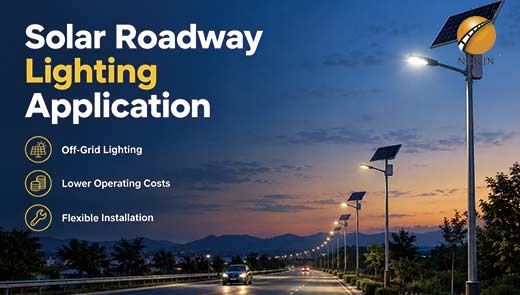
In scenarios such as urban main roads, sidewalks, community entrances, and parking lots, this scheme can meet the regular lighting needs. Through automatic control, it ensures the safety of pedestrian and vehicle travel at night, while avoiding the cumbersome manual switch of lights.
Case reference: A project for renovating an old urban community, which used 120 solar LED street lights integrated with dusk-to-dawn sensors to replace the original traditional grid-powered street lights. After the renovation, the nighttime coverage rate of the community increased to 100%, without any problems such as "lights not turning on or turning on too early", and saved approximately $8,000 in electricity costs per year, with a 60% reduction in labor maintenance costs.
Rural Roads and Off-Grid Areas
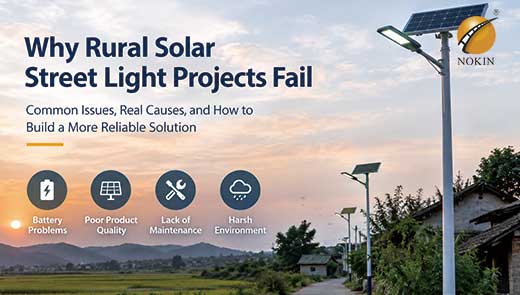
In rural roads, remote mountainous areas, and rural scenic areas where there is no power grid coverage or high costs of power grid connection, the "solar + dusk-to-dawn sensor" scheme is the optimal choice. Without laying cables, it can achieve stable lighting through solar power supply and automatic control by light control.
Case reference: A rural road lighting project for three villages without power grid coverage, with 500 solar street lights integrated with dusk-to-dawn sensors. After the project was completed, the nighttime coverage rate of the village roads increased from 0 to 95%, and the accident rate during nighttime travel decreased by 80%. Compared with the power grid connection scheme, the initial investment was reduced by 40%, and there was no electricity cost in the future, with significant cost benefits.
Parks, Scenic Areas, and Commercial Facilities
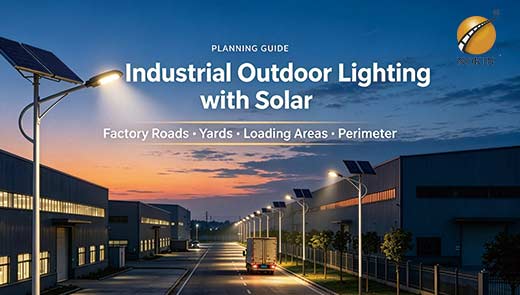
For park paths, parking lots, and outdoor areas of commercial parks, the lighting requirements have the characteristics of "fragmented and dynamic". This scheme can achieve basic automatic lighting through the dusk-to-dawn sensor and dynamic brightness adjustment through motion sensors, meeting the lighting needs of tourists and vehicles while avoiding energy waste caused by constant bright lighting over large areas. For example, after the urban park adopted this combined solution, while ensuring the lighting of the night walkways, the annual energy consumption was reduced by 50% compared to traditional street lights, and the frequency of inspections by the management personnel was decreased. The operation and maintenance efficiency was significantly improved.
Installation and Commissioning Tips for Dusk-to-Dawn Solar Street Lights
To ensure the stable operation of the "solar street light + dusk-to-dawn sensor" system, the installation and commissioning should focus on the following 3 points:
Correct Installation Angle and Sensor Orientation
The dusk-to-dawn sensor should be installed in an unobstructed position that can accurately sense natural light. It is recommended to be in the same orientation as the solar panel (usually facing south) to avoid being blocked by the light source of the street light, buildings' shadows, or trees. The installation height is recommended to be level with the light arm of the street light, with a slightly downward tilt (15° - 30°) to reduce the accumulation of rainwater and the direct sunlight causing false triggering.
Preventing Light Interference and False Triggering
Before installation, it is necessary to check for surrounding obstructions. If avoidance is not possible, the threshold parameters of the sensor can be appropriately adjusted (such as lowering the trigger threshold from 15 lux to 10 lux) to ensure accurate activation at dusk. At the same time, avoid having the sensor directly facing the LED light source of the street light to prevent reflection of the light source from causing the sensor to mistakenly judge "adequate light" and prematurely turn off the solar street light.
Coordinating Dusk-to-Dawn Sensors with Other Smart Controls
If it is necessary to link with motion sensors, remote monitoring functions, etc., the coordination logic should be preset in the controller: For example, set "low brightness (30% power) during dusk-to-dawn period when there is no movement, and high brightness (100% power) when there is movement", to avoid conflicts between different sensor signals. During commissioning, different lighting and movement scenarios should be simulated to verify the accuracy of the system response.
Future Trends in Smart Solar Street Lighting Systems
The combined solution of "solar street light + dusk-to-dawn sensor" achieves "energy-saving, automation, and low-cost" outdoor lighting through the core logic of "clean energy collection + precise light control automatic control", solving the problems of high energy consumption, cumbersome operation and maintenance, and poor adaptability of traditional lighting. It has wide application value in various scenarios such as cities, rural areas, and remote regions. Its core advantages can be summarized as: improving convenience of use, optimizing energy saving and cost, adapting to changes in natural environment, and extending equipment lifespan.
Looking forward to the future, this solution will be upgraded to "intelligentization and networking": On one hand, more intelligent sensors (such as temperature and humidity sensors, air quality sensors) will be integrated to achieve coordination between lighting and environmental monitoring; on the other hand, through IoT technology, it will be connected to remote monitoring platforms to realize real-time monitoring of the light's operating status, remote parameter adjustment, and fault warning functions. At the same time, with the advancement of photovoltaic technology and battery technology, the energy storage efficiency and lifespan of the system will further improve, becoming an important component of smart cities and green rural areas construction.