What Are The Key Features Of Modern LED Street Lights?
Feb 25, 2026
From traditional incandescent bulbs and high-pressure sodium lamps to modern LED street lighting, the field of urban illumination has undergone a revolutionary transformation. This shift has not only reshaped the nocturnal landscape of cities but also plays an irreplaceable role in urban safety, energy conservation, and sustainable development. This article will thoroughly dissect the core characteristics of modern LED street lights, combining practical data with application scenarios to provide readers with a comprehensive understanding of their advantages, while offering practical reference for relevant practitioners.
Energy Efficiency
Energy efficiency stands as the most prominent advantage of modern LED street lights and the core reason for their widespread adoption. Compared to traditional street lights, LED street lights achieve a qualitative leap in energy consumption control, ensuring effective illumination while significantly reducing energy usage.
Energy Consumption Comparison: LED vs Traditional street lights
Modern LED street lights consume merely 30%-50% of the energy used by traditional counterparts, delivering substantial energy savings. The energy consumption and savings ratios for different street light types are as follows:
|
Street Light Type |
Average Energy Consumption (Same Brightness) |
Energy Use Compared to LED |
Energy Saving Rate |
|
Modern LED Street Light |
50W |
100% |
— |
|
High-Pressure Sodium (HPS) |
125W |
250% |
60% |
|
Metal Halide Lamp |
110W |
220% |
55% |
|
Incandescent Lamp |
250W |
500% |
80% |
Luminous Efficacy Advantage
Luminous efficacy (LPW, lumens per watt) serves as a key metric for assessing the efficiency of street lighting. A higher value indicates greater brightness per unit of power consumed. Modern LED street lamps achieve luminous efficacies of 150–200+ LPW, whereas traditional high-pressure sodium lamps yield only 80–100 LPW, with metal halide lamps at approximately 90–110 LPW. This signifies that LED street lights deliver brighter illumination using less electricity.
Cost Savings
Reduced energy consumption translates directly into long-term cost savings. For municipal authorities in particular, street lighting represents a significant expenditure, and LED upgrades yield considerable economic benefits. Following the replacement of 3,000 conventional high-pressure sodium lamps with LED street lights in a medium-sized city, annual electricity consumption was reduced by approximately 1.2 million kilowatt-hours, with the initial investment recouped within 3-5 years.
Exceptional Longevity and Durability
Installation and maintenance costs for outdoor street lights are substantial, particularly in remote areas or for high-altitude installations where bulb replacements demand significant manpower and resources. The exceptionally long lifespan and high durability of modern LED street lights fundamentally resolve this challenge.
Lifespan Comparison: LED Street Lights Outperform Traditional Products
Longevity directly determines maintenance frequency and total ownership costs. Average lifespans for different street light types are compared below:
|
Street Light Type |
Average Lifespan (Hours) |
Estimated Service Life (12 Hours/Day) |
|
Modern LED Street Light |
50,000–100,000 |
11–23 Years |
|
High-Pressure Sodium (HPS) |
10,000–25,000 |
2.3–5.7 Years |
|
Metal Halide Lamp |
8,000–15,000 |
1.8–3.4 Years |
|
Incandescent Lamp |
1,000–2,000 |
0.2–0.5 Years |
Durability Design
Modern LED street lamps feature professional outdoor protection design, effortlessly withstanding extreme weather and complex environments. With an IP65-IP67 rating, they offer effective dust and water resistance, functioning reliably even during torrential rain or heavy snowfall. Their corrosion-resistant and impact-resistant properties enable them to endure natural hazards such as strong winds and hail, while operating within an extreme temperature range of -40°C to 60°C.
Low Maintenance Advantage
Owing to their extended lifespan and robust durability, modern LED street lights require significantly reduced maintenance frequency, eliminating the need for frequent bulb or component replacements. This low-maintenance characteristic proves particularly vital for remote rural roads, motorways, and other hard-to-reach areas, substantially decreasing labour costs and lowering the total cost of ownership (TCO). This delivers considerable savings for municipal authorities and enterprises.
Superior Lighting Quality
Adjustable Colour Temperature: Adapting to Diverse Scenarios
Modern LED street lights support multiple colour temperature settings, enabling selection of optimal illumination for specific applications while balancing lighting efficacy and comfort. Warm white light (2700K-3000K) offers gentle illumination, ideal for residential areas, parks, and neighbourhoods to create a cosy nocturnal ambience. Cool white light (4000K–5000K) delivers bright illumination with strong penetration, ideal for motorways, commercial districts, and main thoroughfares requiring high-definition lighting. This enables drivers and pedestrians to clearly discern their surroundings.
High Colour Rendering Index (CRI): Accurate Colour Reproduction
The Colour Rendering Index (CRI) measures a light source's ability to reproduce the true colours of objects. A higher CRI value indicates superior colour fidelity. Modern LED street lights achieve CRI ≥80, accurately reproducing the true colours of pedestrians, vehicles, and road markings. This enables drivers and pedestrians to swiftly identify obstacles and traffic signals, significantly enhancing night-time travel safety. In contrast, traditional high-pressure sodium lamps have a CRI of merely 20-30, emitting a yellowish light with severe colour distortion.
Uniform Light Distribution: Eliminating Glare and Dark Patches
Modern LED street lights employ advanced optical lenses and reflector designs to achieve uniform light distribution, effectively eliminating issues such as glare and dark patches common in traditional lighting. This even illumination not only enhances lighting comfort and reduces eye strain for pedestrians and drivers but also minimises light pollution, protecting the nocturnal environment.
Dimming Functionality: Energy Efficiency on Demand, Flexible Adaptation
Modern LED street lights support brightness adjustment, enabling different illumination levels to be set according to varying time-of-day requirements for further energy savings. For instance, 100% brightness can be programmed for peak evening hours (18:00-22:00), while reducing to 50% during low-traffic early morning periods (00:00-05:00). This ensures adequate lighting during critical times while conserving unnecessary energy consumption.
Smart Control and Networking Capabilities
IoT Connectivity: Remote Monitoring and Control
Modern smart LED street lights incorporate built-in IoT modules enabling networked interconnectivity. Management personnel can remotely monitor the operational status of each street light via mobile applications or cloud-based platforms. This eliminates the need for on-site inspections, allowing real-time tracking of data such as switch status, brightness levels, and energy consumption. Remote switching and dimming capabilities significantly enhance management efficiency.
Core Intelligent Functions
The intelligent features of modern LED street lights align with practical application needs: motion sensors automatically increase brightness upon detecting movement and dim when no activity is present, ensuring both energy savings and safety; fault alerts automatically notify administrators of issues such as bulb failure or circuit faults, prompting timely repairs; Energy consumption statistics automatically compile usage data for each lamp, generating consumption reports that provide data support for energy management and facilitate optimised energy-saving strategies.
Environmental Sustainability
Eco-Friendly Materials
Conventional street lamps (such as high-pressure sodium lamps and fluorescent lamps) contain toxic substances like mercury and lead. If disposed of improperly, they can cause severe pollution to soil and water sources. Modern LED street lamps utilise eco-friendly materials, free from any toxic or harmful substances. They are recyclable after end-of-life, posing no burden on the environment and aligning with green sustainability principles.
Low-Carbon Emissions Reduction
The low-energy characteristics of LED street lights directly reduce electricity consumption, thereby decreasing greenhouse gas emissions generated during power production. This contributes to achieving carbon peak and carbon neutrality targets. Statistics indicate that replacing 1,000 traditional high-pressure sodium lamps with LED street lights can reduce annual carbon dioxide emissions by approximately 100 tonnes, supporting global low-carbon development.
Off-Grid Power Supply
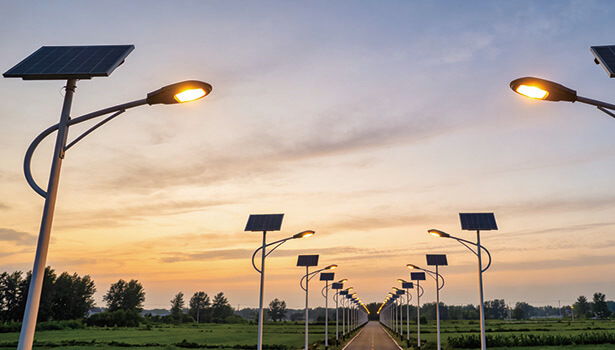
Many modern LED street lights are specifically engineered for solar compatibility, enabling integration with solar panels and energy storage batteries to achieve off-grid operation. This integrated solution eliminates reliance on municipal power grids, proving particularly suitable for remote mountainous regions, rural roads, and other areas beyond grid coverage. It not only reduces grid construction costs but also delivers 100% green energy supply, enhancing sustainability.
Customisation and Versatility
Flexible Design: Adapting to Urban Aesthetics
Modern LED street lights feature diverse designs, customisable to complement urban styles while balancing functionality and aesthetics. Sleek, minimalist models suit contemporary urban thoroughfares with their clean, sophisticated appearance. Traditional, vintage-inspired designs harmonise with historic districts and ancient towns, blending seamlessly with heritage architecture. Decorative variants enhance parks and scenic areas, integrating sculptural elements to elevate nocturnal landscapes.
Power and Brightness Customisation: Tailored to Scenario Requirements
LED street light power and brightness are flexibly customisable, with power ranges spanning 10W-200W+ and lumen output adjustable per scenario needs. Narrow streets and alleys may utilise 10W-30W fixtures for basic illumination, while main thoroughfares and motorways require 80W-200W units to ensure high-intensity, long-range lighting. Car parks and campuses may utilise 30W-60W luminaires, balancing illumination with energy efficiency.
Safety and Reliability
Instantaneous Start/Stop
Traditional high-pressure sodium lamps require 5-10 minutes of warm-up time upon activation. Following a power outage, they cannot illuminate immediately upon restoration, creating a temporary lighting gap that poses safety risks. Modern LED street lights enable instant start-up and shutdown with zero warm-up time. They illuminate immediately after power restoration, ensuring continuous night-time illumination and proving particularly suitable for emergency scenarios.
Low Heat Emission
Conventional street lights (such as incandescent bulbs and high-pressure sodium lamps) generate significant heat during operation, with surface temperatures exceeding 100°C. This poses a fire hazard and risks scalding pedestrians or damaging surrounding vegetation. Modern LED street lights utilise cold light source technology, producing minimal heat during operation with lower surface temperatures. This effectively reduces fire risks and prevents damage to the surrounding environment.
Stable Performance
Traditional street lights experience noticeable brightness degradation over time, compromising illumination quality. In contrast, modern LED street lights exhibit extremely slow brightness decay. Under normal usage, after 50,000 hours of operation, LED street lights maintain over 70% of their initial brightness. This consistent performance ensures long-term, clear illumination, safeguarding night-time travel safety.
The core advantages of modern LED street lights are concentrated in seven key areas: energy efficiency, service life, lighting quality, intelligent control, environmental sustainability, customisation, and safety. These characteristics, when combined, not only resolve numerous pain points associated with traditional street lights but also align perfectly with the modern urban demand for energy-saving, intelligent, and green development.