How Do Solar Street Lights Improve Our Lives?
Jan 06, 2026
The popularization of solar street lights is not only an innovative development in lighting, but also a significant achievement on the path of sustainable development. Stable nighttime lighting is directly related to the quality of residents' lives and development. In the current severe energy situation, solar energy, as a renewable clean energy source, people are dedicated to exploring the unlimited possibilities of solar energy. Solar street lights are the application of solar energy in the field of lighting, and they are improving our lives in various aspects. Next, NOKIN will explain in detail how solar street lights can improve our lives from multiple dimensions such as energy, public safety and community vitality.
How Solar Street Lights Work: System Components and Operating Principles
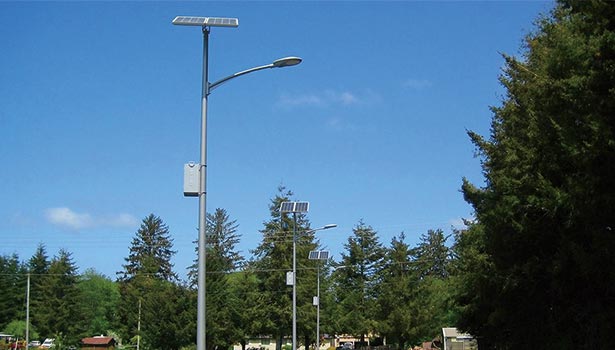
The core working logic of solar street lights is simple and efficient: through solar panels to convert sunlight into electricity, which is then regulated by an intelligent controller and stored in the battery. At night, the battery supplies power to the LED lights to achieve autonomous lighting. The entire system does not rely on traditional power grids, truly realizing the autonomous recycling of energy.
A complete solar street light system mainly consists of five core components, and each component works together to ensure stable lighting:
|
Component |
Role in the Solar Street Light System |
Key Features & Functions |
|
Photovoltaic Panels |
Core energy collection component |
Convert solar energy into electricity for system operation |
|
Batteries |
Energy storage unit |
Store electricity generated during the day to ensure continuous power supply at night |
|
LED Lights |
Lighting output terminal |
Low energy consumption, long lifespan, stable and consistent brightness |
|
Intelligent Controller |
System management unit |
Manages charging and discharging, controls lighting modes, and protects system components |
|
Light Poles and Supports |
Structural support components |
Secure and stabilize all core components, ensuring safe and reliable installation |
The Five Core Ways Solar Street Lights Improve Our Lives
How Solar Street Lights Improve Road and Community Safety
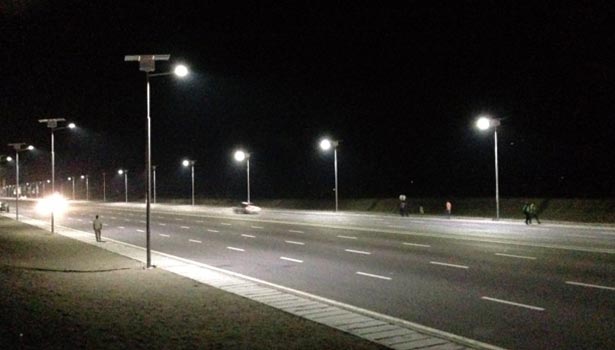
Solar street lights significantly improve road and community safety by providing stable, high-visibility lighting that reduces traffic accidents and deters nighttime crime. Data shows that good nighttime lighting can significantly improve the clarity of road vision, thereby reducing the risk of nighttime traffic accidents by 30%-50%. The continuous lighting provided by motion sensor solar street lights can clearly illuminate potential hazards such as road potholes and obstacles, helping pedestrians and vehicles accurately judge the road conditions, and building a safety barrier for nighttime travel.
From the perspective of public security prevention, lighting has a natural deterrent effect. Adequate nighttime lighting can effectively reduce the probability of theft, robbery and other negative behaviors, reducing the crime rate in communities, and making residents feel safer and more autonomous when traveling and engaging in activities at night. Especially in public areas such as community roads, parks and parking lots, stable lighting can significantly enhance residents' sense of security.
In addition, off-grid solar street lights do not rely on traditional power grids, and can still work normally in emergency situations such as power outages, ensuring uninterrupted lighting in key areas and further strengthening the emergency safety guarantee capacity of the community.
Economic Benefits of Solar Street Lights
One of the most important economic benefits of solar street lights is their ability to reduce electricity and maintenance costs while delivering long-term value for public and commercial projects.
Zero electricity cost is the most obvious advantage
Off-grid solar street lights rely on solar energy for autonomous power generation, do not need to connect to traditional power grids, completely eliminating subsequent electricity costs, saving a lot of long-term operation funds for municipal departments and community management authorities. For large-scale communities or urban road renovation projects, the accumulated electricity savings over time are considerable.
Lower construction costs
Different from the complex engineering of traditional street lights that require digging trenches and laying cables, solar street lights do not require wiring, and the construction process is simple, which can significantly shorten the construction time and reduce labor and material costs. Especially in complex terrain areas, this advantage is more prominent.
Controllable maintenance costs
The lifespan of LED lights and solar panels is over 10 years, and the failure rate is extremely low. Daily maintenance only requires simple cleaning to ensure normal operation, significantly reducing the manpower and financial investment in maintenance. These saved funds can be reallocated to areas such as transportation upgrades, public safety enhancement, and educational resource optimization, achieving efficient utilization of community resources. From the perspective of investment return period, most solar street light projects can recover the initial investment within 3-5 years, and the long-term cost savings are remarkable.
Environmental and Sustainability Benefits of Solar Street Lighting
Solar street lighting offers significant environmental and sustainability benefits by using renewable solar energy to reduce carbon emissions and dependence on fossil fuels.
Zero carbon emissions
Zero carbon emissions during operation is the most core environmental advantage. Different from traditional street lights that rely on coal-fired or natural gas power generation, sustainable street lighting solutions are completely powered by renewable solar energy, and during use, no greenhouse gas emissions are produced, helping to reduce the overall carbon footprint of the community and contribute to addressing climate change.
Effective saving of limited energy resources
By replacing traditional fossil energy with solar energy, which is a renewable resource, the consumption of coal, oil, and other non-renewable resources can be reduced, helping to build a long-term stable energy sustainable strategy.
Higher energy utilization efficiency
Solar street lights are generally equipped with efficient LED light sources, compared to traditional high-pressure sodium lights and other light sources, the energy conversion rate is higher, further reducing energy consumption and resource waste, making it a truly environmentally friendly lighting solution.
How Solar Street Lights Enhance Community Vitality and Quality of Life
By improving nighttime visibility and public space safety, solar street lights enhance community vitality and significantly improve the overall quality of life for residents.
Activating the nighttime value of public spaces
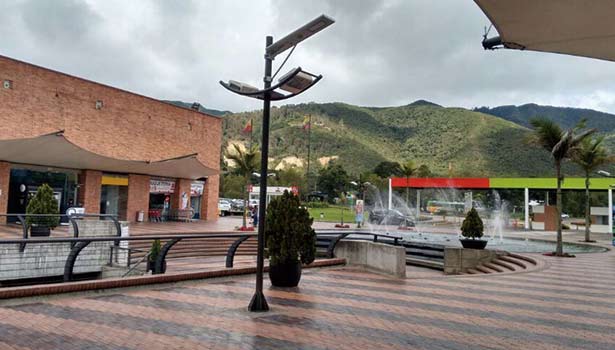
Public areas such as parks, squares, and pedestrian streets, with adequate lighting, can extend their operation and use time, supporting residents to engage in nighttime activities such as walking, exercising, and neighborhood communication, and also driving the development of night markets and night commercial activities, enriching the community life scene.
Reduction of urban-rural lighting gap
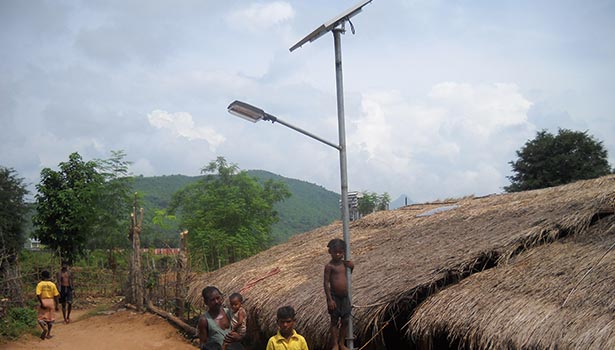
For remote or electricity-free areas, off-grid solar street lights can be quickly deployed without relying on the power grid, allowing local residents to enjoy stable nighttime lighting and carry out nighttime activities such as traveling, socializing, and learning, effectively narrowing the quality of life gap between urban and rural areas.
Enhancement of regional attractiveness
A good lighting environment not only enhances residents' sense of belonging and happiness, but also enhances the attractiveness of the region to investors, tourists, and boosts local economic and social vitality, helping to improve community nighttime life.
Environmentally Friendly Lighting and Light Pollution Control
As an environmentally friendly lighting solution, solar street lights help control light pollution through efficient LED technology and targeted illumination design. Solar street lights have a natural advantage in light pollution control, further strengthening their environmental friendliness.
Reduce light pollution
Most solar street lights use LED light sources combined with directional lighting design, which can precisely control the range of light projection, reducing unnecessary light scattering, thereby effectively reducing light pollution. Compared to traditional high-pressure sodium lights, the light concentration of LED light sources is higher, avoiding the indiscriminate diffusion of light that interferes with the night sky and the habitats of animals and plants.
Intelligent lighting control
Through intelligent control systems, solar street lights can also adjust the brightness and range of lighting according to environmental needs, ensuring lighting needs while minimizing the impact of light pollution, achieving a balance between lighting and ecological protection, which is also an important value of intelligent lighting control.
Applications of Solar Street Lights Across Different Scenarios
Solar Street Lights for Urban Transportation and Public Spaces
In urban scenarios, solar street lights are widely used in main roads, community roads, parks, parking lots, etc. Its stable lighting can enhance traffic safety at night and reduce traffic accidents; in public spaces such as parks and squares, adequate lighting can activate the atmosphere of nighttime activities and enhance community cohesion. At the same time, the advantages of zero electricity cost and low maintenance also save a lot of operating funds for municipal departments, allowing them to invest more resources in upgrading urban infrastructure.
Solar Street Lights for Remote and Off-Grid Areas
Remote and power-less areas are important scenarios where solar street lights can demonstrate their value. These areas have incomplete power grid coverage or no power grid coverage at all, and traditional lighting facilities cannot be widely implemented. Solar street lights do not rely on the power grid and can achieve stable lighting as long as there is sunlight. They can be quickly deployed to complete the lighting coverage. This application not only solves the safety problem of local residents' night travel but also provides nighttime learning lighting guarantee for rural schools, providing support for basic needs such as education and safety in remote areas, and helping to implement the social benefits of rural lighting.
Solar Street Lights for Commercial and Specialized Applications
In special scenarios such as commercial districts, campuses, industrial parks, etc., solar street lights can be the core component of an intelligent lighting solution. The solar street lights in commercial districts can be equipped with intelligent sensing functions, adjusting brightness according to the density of people flow, which not only ensures lighting needs but also saves energy; the solar street lights in campuses can provide safety guarantees for teachers and students' night travel; the solar street lights in industrial parks can adapt to complex outdoor environments, providing stable lighting while reducing enterprise energy costs and improving environmental comfort and safety index.
Common Problems and Misconceptions About Solar Street Lights
Q1: Are Solar Street Lights Too Expensive?
A1: Although the initial installation cost of solar street lights is higher than that of traditional street lights, it needs to be considered from the long-term full life cycle cost. As shown in the previous cost comparison, the zero electricity cost and low maintenance advantages of solar street lights make their total cost over 10 years only 40%-60% of that of traditional street lights. Moreover, with the development of photovoltaic technology, the initial cost of solar street lights is decreasing year by year, and most projects can recover the investment within 3-5 years, with higher long-term usage cost-effectiveness. In addition, some regions also have renewable energy promotion subsidies, further reducing the initial investment pressure.
Q2: Do Rainy or Cloudy Days Affect the Performance of Solar Street Lights?
A2: It will not affect the core lighting needs. Modern solar street light systems are equipped with efficient energy storage batteries and intelligent charging and discharging management systems. During sunny days, they will prioritize the storage of sufficient electricity, and even in continuous rainy weather, they can ensure stable lighting for 3-7 days. At the same time, according to different regional climate conditions, the power of photovoltaic panels and the capacity of batteries can be customized to ensure that basic lighting needs are met even in extreme weather. For example, in rainy areas, higher conversion efficiency photovoltaic panels can be selected to improve the energy collection ability in rainy weather.
Q3: Are Solar Street Lights Less Powerful Than Traditional Street Lights?
A3: The performance of modern solar street lights has fully surpassed traditional street lights. In terms of lighting effect, the brightness and color rendering of LED light sources are superior to those of traditional high-pressure sodium lights, providing a clearer lighting environment; in terms of service life, the core components of solar street lights have a lifespan of over 10 years, while the average lifespan of traditional street lights is only 3-5 years; in terms of intelligence level, solar street lights can integrate light control, human body sensing, and remote monitoring functions, achieving precise lighting and intelligent management, which is something that traditional street lights cannot achieve. Actual application data shows that the lighting stability, fault rate control, etc. of solar street lights are all better than those of traditional street lights.
In conclusion, solar street lights are not just a simple "lighting tool upgrade", but a comprehensive infrastructure that integrates safety guarantee, cost optimization, environmental friendliness, and community empowerment. It enhances the sense of security in daily life through safe lighting, optimizes community resource allocation through long-term cost savings, promotes sustainable development through the utilization of renewable energy, and activates community vitality through lighting improvement. In this way, it has comprehensively improved the modern quality of life.
From a development perspective, with the continuous progress of photovoltaic technology, energy storage technology, and intelligent control technology, solar street lights will develop in a more efficient, intelligent, and adaptable direction. In the future, it will not only become the mainstream choice for urban and rural lighting, but also integrate into the smart city construction system, and interact with systems such as traffic monitoring and environmental monitoring, further expanding the boundaries of improving life. Promoting off-grid solar street lights is not only in line with the trend of energy transformation, but also an important contribution to improving the quality of life for all citizens and building a sustainable society.