10 Tips for Buying High Quality Best Solar Flood Lights
Jan 05, 2026
At a time when the concept of green energy saving is becoming more and more popular, solar flood lights have become a popular choice for outdoor lighting due to their unique advantages. It does not require complex wiring, relying on solar energy to realize independent power supply, not only can significantly reduce the long-term cost of electricity, but also reduce carbon emissions, in line with the demand for environmental protection.

However, at the same time, the market of solar flood light products are mixed, parameter labeling confusion, false performance and other issues occur frequently, many consumers because of blind attention to the “wattage” and other non-core indicators, to buy products that do not meet expectations. In this article, we have compiled 10 scientific tips to help you avoid the pitfalls of purchasing, accurately match their own needs, and choose durable, efficient, cost-effective and outstanding quality solar floodlights.
Focusing on lumen, rejecting blindly looking at wattage
Many consumers will fall into the “higher wattage, the brighter the solar flood light” misunderstanding, in fact, this is not the case. Wattage only represents the energy consumption of the lamps and lanterns (Lumens) is to determine the actual brightness of the core indicators, the two do not have a direct reciprocal relationship. When choosing lumens, you need to combine the specific use of the scene to accurately match, to avoid insufficient brightness or excessive waste, which is also the key principle of solar floodlight lumens selection. The following is the lumen selection reference for different scenes:
|
Application Scenario |
Recommended Lumen Range (lumens) |
Core Lighting Requirements |
|
Decorative / Pathway Lighting |
100–1,500 |
Creates a soft ambiance; strong illumination not required |
|
Courtyard / Patio Lighting |
300–1,300 |
Balances visibility with comfortable ambient lighting |
|
Driveway / Large Area Lighting |
1,300+ |
Covers wide areas to ensure safe movement and visibility |
|
Security / High-Intensity Lighting |
2,500+ (e.g., 2,800-lumen models) |
Powerful illumination for warning purposes and clear detail recognition |
In addition, you can also refer to the LED luminous efficiency (lm/W), the higher the value, the lower the energy consumption of solar floodlights at the same brightness, the more energy-saving.
Pay attention to the battery capacity and type to ensure the stability of the endurance
The endurance of the solar floodlight is completely dependent on the built-in battery, the battery capacity and type directly determines the duration and service life of the lighting. Battery capacity is measured in milliampere hours (mAh), the larger the capacity, the more power stored, the longer the endurance.
The capacity options corresponding to different needs are as follows. Basic demand: 2000-4000 mAh, suitable for daily short-time lighting (e.g., evening to late-night garden lighting). Long life demand: 4000-5000 mAh and above, can realize more than 15 hours of continuous lighting, suitable for security scenes that need to be lit all night.
In terms of battery type, lithium batteries are preferred. Compared with traditional lead-acid batteries, lithium batteries have the advantages of long cycle life, high charging and discharging efficiency, strong stability, small size and light weight. At the same time, it is recommended to pay attention to whether the lamps and lanterns support rainy day renewal, high-quality products can be 5-7 days of rainy weather under normal operation, to avoid interruption of lighting due to continuous cloudy days, this type of rainy day renewable solar floodlights are more suitable for use in rainy areas.
Preferred high conversion efficiency solar panels
Solar panels are the “energy source” of solar floodlights, and their conversion efficiency directly affects the charging speed and charging effect, especially in areas with poor lighting conditions. High conversion efficiency solar panel floodlight conversion efficiency should be ≥ 20.5%, the higher the conversion efficiency, the more efficient use of sunlight, even in cloudy, cloudy days and other low-light conditions can be quickly charged.
Material selection, monocrystalline silicon solar panels are superior to polycrystalline silicon, monocrystalline silicon conversion efficiency is higher, more stable, and better ability to adapt to the environment. Auxiliary design should not be ignored: choose adjustable angle solar panels to facilitate the adjustment of the angle according to the installation location and season, maximizing the alignment of the sun; solar panels with anti-fouling and waterproof coating can reduce the impact of dust and rain on the charging effect, and extend the service life.
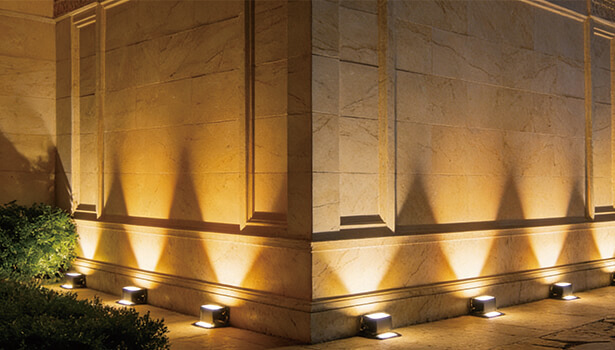
Matching lighting modes and sensors
Core lighting modes recommended
Security Requirements: Priority is given to solar flood lights with motion sensors; when no one is around, the lamps are in a low-brightness or off state, and automatically switch to a high-brightness mode when someone is approaching, which is energy-saving and can serve as a warning.
Constant light demand: If you need to light up the whole night (such as courtyard, driveway), choose dusk to dawn constant light solar floodlights, no need to manually switch, more convenient to use.
Flexible demand: choose multi-mode switching solar floodlights, according to different times, different needs flexible adjustment, adaptability is stronger.
Sensor parameters
If you choose solar floodlights with motion sensing, you need to pay attention to the sensor's sensing distance and sensing angle, the sensing distance is recommended to be 20-40 feet and above for a wider coverage, and the sensing angle of 120°-270° is preferred to reduce the blind spot of illumination and improve the security effect.
Recognize the IP protection level
Solar floodlights are mainly used outdoors, and need to withstand wind, rain, dust and other environmental tests over a long period of time, so the IP protection level is a key indicator of its durability. The IP level consists of two digits: the first digit stands for the dust protection level, the second digit stands for the waterproof level, and the bigger the digit is, the stronger the protection ability is. The IP rating requirements for different outdoor environments are as follows:
|
Operating Environment |
Recommended IP Rating |
Protection Capability Description |
|
Most standard outdoor environments (rain, dust) |
IP65 or higher |
Fully dust-tight; resistant to water jets, suitable for daily outdoor use |
|
Harsh environments (heavy rain, snow, coastal humidity) |
IP67 / IP68 |
Immersion-resistant; capable of stable operation under extreme environmental conditions |
In addition to the IP rating, you also need to pay attention to the operating temperature range of the luminaire. The operating temperature range of high-quality products is usually -20℃-60℃, which is suitable for extreme high and low temperature environments such as cold in the north and hot in the south, avoiding failures due to temperature problems.
Pay attention to the beam angle and range
The beam angle determines the lighting range and light concentration of the solar floodlight, the choice of the beam angle of the solar floodlight needs to be combined with the size and shape of the lighting area, to avoid the emergence of the light blind spot.
|
Lighting Requirement |
Recommended Beam Angle |
Suitable Applications |
|
Focused / Localized Lighting |
Narrow beam angle (around 70°) |
Landscape lights, accent lighting, decorative illumination for key areas |
|
Wide-Area Diffused Lighting |
Wide beam angle (140°–270°, up to 360° adjustable) |
Courtyards, driveways, large-area outdoor lighting |
Additionally, it is recommended to choose products with adjustable lamp heads, allowing flexible adjustment of light direction based on actual lighting needs to further optimize illumination and avoid light wastage.
Prioritize LED quality and color temperature
The LED chip serves as the light-emitting core of solar floodlights, with its quality directly impacting brightness, color rendering, and lifespan. Simultaneously, color temperature selection affects the lighting experience. Regarding LED quality, prioritize solar floodlights with an LED color rendering index (CRI) ≥80. A higher CRI indicates light closer to natural sunlight, accurately reproducing object colors and preventing light distortion—ideal for security scenarios requiring clear object identification.
Color temperature selection should align with usage scenarios:
Security/Work Lighting: Opt for cool white light around 6000K. Its strong penetration and high alertness clearly capture details. For courtyard/recreational lighting, opt for warm white light (3000K-4000K) to create a soft, cozy ambiance and comfortable leisure atmosphere. Regarding lifespan, high-quality LED should last ≥50,000 hours, reducing the hassle and cost of replacing bulbs later.
Prioritize easy installation & wireless design
Installation convenience directly impacts user experience and costs. Premium solar flood lights should feature effortless setup and wireless operation. Wireless designs outperform wired alternatives. These fixtures typically secure with screws or adhesive, eliminating the need for professional electricians—DIY installation significantly lowers costs and complexity.
Installation flexibility is equally crucial: opt for products supporting multiple mounting options like wall-mounting, ground placement, or bracket installation. This adaptability accommodates diverse locations such as walls, fences, or ground surfaces, meeting varied application needs. Additionally, verify that the product includes all necessary accessories—installation screws, expansion anchors, and manuals—to prevent installation delays due to missing parts.
Evaluate brand reputation and warranty services
In a market filled with mixed quality products, selecting reputable brands with reliable service is an effective way to avoid substandard items—a key aspect of solar floodlight selection. Prioritize brands with strong market reputations and professional manufacturing backgrounds. Their premium solar floodlights offer greater assurance in quality control and performance stability.
Warranty duration reflects brand strength. Premium solar floodlights typically offer ≥3 years of warranty, with some models providing even longer coverage. Exercise caution with products warrantied for less than one year, as they may harbor quality concerns. Additionally, review user feedback (focusing on core metrics like battery life, brightness, and durability) and third-party evaluation reports before purchasing. This comprehensive research helps you navigate common pitfalls and make informed decisions.
Define additional requirements
Beyond core functionality, certain supplementary features can significantly enhance the solar floodlight experience. Select based on your specific needs:
Portability Requirements: For mobile use (e.g., temporary lighting, outdoor events), choose lightweight models with handles for easy transport and relocation.
Smart Control Needs: For remote adjustment of lighting modes and brightness, opt for products supporting remote control or app operation for greater convenience. Special Feature Requirements: Features like emergency lighting mode (serves as an emergency light during power outages) or scheduled on/off functionality (allows setting specific lighting periods) further enhance practicality.
Mastering these 10 selection tips will help you avoid common pitfalls when choosing solar floodlights, enabling you to pinpoint high-quality products that meet your specific needs and deliver stable performance. A superior solar floodlight not only provides efficient and reliable outdoor lighting but also demonstrates energy-saving advantages over long-term use, contributing to a greener lifestyle. Consider each requirement against your actual needs to effortlessly select an ideal product that balances cost-effectiveness and practicality.