Why Are Smart Solar Lights Essential for Modern City Infrastructure?
Jan 07, 2026
Amid the global push toward smart cities and green, low-carbon development, smart solar street lights have become a crucial component in upgrading modern urban infrastructure. To fully unlock their value, we must first clarify their core definition and fundamental differences from traditional solar lights. This enables a deeper exploration of their practical role in optimizing city operations and ensuring public safety—a critical step for advancing high-quality urban infrastructure development.
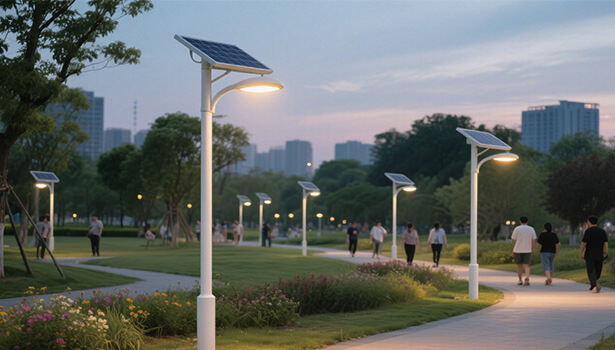
What Defines a “Smart” Solar Street Light?
Before examining the value of smart solar street lights, we must first clarify their core definition and defining characteristics, distinguishing them fundamentally from traditional solar street lights.
Core Definition of Smart Solar Street Lights
A solar street light constitutes a self-sufficient lighting system capable of independent operation without grid dependency. It integrates advanced technologies such as IoT connectivity, energy management, and environmental adaptability. This system enables remote monitoring, efficiency programming, and adaptation to diverse urban environments, providing municipal authorities with comprehensive, lifecycle based lighting solutions.
Core Differences from Traditional Solar Street Lights
While traditional solar street lights merely fulfill basic illumination needs, the core advantage of smart solar street lights lies in empowering municipal departments with real-time control, automated operations, and efficiency enhancements. This distinction elevates them beyond mere lighting fixtures to become indispensable core assets in smart city development, unlocking greater possibilities for urban operations management.
How Do Smart Solar Street Lights Optimize Urban Infrastructure?
Energy Independence & Cost Savings
Smart solar street lights generate electricity through their own high-efficiency solar panels, completely eliminating dependence on fossil fuels and eliminating lighting electricity costs at the source. Their long-life batteries effectively store energy, ensuring continuous and stable operation even during extreme conditions like grid failures or prolonged rainy periods, guaranteeing uninterrupted lighting services.
Enhancing Public Safety
Road lighting stands as one of the most effective crime deterrents. Adequate illumination improves visibility for pedestrians and drivers, reducing safety hazards during nighttime travel while significantly lowering the incidence of theft, robbery, and other criminal activities. Operating independently of the grid, smart solar street lights maintain functionality during emergencies like sudden power outages or natural disasters. They provide critical lighting support for emergency response and citizen evacuation, further strengthening public safety safeguards.
Enhancing Infrastructure Resilience
Extreme weather, grid failures, and natural disasters often cause total shutdowns of traditional road lighting systems, severely disrupting urban operations and daily life. Smart solar street lights, requiring no external power supply, maintain operation under extreme conditions, providing reliable emergency lighting solutions that significantly boost cities' preparedness and resilience against disasters.
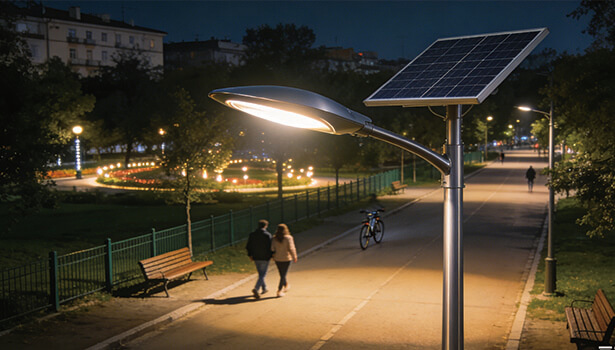
Low Maintenance & Long Lifespan
Traditional lighting systems require frequent repairs and replacements due to underground wiring failures, corrosion, and vandalism, resulting in persistently high maintenance costs. Smart solar street lights eliminate underground wiring entirely, addressing these issues at their root. Additionally, their use of highly durable components ensures a lifespan exceeding 10 years with virtually no maintenance required during operation, substantially reducing municipal management's labor and financial expenditures.
Core Differences Between Traditional Lighting and Smart Solar Street Lights
|
Comparison Dimension |
Traditional Lighting |
Smart Solar Street Lights |
|
Energy Dependency |
Relies on the power grid and consumes fossil energy |
Self-powered; no external energy dependency |
|
Operating Cost |
Continuous electricity expenses with high maintenance costs |
Zero electricity cost; low to almost maintenance-free operation |
|
Disaster Resistance |
Fails during grid outages; poor resilience |
Operates independently; remains stable in extreme conditions |
|
Service Life |
Typically 3–5 years, requiring frequent replacement |
10+ years with extended service life |
|
Maintenance Complexity |
Complex wiring, multiple failure points, high maintenance difficulty |
No underground cabling; robust components and simplified maintenance |
Cost-Benefit Analysis of Smart Solar Street Lights
For municipal departments, cost-effectiveness is a critical consideration in infrastructure upgrades. Smart solar street lights demonstrate significant economic value by balancing short-term investment with long-term returns.
Short-Term Cost Benefits
Smart solar street lights deliver immediate cost savings. On one hand, their self-powered generation completely eliminates ongoing electricity expenses.
Second, eliminating the need for underground cabling substantially reduces initial installation engineering and material costs. Compared to traditional lighting systems' installation expenses and ongoing electricity bills, smart solar street lights offer a more favorable short-term investment return ratio.
Long-Term Cost Efficiency
Over extended periods, the cost advantages of smart solar street lights become even more pronounced. First, their highly durable components ensure a lifespan exceeding 10 years—far surpassing traditional lighting equipment—drastically reducing replacement frequency and costs. Second, their low-maintenance or even maintenance-free nature saves substantial long-term labor and financial investments in operations and upkeep. Third, enhanced energy efficiency further minimizes indirect costs associated with energy waste.
Synergy with Other Smart City Technologies
The value of smart solar street lights extends far beyond illumination. As the “nerve endings” of smart cities, they seamlessly integrate with other intelligent urban technologies to build a comprehensive, unified city operations management system.

Integration with Traffic Management Systems
Certain smart solar street light models can synchronize in real-time with traffic control systems, intelligently adjusting illumination levels based on road congestion. For instance, during peak traffic hours, they automatically increase brightness to ensure driving safety. At night when traffic is sparse, they appropriately reduce brightness to conserve energy, enabling precise and efficient traffic lighting management.
Interoperability with Security Surveillance Networks
Smart solar street lights provide stable, ample illumination for security cameras, enhancing nighttime surveillance clarity and aiding security systems in accurately identifying anomalies. Their integration with emergency response systems enables rapid illumination of incident sites and surrounding roads during emergencies, buying critical time for rescue operations.
Applications in Environmental Monitoring
Smart solar street lights can integrate various environmental sensors to collect real-time data on air quality, noise pollution, temperature, humidity, and other environmental parameters. This data is transmitted via IoT to urban management platforms, providing precise support for municipal environmental governance and urban planning. This drives scientific and refined management of the urban environment.
Building an Efficiently Interconnected Urban Operations System
This multidimensional technological integration breaks down information silos between traditional urban systems, enabling coordinated operations across energy, transportation, security, and environmental sectors. It significantly enhances urban operational efficiency while effectively reducing energy waste, laying a solid foundation for constructing green, intelligent, and interconnected modern cities.
Smart solar street lights represent far more than a simple lighting upgrade. Leveraging core advantages like autonomous energy supply, low operational costs, and extended lifespan, they substantially optimize the operational efficiency and stability of urban infrastructure. Simultaneously, functioning as the “nerve endings” of smart cities, they enable deep integration with technologies across transportation, security, environmental monitoring, and other domains. This creates a more efficient urban management system, providing robust support for cities' green, sustainable, and high-quality development.