Solar Street Lighting Projects in Africa: 7 Key Factors for Successful Delivery
Nov 16, 2026
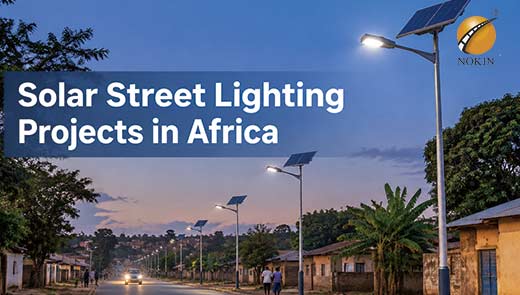
On the African continent, a large number of urban roads, rural side roads, and town public squares have long faced problems of insufficient power grid coverage and unstable electricity supply. Installing traditional street lights requires digging cables and laying pipelines, which incurs high construction costs and a long construction period. Solar street lights, relying on independent photovoltaic power supply, do not require external power grids and have become one of the mainstream solutions for infrastructure lighting projects in Africa.
However, large-scale solar street light projects are not simply about purchasing lighting products in large quantities. The implementation of such projects is constrained by multiple factors such as local climate, light resources, road conditions, system configuration, batch production, oceanic logistics, on-site construction, and long-term operation and maintenance. This article is aimed at government procurement departments, EPC engineering contractors, project developers, and large wholesalers. It introduces the entire process delivery concept of large-scale solar street light projects from the early survey to long-term operation and maintenance in seven core links, ensuring the smooth implementation of the projects.
Conduct a Site Survey and Define Lighting Requirements
Africa is vast, and different regions have extremely different light conditions, temperature and humidity, and corrosion conditions. A single solar street light configuration cannot be adapted to all regions. The procurement team needs to first clarify two core pieces of information: regional climate conditions and road lighting indicators.
Assess Local Climate and Solar Resources
Africa cannot be regarded as a single climate region with a unified design scheme. The environmental conditions in West Africa, East Africa, North Africa, and Southern Africa are completely different, directly determining the selection standards for photovoltaic panels, energy storage batteries, and light housings.
- The Sahel region in West Africa: High temperatures during the dry season and heavy sandstorms, with equipment on the top of the lightpoles remaining in a high-temperature environment for a long time; the rainy season occurs in the middle of the year, with frequent short-term heavy rains, and dust easily covers the photovoltaic panels, reducing power generation.
- The equatorial region in East Africa: High humidity throughout the year, with two rainy seasons a year, long periods of continuous cloudy and rainy weather, and solar power generation significantly decreases compared to sunny days, with higher risks of equipment moisture and corrosion.
- The coastal area in North Africa: Air contains salt fog, which accelerates the rusting of metal lightpoles and line connectors, and requires stricter requirements for the protection level and anti-corrosion treatment of the lights.
- The inland region in Southern Africa: Relatively sufficient sunlight, but large temperature differences between day and night in winter, which reduces the available capacity of lithium batteries.
During the survey stage, project teams should collect key environmental data, including peak sun hours, the longest consecutive rainy period, ambient temperature and humidity, and local exposure to sand, dust, or salt fog.
Road Types and Key Solar Street Lighting Requirements
Different road types have completely different light pole heights, installation spacings, road illuminance, and lighting uniformity. In the early stages of the project, it is necessary to sort out the basic parameters of the roads and match corresponding road lighting standards.
|
Project Application Scenarios |
Key Factors to Evaluate |
|
Urban Main Roads |
Road width, average road illuminance, lighting uniformity, and glare prevention requirements. |
|
Rural Roads |
Complete independent power supply, ease of on-site maintenance, and anti-theft design. |
|
Highway Entrances and Exits |
Lighting continuity, light pole spacing and layout, and structural wind resistance. |
|
Parking Lots and Public Squares |
Wide-area coverage, nighttime personnel activity duration, and time-based dimming requirements. |
Choose the Right Solar Street Light System Structure
Currently, African engineering projects are mainly divided into three product structures: all-in-one (All-in-One), all-in-two (All-in-Two), and split (Split). The differences in these three structures directly affect installation efficiency, layout flexibility, and long-term maintenance. Large projects must choose the optimal structure based on the scene.
Compare All-in-One, All-in-Two, and Split Solar Street Lights
|
Product Type |
Structural Characteristics |
Primary Advantages |
Limitations |
Applicable Scenarios |
|
Integrated (All-in-One) |
Solar panel, battery, LED light head, and controller are integrated into a single unit. |
Compact structure, easy installation, and lower construction costs. |
Fixed solar panel angle; higher heat dissipation demands in high-power models; some products may require replacing the entire unit for maintenance. |
Small rural roads, community walkways, and small-scale lighting projects. |
|
Two-Part (All-in-Two) |
Solar panel is installed separately, while the LED light head and battery are integrated into one unit. |
Adjustable solar panel angle, flexible lighting configuration, and a balance between installation convenience and heat dissipation. |
More complex installation than All-in-One systems due to partially separated components. |
Municipal roads and medium-sized road lighting projects. |
|
Split |
Solar panel, LED light head, and energy storage battery are installed as independent components. |
Flexible system layout, easy individual maintenance and component replacement, and flexible battery positioning. |
More complex installation and system configuration. |
Urban main roads, highways, and high-power or long-distance lighting projects. |
Summary: All-in-One systems prioritize installation convenience, All-in-Two systems balance installation efficiency with configuration flexibility, while Split systems are better suited to large-scale projects requiring greater flexibility in system configuration, maintenance, and long-term operation. The final selection should depend on project scale, environmental conditions, and technical requirements.
Calculate Solar Panel and Battery Capacity
System configuration is the core of the technical design of the entire project. Many projects simply match power based on sunny days' sunlight, ignoring continuous rainy and hot weather in the rainy season, and ultimately resulting in power failure on rainy days. The configuration design must first calculate energy consumption, and then reverse calculate the power of the photovoltaic panels and the energy storage capacity of the batteries to achieve a balance between power generation, power consumption, and energy storage.
Calculate Daily Energy Consumption
Basic energy consumption calculation formula:
E=P×t
Hereinafter: E represents the total daily lighting energy consumption (Wh); P represents the rated power of the LED light (W); t represents the daily lighting duration (h).
For example: A 60W solar-powered light that is on for 10 hours throughout the night has a theoretical energy consumption of 600Wh. In actual engineering, system losses must also be accounted for, including controller and wiring losses, power reduction due to dust obstruction, and night-time dimming strategies. If an intelligent dimming strategy of full power in the early morning and half power in the late evening is adopted, it can reduce some daily energy consumption and alleviate the pressure on battery storage.
Determine Battery Storage Capacity
Projects generally use LiFePO4 lithium iron phosphate batteries, which have a longer cycle life and better high-temperature resistance, suitable for outdoor environments in Africa. The safe discharge depth (DoD) of lithium iron phosphate is usually taken as 0.8 to 0.85, and a coefficient for capacity reduction in high-temperature environments should also be added.
Calculate Solar Panel Power Requirements
Photovoltaic panels cannot be configured based on peak sunlight conditions on sunny days. They must be based on the lowest peak sunlight hours during the rainy season as the design benchmark, and a certain design margin should be reserved to compensate for the reduction in power generation caused by dust obstruction and wiring losses, ensuring that the discharged batteries can be fully charged on sunny days.
Allow for Rainy Season Autonomy
The most common design flaw in African projects is to only ensure sufficient power for sunny days, and then power outages and lights go off after several consecutive rainy days.
- For conventional rural projects, the minimum guaranteed autonomous endurance is approximately 3 days;
- For major urban roads and municipal key projects, usually a reserve of about 5 days of rainy endurance is required;
- In equatorial rainy regions, additional energy storage redundancy should be increased based on on-site meteorological data.
These values should be treated as preliminary design references rather than universal requirements. The final autonomy period should be determined by local weather data, lighting schedules, and project specifications.
Verify Supplier Production Capacity and Batch Consistency
Standardize Technical Specifications Across Project Zones
Large-scale cross-regional projects are prone to having inconsistent configurations of lights in the same batch, causing troubles in subsequent storage, installation, and maintenance. Standardized control should follow two principles:
- Unified core hardware parameters: LED power, photovoltaic panel specifications, voltage and capacity of lithium iron phosphate batteries, controller program, wall thickness and hot-dip galvanizing standards;
- Zone-specific differentiated configuration: Only make minor adjustments to battery endurance and protection level for areas with heavy rain, high temperature, and coastal salt spray, while keeping other accessories universal to minimize the number of component types and reduce batch production costs and inventory pressure.
Standardization does not mean using exactly the same configuration on all sections, but rather reducing the number of non-standard components while meeting different on-site conditions to achieve large-scale mass production.
Evaluate Manufacturing Capacity and Quality Control
Procurement and EPC contracting projects have high requirements for the consistency of batch supply. Before procurement, each solar street light supplier's production guarantee capability should be verified to avoid problems such as insufficient production capacity of small factories and inconsistent product quality in batches.
|
Items to Be Confirmed Before Procurement |
Core Verification Purpose |
|
Complete Technical Specification Sheet |
Confirm and lock all hardware parameters to prevent component downsizing or specification changes during production. |
|
Sample Performance Test Report |
Verify laboratory test results for key performance indicators, including illumination, high-temperature resistance, and waterproof performance. |
|
Monthly Production Capacity |
Confirm production capacity and manufacturing schedules to ensure on-time delivery of large-volume orders. |
|
Full-Process Quality Inspection System |
Verify incoming material inspection, in-process quality control, and final factory inspection to ensure batch consistency. |
|
Availability of Replacement Components |
Ensure sufficient inventory of controllers, light sources, and batteries for future maintenance and replacement. |
|
OEM/ODM Customization Capability |
Confirm the ability to customize pole dimensions, dimming programs, and protection ratings to meet specific project tender requirements. |
Nokin has the full production capacity for solar street lights and can undertake large-scale municipal project orders. It supports customization adjustments based on the technical documents of different African countries' tenders and provides a full-process service from sample testing to batch delivery. It strictly controls the consistency of each batch of products upon leaving the factory.
Plan Shipping, Customs Clearance, and On-Site Installation
The delivery of large-scale projects is not only about completing the production of goods, but also involves the entire chain of maritime transportation, import customs clearance, inland transfer, and on-site construction. Many project products are delivered on time, but they get stuck at customs delays, packaging damage, and disconnection in on-site installation, ultimately resulting in overall project delays.
Arrange International Shipping and Customs Documentation
Transportation plan planning
Large-scale solar street lights are preferably transported by full container (FCL) shipping. The light poles are packaged in bare tubes, while the lights and batteries are packed in separate cardboard boxes and reinforced with wooden boxes; lithium batteries are classified as dangerous goods and must be independently insulated packaged in accordance with corresponding maritime shipping regulations, and provide safety technical specifications (MSDS), transportation appraisal reports, etc., to avoid port detention. The destination port can be selected from major ports in West Africa, East Africa, or Southern Africa, and then arranged for inland transfer to the project site.
Preparation of customs clearance documents in advance
Some African countries implement mandatory customs clearance certification. Specific requirements should be in accordance with the current regulations of the destination country. Before export, relevant customs clearance documents such as origin certificates, commercial invoices, packing lists, and product inspection certificates should be processed in advance. Complete the preparation of documents to avoid port detention fees due to incomplete documents upon arrival at the port. The transportation documents and packaging requirements for lithium batteries need to be verified item by item according to the battery type, transportation method, and applicable regulations, and cannot be applied with a uniform requirement.
Organize Local Installation and Technical Training
The goods arriving at the site is only half of the delivery. The quality of on-site installation directly determines the service life of the solar street lights.
Pre-prepare construction drawings: dimensions of the light pole foundation pit, specifications of anchor bolts, and the curing period of concrete; in soft soil areas, the foundation must be deepened to prevent the light pole from toppling in strong winds;
Prioritize ground assembly: complete the installation of the light head, photovoltaic panel, and wiring debugging on the ground, then lift and erect the whole unit to reduce faults in high-altitude operations;
Conduct local installation personnel training: clarify the debugging of the photovoltaic panel orientation and inclination, waterproof sealing of the lines, and methods of anti-theft reinforcement;
Establish a progress feedback mechanism: daily follow-up on the progress of pole erection, wiring, and debugging, and promptly handle on-site problems such as wiring errors and non-lit equipment.
Implement Factory Inspection and On-Site Acceptance
Project quality control is divided into two stages: factory inspection and on-site completion acceptance. Passing the factory inspection does not mean meeting the lighting standards on-site; both are indispensable and are also mandatory requirements for government project acceptance.
Conduct Factory Quality Inspection
Complete the sampling inspection of the full batch of products in the factory, with the main inspection items including:
- LED light source: luminous efficacy, color temperature, optical distribution curve, and IES light degree file can be provided;
- Photovoltaic module: open-circuit voltage, peak power, and power generation performance under high-temperature conditions;
- Lithium iron phosphate battery: capacity test, overcharge and overdischarge protection, and high and low-temperature cycle life;
- Whole machine protection: waterproof and dustproof grade, impact resistance test, adapted to the sand and rainstorm environment in Africa;
- Lightpole quality: hot-dip galvanizing anti-corrosion treatment, resistance to salt fog rusting.
Product inspection can refer to relevant standards such as IEC, EN, and IP. The applicable clauses should be verified according to the product type and target market, and cannot be written as mandatory applicable requirements. All inspections should retain written reports and video records for project bidding and acceptance filing.
Verify On-Site Lighting Performance and System Operation
After the products are delivered to the construction site and installed, on-site actual measurement and acceptance must be carried out. The delivery cannot be completed merely based on the factory report.
- Hardware installation acceptance: Check the verticality of the lightpole, the tightness of the anchor bolts, the orientation and inclination of the photovoltaic panels, and the waterproof sealing of all connection joints;
- Lighting effect measurement: Use an illuminance meter to measure the average illuminance of the road surface and the uniformity of lighting; or use the DIALux software to complete the road lighting simulation in advance, compare the simulation data with the on-site measured data, and confirm that it meets the applicable road lighting specifications;
- System commissioning: Conduct commissioning tests to verify battery performance, intelligent dimming, light-control functions, and system operation under the specified test conditions.
All measured data should be sorted and formed into a formal acceptance document, signed and archived, to complete the project delivery closure. The factory test of the product cannot replace the on-site lighting acceptance; they are different quality control links.
Plan Long-Term Maintenance and Control Lifecycle Costs
Many purchasers only compare the initial purchase price, ignoring the subsequent years of maintenance expenses. In remote areas of Africa, there is a shortage of maintenance personnel. Once the core components are damaged and the spare parts cannot be promptly in place, the street lights will be paralyzed for a long time. During the project planning stage, a full life cycle operation plan should be established to control the total ownership cost (TCO).
Reserve Spare Parts and Define Warranty Terms
- Lock in the supply of easily damaged parts in advance: LED light sources, controllers, and lithium batteries are components with high wear and tear. A certain proportion of spare parts can be reserved according to the total project quantity and dispatched to the local warehouse of the project;
- Specify the warranty period: Clearly state the warranty scope and the conditions for free replacement of non-human damage in the purchase contract; the specific warranty period shall be subject to the terms of the manufacturer;
- Assess the local maintenance capability: If the project is located in a remote rural area, it is advisable to choose modular products. A single component failure can be replaced separately without the need to dismantle the entire light.
Establish a Regular Maintenance Plan
The common faults of solar street lights are often related to dust blocking and aging of the lines. Regular maintenance can significantly extend the equipment life:
- Clean the surface dust of the photovoltaic panels regularly during the dry season to avoid continuous degradation of power generation;
- Before the rainy season arrives each year, conduct a comprehensive inspection of the waterproofing of the line joints and the anti-corrosion coating of the lightpole;
- Monitor the battery voltage and charging and discharging data through the intelligent controller to predict battery aging faults in advance;
- Provide technical training to local maintenance personnel and establish a local maintenance team to reduce the cost of cross-border technical personnel's round-trip.
Project procurement must calculate the total ownership cost TCO: initial purchase price + transportation and installation costs + maintenance spare parts costs over many years + component replacement costs, and cannot only compare the factory unit price. A set of equipment with reasonable initial configuration and stable quality can compress the maintenance expenses during the equipment life cycle to a relatively low level.
Conclusion: Key Considerations for Successful Solar Street Lighting Projects in Africa
For an African large-scale solar street light project to successfully pass the acceptance inspection and operate stably for a long time, it relies on seven complete steps:
Conduct on-site surveys to understand the regional climate, lighting conditions, and road lighting indicators;
Based on the road conditions, reasonably select an integrated, two-part, or split system structure;
Scientifically calculate energy consumption, match the power of the photovoltaic panels with the battery's endurance, and reserve redundant power for rainy seasons;
Establish unified product technical standards, verify the manufacturer's batch production and quality control capabilities;
Plan in advance for maritime transportation and customs clearance documents, and conduct local construction technical briefings;
Implement dual acceptance mechanisms of factory inspection and on-site illuminance measurement;
Pre-allocate spare parts and establish a localized operation and maintenance system to control the full life cycle costs.
Simply purchasing hardware equipment can only complete half of the project work. Nokin can provide a complete set of on-site solutions for African government procurement, EPC contractors, and project developers and all-round guarantee for the smooth delivery and acceptance of large-scale lighting projects.