Solar Outdoor Lighting Solutions
Dec 01, 2025
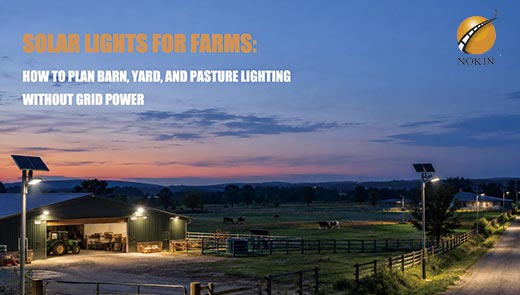
Amid the global surge in renewable energy adoption, solar outdoor lighting is rapidly establishing itself as a core player in the outdoor lighting market, leveraging its core advantages of low-carbon sustainability and cost-effectiveness. Traditional outdoor lighting has long grappled with challenges such as high energy consumption, elevated maintenance costs, and grid dependency. The emergence of solar outdoor lighting solutions has fundamentally transformed this landscape. Solar street lights are now ubiquitous, illuminating everything from rural roads in remote villages to scenic nighttime displays in urban tourist attractions.
How Solar Outdoor Lighting Handles Complex Environments
Battery Performance and Weather Resilience
The stable operation of solar outdoor lighting across diverse weather conditions relies heavily on advanced battery management systems. Premium solar street lights utilize high-quality lithium iron phosphate batteries that maintain optimal charging efficiency even on cloudy days. This capability ensures sufficient energy storage, enabling continuous power supply to LED sources for multiple nights during prolonged overcast periods and preventing illumination interruptions due to insufficient sunlight.
Simultaneously, the built-in intelligent management module within the solar street light system continuously monitors remaining battery capacity and automatically adjusts light output based on power levels. During periods of limited sunlight, it extends operational duration by moderately reducing brightness, ultimately delivering reliable, consistent illumination year-round—even under sub optimal weather conditions.
Solar Panel Efficiency in Various Climates
As the “energy source” for solar outdoor lighting, photovoltaic panels' power generation efficiency in different climates directly determines system performance. Mainstream solar street light panels currently utilize monocrystalline or polycrystalline silicon technology, enabling continuous electricity production even under partially cloudy conditions and preventing power interruptions caused by brief cloud cover.
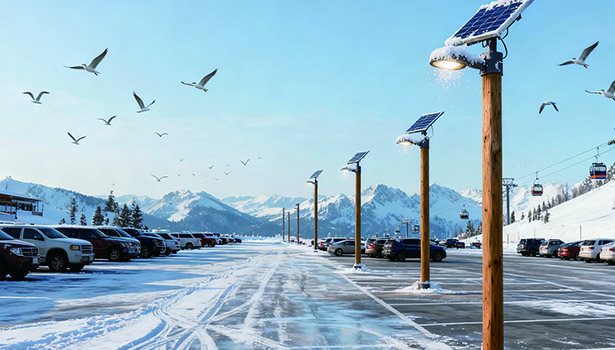
To withstand complex climates, these panels feature advanced anti-reflective coatings and tempered glass surfaces: the anti-reflective coating maximizes light absorption for superior power generation. Professionally tested, these panels endure winds up to 150 mph and operate reliably within temperatures ranging from -40°F to 185°F, adapting to most global climates.
Adaptive Lighting Technology
Beyond ensuring “energy harvesting” and “energy storage,” Adaptive Lighting Technology further enhances the adaptability and energy efficiency of solar outdoor lighting in complex environments. Modern solar street lights are equipped with smart sensors that automatically adjust illumination levels based on ambient brightness and patterns of pedestrian and vehicle traffic. For instance, during low-activity periods at night with minimal foot or vehicle traffic, the lights automatically switch to low-brightness mode to maximize battery conservation. Upon detecting movement, they instantly increase brightness to ensure uncompromised safety for passersby.
This intelligent adjustment function not only achieves optimal energy utilization but also consistently maintains lighting levels that meet safety standards across varying weather conditions and time periods, further enhancing the practicality and reliability of solar outdoor lighting.
What Are the Installation Requirements for Solar Street Lights Outdoor?
Core Installation Requirements and Preliminary Preparations
While ease of installation is a key advantage of solar outdoor lighting, scientific preliminary preparation and site selection directly determine subsequent performance. Site selection should prioritize avoiding tall buildings, trees, and other obstructions to ensure sufficient daily sunlight exposure for photovoltaic panels. In special settings like scenic areas, ecological conservation and landscape harmony must also be considered.
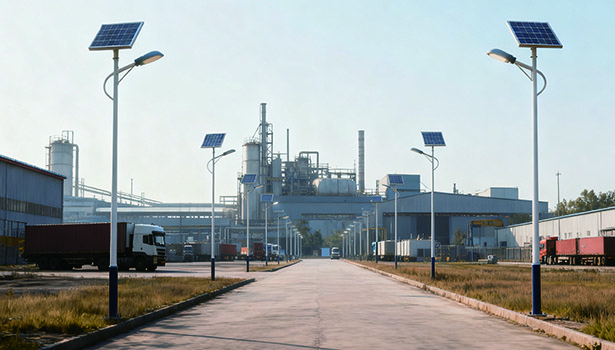
Light pole specifications offer diverse options ranging from 3 to 12 meters in height, adaptable to specific lighting requirements. For optimal spacing, poles should be positioned 15 to 25 meters apart. This ensures comprehensive coverage without blind spots while preventing resource wastage. Unlike traditional lighting systems requiring complex underground wiring, solar outdoor lighting operates independently of the grid. This wiring-free design not only reduces installation complexity and costs but is also particularly suited for remote areas, temporary sites, and other locations where grid access is impractical, enabling true “plug-and-play” functionality.
Post-Installation Maintenance and Lifespan Extension Tips
A key advantage of solar outdoor lighting systems is their low maintenance requirements, yet simple daily upkeep can further extend their service life. The core of routine maintenance lies in cleaning the photovoltaic panels. Regularly removing dust, leaves, and other debris ensures uncompromised power generation efficiency and reduces the frequency of on-site repairs.
High-quality solar outdoor lighting systems utilize durable components, typically enabling 5-10 years of maintenance-free operation. Their enclosures are constructed from corrosion-resistant, weatherproof materials that withstand harsh conditions like heavy rain, intense sunlight, and salt spray, effectively lowering long-term operational costs. Users are advised to prioritize suppliers offering one-stop services and local service stations when selecting products, ensuring prompt after-sales support when needed.
Why Choose Solar Street Lights Outdoor Over Traditional Lighting?
Dual Benefits for Economy and Environment
Solar outdoor lighting demonstrates unparalleled advantages in both economic costs and environmental protection. In cost control, solar outdoor lighting can save users up to 90% in operational expenses. On one hand, its power source eliminates monthly electricity bills entirely. On the other, its wireless design reduces initial installation costs. Combined with low maintenance requirements, it delivers substantial long-term savings for municipal and corporate users, making it a budget-friendly, long-term investment choice.
On the environmental front, solar outdoor lighting operates with zero carbon emissions and zero noise pollution, aligning perfectly with global low-carbon development strategies. Whether upgrading lighting in ecological reserves or advancing urban green infrastructure, it meets stringent environmental standards, helping users achieve sustainable development goals.
Unmatched Reliability and Independence
The critical weakness of traditional outdoor lighting—its heavy reliance on the grid—is completely eliminated by the autonomous operation of solar outdoor lighting. During grid failures or sudden power outages, solar street lights maintain normal illumination using stored energy from their built-in batteries. This proves vital in disaster response scenarios and for power supply security in remote areas.
For rural roads, mountain outposts, remote construction sites, and other areas where traditional grid deployment is costly and challenging, solar outdoor lighting is an ideal solution. It enables rapid lighting coverage without the need for substantial investment in grid infrastructure. Furthermore, the lifespan of solar outdoor lighting systems far exceeds that of traditional fixtures. High-quality components paired with LED light sources not only deliver stable illumination but also offer a service life several times longer than conventional lighting, reducing the hassle and cost associated with frequent replacements.
Traditional Lighting VS Solar Lighting
|
Comparison Dimension |
Solar Outdoor Lighting |
Traditional Grid Lighting |
|
Operating Cost |
Zero electricity cost; extremely low maintenance expenses |
Monthly electricity bills required; frequent repairs increase total cost |
|
Reliability |
Independent operation; unaffected by grid failures; supports 3–5 days of autonomy without sunlight |
Fully dependent on the grid; stops working during power outages |
|
Installation Difficulty |
Wire-free design; simple installation with short construction time |
Requires underground cable installation; complex and time-consuming |
|
Environmental Impact |
Zero carbon emissions, low noise, clean and eco-friendly |
Relies on thermal power generation, indirectly emitting greenhouse gases; high energy consumption |
|
Lifecycle |
5–10 years of maintenance-free operation with long overall lifespan |
Fixtures wear out easily and need frequent replacement; shorter overall lifespan |
Multi-Scenario Applications of Solar Outdoor Lighting
Municipal and Public Areas
In municipal public spaces, solar outdoor lighting is widely adopted for its high reliability and adaptability. Along rural roads and urban thoroughfares, solar street lights with varying brightness specifications can be selected based on traffic volume. Rural roads may utilize medium-brightness fixtures to meet villagers' nighttime travel needs.
Urban thoroughfares benefit from high-brightness, long-endurance models to ensure vehicle and pedestrian safety. In scenic areas and ecological reserves, solar street lights feature landscape-integrated designs where pole aesthetics blend with the natural surroundings. Low-brightness modes prevent disturbance to flora and fauna while providing soft illumination for nighttime visitors.
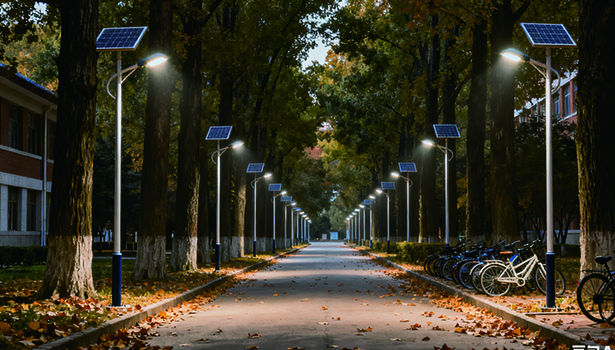
Commercial and Campus Settings
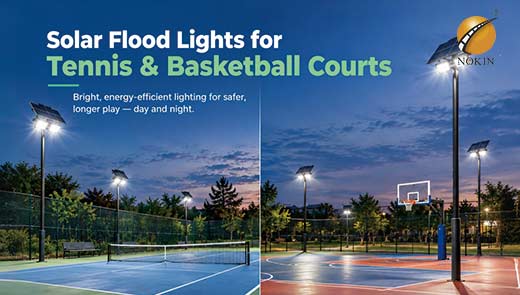
Commercial complexes and university campuses demand intelligent, flexible outdoor lighting solutions—areas where solar outdoor lighting systems deliver precise customization. On university campuses, solar street lights can implement differentiated lighting modes for academic buildings, sports fields, and dormitory areas. Sports fields maintain high brightness during nighttime activities, while dormitory zones automatically dim late at night, balancing safety and energy efficiency.
Commercial complexes utilize smart, interconnected solar lighting systems to remotely adjust brightness based on foot traffic and event schedules. This provides a secure nighttime environment for businesses and visitors while reducing operational costs.
Residential Areas
In residential settings, solar outdoor lighting offers aesthetically pleasing and practical solutions for neighborhoods and private gardens. Solar street lights in residential communities can integrate with security systems to enhance nighttime safety. Small solar lights for private gardens come in diverse designs, combining decorative appeal with illumination functionality, aligning with smart home trends.
Solar outdoor lighting solutions have become the mainstream choice in the outdoor lighting sector due to their mature core technology, significant economic advantages, and broad adaptability to various scenarios. For users with outdoor lighting needs, it is recommended to prioritize solar street lights featuring high-quality components and comprehensive after-sales support, tailored to specific usage scenarios.