Recommendations for Protecting Solar Street Lights During the Rainy Season and Typhoon Season
Apr 01, 2026
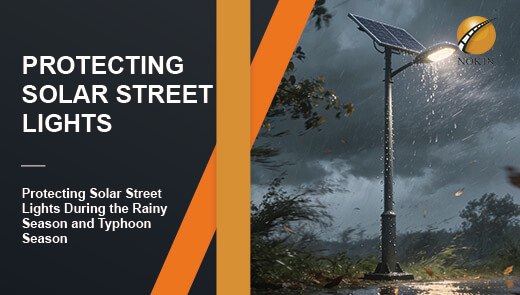
As a key choice for outdoor lighting, solar street lights are widely used in various settings—including municipal roads, rural lanes, and scenic parks—thanks to their energy-saving, environmentally friendly nature and the fact that they require no cabling. However, during the rainy and typhoon seasons, frequent rainfall, strong winds and adverse weather conditions pose multiple challenges to the equipment.
At best, this results in reduced brightness and flickering faults; at worst, it leads to component damage, electrical accidents and even a shortened service life. Drawing on practical experience in outdoor operations and maintenance, this article provides a detailed analysis of the key risks during the rainy and typhoon seasons, offering actionable protection and maintenance solutions. These are designed to assist operations and maintenance personnel and procurement teams in managing the system scientifically, ensuring the stable and efficient operation of street lights whilst avoiding safety hazards and unnecessary losses.
Risks to Solar Street Lights in Rainy and Typhoon Seasons
Risk of Water Ingress
Persistent rainfall during the rainy season and torrential downpours brought by typhoons pose the primary safety threats to solar street lights. The core issue centres on various electrical faults caused by ‘water ingress’, which are often concealed and difficult to diagnose; if not addressed promptly, they can easily lead to safety incidents. Rainwater seeping into the controller will directly cause a short circuit. As the controller acts as the ‘command centre’ of the solar street light, its failure will result in the charging and discharging systems ceasing to function, causing the street light to shut down.
Moisture in the lamp body causes the brightness of the LED light source to diminish and the light output to become unstable; in severe cases, the chips may be damaged, rendering the light inoperable. Exposed or incorrectly connected wiring is prone to electrical leakage, short circuits and fires when soaked in rainwater, whilst poorly sealed joints further increase the risk of water ingress. Water entering the battery compartment can cause battery corrosion, swelling and leakage, not only rendering the energy storage function useless but also causing secondary damage to the controller. Once ageing sealing tape fails, rainwater can penetrate the circuit board, causing corrosion of the wiring and loosening of connections, ultimately resulting in the solar street light flickering or failing to illuminate at all.
Insufficient sunlight
The rainy season is characterised by frequent overcast and rainy weather, whilst typhoons bring heavy cloud cover, severely obstructing sunlight. This causes a sharp drop in the solar street light’s photovoltaic conversion efficiency, thereby affecting battery charging performance and, over time, accelerating battery ageing. Data on efficiency drops under varying weather conditions clearly illustrates the impact of sunlight: under light cloud cover, efficiency decreases by 20–30%, resulting in reduced battery charging efficiency and slightly shorter illumination times.
Under heavy cloud cover, efficiency drops by 30–50%, leading to insufficient battery charging and potentially reduced brightness at night. During heavy rain or thick cloud cover, efficiency drops by 50–80 per cent; the battery cannot be fully charged, and prolonged undercharging accelerates ageing, potentially leading to the lights failing to illuminate at night.
When the battery remains in a state of undercharging for extended periods, the internal cells degrade more rapidly, significantly shortening the service life. Traditional lead-acid batteries are particularly affected by this; even lithium-ion batteries, despite their superior performance, require adequate protection in low-light environments.
|
Weather Condition |
Efficiency Reduction Range |
Specific Impact |
|
Lightly Cloudy |
20%–30% |
Battery charging efficiency decreases, lighting duration slightly shortened |
|
Heavily Cloudy |
30%–50% |
Insufficient battery charging, nighttime brightness may decrease |
|
Heavy Rain / Thick Cloud Cover |
50%–80% |
Battery cannot be fully charged, long-term power deficit accelerates aging, and may even fail to light up at night |
Strong winds and flying debris
The strong winds and accompanying flying debris associated with typhoon conditions can cause direct impact on the structure of solar street lights, posing a significant and highly destructive risk. Whilst most products currently available on the market are designed to withstand wind speeds of over 150 miles per hour, serious damage can still occur if protection is inadequate. Strong winds may tear solar panels from their mountings, turning them into projectiles that can damage surrounding buildings and vehicles, or even cause injury or loss of life.
Flying branches and stones can strike lamp posts and brackets, causing bending and deformation; if the installation is not secure, this may lead to the lamp post tilting or collapsing. Lampshades and LED heads are prone to cracking and detaching upon impact with debris, further increasing the risk of water ingress and triggering a chain reaction of structural damage, water ingress and electrical faults.
Core Protective Measures for Solar Street Lights (Specifically for the Rainy Season and Typhoon Season)
Waterproofing
Waterproofing is central to the protection of solar street lights during the rainy season. A comprehensive waterproof barrier must be established across three dimensions—product selection, sealing and reinforcement, and installation optimisation—to prevent rainwater from penetrating the equipment. When procuring, pay close attention to the IP protection rating: IP65 is suitable for areas with little rainfall and no typhoons; IP66 is suitable for rainy coastal and suburban areas; IP67 can cope with environments prone to frequent flooding; and IP68 is suitable for extremely humid rainforest regions.
Prioritise solar street lights where the controller, lamp body and battery compartment all meet high waterproofing standards, combined with corrosion-resistant aluminium casings, marine-grade silicone seals and tempered glass lenses. For sealing, use high-quality tape and sealant to reinforce critical areas such as lamp body joints, cable connections and battery compartment lids. Inspect these every 3–6 months, carry out a comprehensive check before the rainy season, and replace any aged or cracked components immediately. During installation, route cables away from low-lying areas and angle the lamp body slightly to facilitate drainage. Ensure drainage holes are provided at the base of the lamp post and the battery compartment, whilst also clearing surrounding drainage channels and floor drains to prevent rainwater accumulation and waterlogging.
|
IP Protection Rating |
Dust Protection |
Water Protection |
Applicable Scenario |
|
IP65 |
Dust protected |
Low-pressure water jets |
General outdoor areas, less rainfall, no typhoons |
|
IP66 |
Completely dust-tight |
Powerful water jets |
Coastal suburbs with frequent rain and typhoons |
|
IP67 |
Completely dust-tight |
Immersion up to 1 meter for 30 minutes |
Flood-prone areas, frequent heavy rain |
|
IP68 |
Completely dust-tight |
Continuous immersion |
Extremely humid areas with concentrated heavy rainfall |
Structural Reinforcement
To withstand the impact of strong typhoon winds and flying debris, the wind resistance of solar street lights is enhanced through both structural design and installation reinforcement, thereby preventing structural damage. Heavy-duty lamp posts and brackets made of galvanised steel or aluminium are selected, paired with hurricane-grade hardware, to ensure that load-bearing capacity and wind resistance are commensurate with local typhoon intensities. During installation, all fixing bolts must be tightened to ensure a secure, rattle-free fit.
Solar panel brackets require additional reinforcement to prevent them from being torn apart by strong winds. The installation angle should be adjusted appropriately to balance sunlight exposure with wind resistance, reducing the wind-exposed surface area to minimise aerodynamic drag. Prior to the typhoon season, the surrounding environment must be thoroughly cleared: prune branches and shrubs, and remove debris such as billboards and plastic waste to prevent these objects from colliding with the lamp body, solar panels and lamp posts during a typhoon, thereby reducing the burden on the structural protection system from an environmental perspective.
Power Supply and Battery Management
As the ‘energy heart’ of solar street lights, batteries require special protection in damp and low-light environments to ensure a stable power supply. Prioritise the use of outdoor-specific waterproof batteries. Lithium iron phosphate (LiFePO₄) batteries offer superior water resistance, a cycle life of 1,000–2,000 cycles, a monthly self-discharge rate of 1%–2%, and retain over 70% of their capacity at -20°C, far outperforming lead-acid batteries, which have poor water resistance, a lifespan of only 1–2 years, and a sharp drop in capacity at low temperatures.
Regularly inspect the battery compartment; if moisture or corrosion is detected, wipe it dry immediately and apply anti-corrosion treatment to the terminals. Replace batteries immediately if they show signs of swelling, leakage or severe corrosion to prevent damage to other components. For power management, select an MPPT charge controller, which offers a maximum efficiency of 97.96%, enhancing charging performance in low-light conditions. During the rainy season, appropriately shorten the discharge duration; during prolonged periods of overcast weather, activate energy-saving mode to reduce brightness, thereby avoiding overcharging or over-discharging of the batteries and extending their overall lifespan.
|
Performance Indicator |
Lithium Battery (LiFePO4) |
Lead-Acid Battery |
|
Water Resistance |
Better, suitable for outdoor humid environments |
Poor, prone to moisture corrosion |
|
Cycle Life |
1000–2000 cycles, 3–8 years |
300–500 cycles, 1–2 years |
|
Self-Discharge Rate |
Low (1%–2% / month) |
High (5%–10% / month) |
|
Environmental Adaptability |
Strong, capacity ≥70% at -20°C |
Weak, capacity drops 50% at -10°C |
Smart Control
Leveraging smart technology to cope with the complex conditions of the rainy and typhoon seasons, this system reduces operational and maintenance costs whilst ensuring stable operation. Solar street lights equipped with smart controllers can monitor charging, discharging and lamp status in real time, automatically adjusting LED brightness based on battery levels to prevent over-discharge. The system also features early warning alerts for short circuits and water ingress, facilitating rapid response.
In regions with prolonged rainfall and frequent typhoons, equipping the system with a backup power supply prevents lights from switching off due to power depletion during prolonged periods of overcast weather. By establishing a remote monitoring system, maintenance personnel can view the status via a backend interface without the need for on-site inspections, significantly improving maintenance efficiency in remote areas and enabling early detection and resolution of faults.
Practical Maintenance Guide for Solar Street Lights During the Rainy and Typhoon Seasons
Preventive Maintenance
The core of preventive maintenance lies in identifying potential hazards and reinforcing protective measures to prevent faults caused by adverse weather conditions. Thoroughly clean the solar panels using a soft-bristled brush and mild soapy water to remove dust, leaves and bird droppings, taking care to avoid scratching the glass with hard objects. Check for surface cracks or damage and replace panels promptly. Tighten mounting bracket bolts and trim surrounding branches to prevent obstruction or impact.
Seals and Wiring: Inspect all joints, connections and compartment seals one by one; replace aged components and reapply sealant; repair exposed or damaged wiring; clear dust and insects from inside the lamp body; ensure drainage holes are unobstructed. Batteries and Controllers: Open the compartment for inspection; polish corroded terminals and apply anti-corrosion agent; replace damaged batteries and faulty controllers; ensure wiring connections are secure. Structure and Drainage: Tighten the bolts on the lamp post brackets, straighten any leaning lamp posts, and clear surrounding drainage channels and bottom drainage holes to prevent waterlogging.
Ongoing Maintenance
During severe weather, focus on dynamic monitoring to prevent the escalation of faults and safety incidents. Use remote monitoring to view real-time operational status, paying particular attention to battery levels and lighting status, and record any anomalies for resolution once the weather improves. If wind speeds become excessive prior to a typhoon, temporarily disconnect the power supply to prevent short circuits and component damage. Outdoor inspections are prohibited during heavy rain to avoid the risks of electric shock and falls from height.
If obvious faults such as water ingress into the lamp body or leaks from the battery compartment are detected, do not attempt to dismantle the unit yourself. Wait until the weather has fully improved and safety is assured before carrying out repairs to ensure the safety of personnel and equipment.
Post-Event Maintenance
Conduct a comprehensive inspection after severe weather has passed to swiftly rectify faults and restore normal operation. Check each lamp post, bracket and solar panel individually; correct any deformation, secure loose parts, replace damaged or detached components, remove water accumulation from the lamp body and battery compartment, dry internal components and replace seals. Inspect for damaged wiring, short circuits and corroded terminals; repair or replace these promptly to eliminate electrical hazards.
Clean rain marks and mud from the solar panels to restore photovoltaic conversion efficiency. Calibrate the controller and battery charge/discharge functions, optimise parameters, and test the smart monitoring system to ensure it is functioning correctly. At the same time, establish a long-term, regular maintenance mechanism comprising weekly routine inspections, comprehensive checks every 3–6 months, seasonal pre- and post-season specialised maintenance, and an annual major overhaul to inspect core components, thereby ensuring long-term stable operation.
|
Maintenance Type |
Maintenance Frequency |
Maintenance Content |
|
Routine Inspection |
Once per week |
Check lighting status and damage, remove simple hazards |
|
Regular Inspection |
Every 3–6 months |
Check sealing, wiring, and battery; clean panel; tighten bolts; replace aging parts |
|
Seasonal Maintenance |
Once before and after each season |
Inspect waterproof and wind resistance, optimize parameters, repair minor damage |
|
Annual Overhaul |
Once per year |
Test battery and controller, replace aging components, optimize protection |
The harsh conditions of the rainy and typhoon seasons pose a comprehensive test of solar street lights’ waterproofing, wind resistance and operational endurance. Only through proactive protection, standardised maintenance and timely repairs can risks such as water ingress, reduced efficiency and structural damage be effectively mitigated, thereby ensuring stable lighting and operational safety.
By selecting products with high protection ratings, enhancing sealing and structural reinforcement, and implementing scientific management of batteries and intelligent control systems—combined with phased, standardised maintenance procedures—it is possible to significantly reduce the incidence of faults, effectively extend the service life of solar street lights, lower overall operational and maintenance costs, and provide a more reliable and enduring solution for outdoor lighting.