How to Choose a 100W Solar Street Light? A Practical Guide
Mar 23, 2026
As the concept of energy conservation and environmental protection gains widespread acceptance, solar street lights have become widely adopted in various outdoor settings due to their advantages, such as no need for wiring, low operating costs, and eco-friendliness. Among these, 100W solar street lights, with their moderate brightness and strong adaptability, have become the top choice for residential communities, rural roads, parks, parking lots, industrial parks, and other similar settings.
However, the quality of 100W solar street lights currently on the market varies greatly, and many users often end up purchasing substandard products with short lifespans, insufficient brightness, and unstable charging capabilities. This article will provide a clear, practical, and actionable guide to selecting 100W solar street lights, covering foundational knowledge, key selection criteria, step-by-step procedures, and common questions. It aims to help you avoid pitfalls and choose a cost-effective product.
What Is a 100W Solar Street Light?
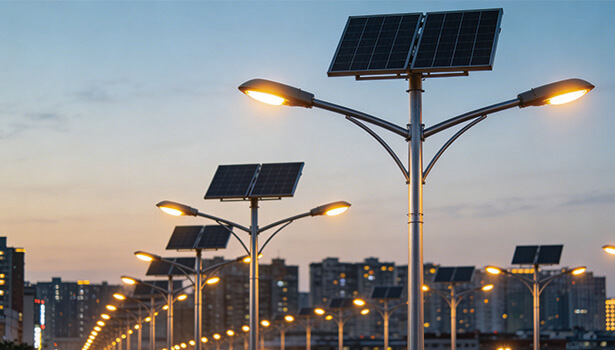
A 100W solar street light refers to an integrated solar lighting system with an LED light source rated at 100W. It primarily relies on solar panels to convert sunlight into electricity, which is then stored in a battery. This allows for automatic nighttime illumination without the need for a connection to the grid, offering energy efficiency, environmental friendliness, and easy installation.
Core Components
A complete 100W solar street light consists of four core components: the solar panel, which converts light energy into electrical energy; the battery, which stores energy to ensure continuous lighting at night and on cloudy or rainy days; the LED light source, which provides illumination with a rated power of 100W; and the smart controller, which manages charging and discharging, handles light- and time-controlled operations, and provides various circuit protection functions. The coordinated operation of these components determines the overall performance and service life of the street light.
Key Selection Criteria for 100W Solar Street Lights
Solar Panels
A 100W LED light source requires a 150–200W solar panel to ensure sufficient charging capacity, meeting normal lighting needs even on cloudy or rainy days. If the panel power is less than 150W, the battery may not charge fully during the day, resulting in short illumination times at night. If the panel exceeds 200W, it will increase costs and result in a waste of resources.
In terms of efficiency, prioritize monocrystalline silicon panels with a conversion efficiency of ≥22%, which are suitable for areas with insufficient sunlight. In areas with ample sunlight, polycrystalline silicon panels can be selected to reduce costs. Regarding materials, the panel surface should use tempered glass, which offers advantages such as impact resistance, scratch resistance, and good light transmission. The frame should be made of aluminum alloy, which is corrosion-resistant and oxidation-resistant, effectively extending the service life.
Battery
Battery capacity should be determined based on daily lighting duration. For a 100W solar street light, a capacity of 100Ah–200Ah is recommended to ensure continuous lighting for 3–5 consecutive days of cloudy or rainy weather. For example, with 10 hours of daily lighting, a 150Ah lithium-ion battery can meet the power requirements for 4 days of cloudy or rainy weather, making it suitable for most regions.
Lithium iron phosphate batteries are the preferred choice. Although this type of battery is relatively expensive, it has a service life of 8–10 years and offers the advantages of low-temperature resistance and environmental friendliness, making it more cost-effective in the long run. If your budget is limited and the installation site has ample sunlight and no cold weather, lead-acid batteries can be selected, but you should be prepared for regular replacements.
High-quality batteries should also feature overcharge, over-discharge, and short-circuit protection. These safeguards effectively prevent battery damage caused by excessive charging or discharging, thereby extending the battery’s actual service life and reducing future replacement and maintenance costs.
LED Light Source
|
Inspection Item |
Premium Standard |
Poor Performance |
|
Luminous Flux |
≥12000 lm, sufficient brightness, uniform illumination |
<10000 lm, insufficient brightness, uneven lighting |
|
Color Temperature |
4000K–6000K (warm white for residential areas, cool white for main roads) |
Large color temperature deviation, harsh or dim lighting |
|
Service Life |
≥50,000 hours, no frequent replacement required |
<30,000 hours, replacement needed after 1–2 years |
|
Color Rendering Index (CRI) |
≥80, accurate color rendering, suitable for public areas |
<70, color distortion, affects visual experience |
Controllers
A high-quality controller must combine basic functions, energy-saving features, and protective functions. Basic functions include light-sensing capabilities—such as automatic activation at dusk and deactivation at dawn—as well as time-based controls for adjusting lighting duration. Energy-saving features include intelligent dimming that automatically reduces brightness during late-night hours, while protective functions cover overcharge, over-discharge, and reverse connection protection. These multiple functions ensure the stable operation of street lights and enhance overall user convenience.
Housing and Installation
Outdoor environments are complex and variable, so street light housings must be corrosion-resistant, rust-proof, and provide efficient heat dissipation. Aluminum alloy or die-cast aluminum materials should be prioritized, while plastic housings should be avoided whenever possible, as these materials are prone to aging and damage and cannot withstand long-term outdoor use. The IP rating is a key indicator of a street light’s water and dust resistance. A 100W solar street light must meet an IP65 rating or higher. This rating completely prevents dust ingress and withstands low-pressure water jets, effectively preventing short circuits and damage to internal components caused by rain or dust intrusion.
Prioritize products with a simple structure and easy installation that support standard lamp post mounting and are compatible with standard lamp post diameters of 60–114 mm. Installation can be completed without a professional construction team, reducing installation costs, while the simple structure also facilitates routine maintenance and troubleshooting.
After-Sales Service and Certifications
High-quality 100W solar street lights must hold international certifications such as CE, RoHS, and FCC. These certifications directly verify that the product meets international standards. When purchasing, avoid “three-no” products—those without certification, brand, or after-sales service—to eliminate potential quality risks.
Prioritize brands with comprehensive after-sales support systems. Core components such as solar panels, batteries, and LED light sources should come with a 2–5-year warranty, and the brand should have a dedicated after-sales team capable of promptly addressing installation and malfunction issues. Products without after-sales support cannot be repaired if they fail and must be replaced entirely, which significantly increases long-term operating costs.
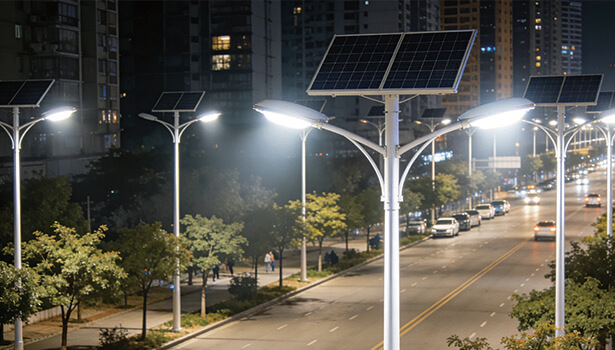
Practical Purchasing Guide: 5 Steps to Selecting the Right 100W Solar Street Light
Step 1: Identify the Application Scenario
First, clearly define the specific installation environment for the street light, focusing on three key factors: road width, daily lighting duration, and local climate conditions. A 100W solar street light is suitable for roads 6–12 meters wide and can meet daily lighting needs of 8–12 hours. Only after these details are confirmed can you accurately match component specifications, avoiding issues of over- or under-specification.
Step 2: Identify Core Requirements
Based on the installation scenario, identify your core requirements. For example, determine battery capacity based on whether continuous lighting is needed during cloudy or rainy days; determine the controller type based on whether smart dimming is required; and select core component materials based on whether long-term service life is a priority. Once core requirements are clear, you can quickly eliminate products that do not meet these criteria, effectively narrowing down your options.
Step 3: Screen Core Components
Select solar panels with a power rating of 150–200W. Choose monocrystalline silicon for areas with insufficient sunlight and polycrystalline silicon for areas with ample sunlight. Select a battery capacity of 100Ah–200Ah, prioritizing lithium iron phosphate (LiFePO₄) batteries; if budget is limited, lead-acid batteries may be selected. LED light sources must have a luminous flux of ≥12,000 lm and a lifespan of ≥50,000 hours; controllers must feature light-sensing, time-controlled, and overcharge/over-discharge protection functions.
Step 4: Compare Product Details
After screening products that meet the core component requirements, further compare detailed specifications, including whether the housing material is aluminum alloy or die-cast aluminum, whether the IP protection rating is ≥IP65, ease of installation, and whether the product holds valid international certifications. Product details directly determine user experience and service life; do not overlook critical details due to negligence.
Step 5: Verify After-Sales Service and Reputation
Finally, verify the product’s after-sales service offerings, focusing on the warranty period for core components and the speed of after-sales response. Simultaneously, review genuine user reviews to avoid products with poor reputations or inadequate after-sales support. Prioritize brands with a strong market reputation and a comprehensive after-sales system; even if the price is slightly higher, this ensures long-term, stable operation and minimizes future complications.
Frequently Asked Questions (FAQ)
Q1: How long can a 100W solar street light operate continuously during cloudy or rainy weather?
The runtime of a 100W solar street light during cloudy or rainy weather primarily depends on the battery capacity and local light conditions during such weather. A standard 100Ah–200Ah battery typically provides 8–10 hours of daily lighting and can maintain normal illumination for 3–5 consecutive days of cloudy or rainy weather. If your area experiences frequent cloudy or rainy weather, we recommend selecting a high-capacity 200Ah battery to ensure the runtime meets your usage needs.
Q2: For a 100W solar street light, which is better: monocrystalline or polycrystalline panels?
There is no definitive superiority between monocrystalline and polycrystalline panels; the choice should be based on local sunlight conditions. In areas with insufficient sunlight and frequent cloudy or rainy weather—such as the rainy regions of southern China—monocrystalline panels are the preferred choice due to their higher conversion efficiency and faster charging speed. In areas with ample sunlight and stable climates—such as the sunnier regions of northern China—polycrystalline panels are a suitable option, as they are more affordable and offer better overall value for money.
Q3: Which is more suitable for a 100W solar street light: lithium-ion batteries or lead-acid batteries?
From a long-term usage perspective, lithium iron phosphate (LiFePO4) batteries are more suitable for 100W solar street lights. These batteries have a lifespan of 8–10 years without the need for frequent replacement. They offer advantages such as low-temperature tolerance and being environmentally friendly and pollution-free, making them adaptable to a wider range of regional environments. Additionally, they are compact and lightweight, allowing for easier installation. If your budget is limited and the installation site has ample sunlight with no low-temperature issues, lead-acid batteries can be chosen, but you should plan for replacement cycles in advance.
Q4: How can I determine if the LED light source in a 100W solar street light is high-quality?
To assess the quality of an LED light source, focus on three key parameters: a luminous flux of ≥12,000 lm, a lifespan of ≥50,000 hours, and a Color Rendering Index (CRI) of ≥80. Additionally, consider the LED brand; high-quality brands offer uniform brightness and low heat generation, further ensuring longevity and optimal lighting performance.
Q5: What should be considered when installing a 100W solar street light?
There are four key points to consider when installing a 100W solar street light: the pole height should be between 6 and 8 meters to ensure the light covers the entire road; the solar panel must be installed facing due south, with no trees or buildings obstructing sunlight; follow the manual strictly when wiring to avoid damaging components by reversing the positive and negative terminals; and regularly clean dust and debris from the solar panel surface to maintain stable charging efficiency.
The key principles for selecting a 100W solar street light are matching the application scenario, thoroughly verifying core components, and prioritizing after-sales service—there is no need to blindly pursue well-known brands or extremely low prices. By strictly adhering to the core selection criteria outlined in this article and following the five-step practical selection method, you can choose a cost-effective product that meets your specific needs. A high-quality 100W solar street light not only meets basic outdoor lighting needs but also reduces electricity bills and maintenance costs, delivering true long-term value from a single investment.