How Solar LED Pathway Lighting Improves Pedestrian Safety
May 22, 2026
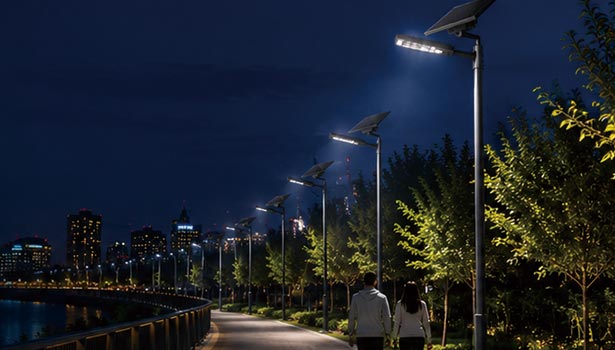
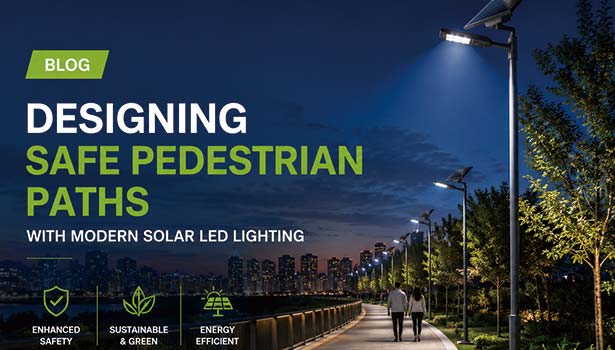
Nighttime walking safety is a core necessity in modern cities, parks, campuses, and communities, and solar LED street lighting has become the core solution for optimizing pedestrian paths and enhancing pathway safety.
As global low-carbon city construction progresses, the high energy consumption and high construction costs of traditional mains power lighting have become increasingly evident. Modern solar pathway lighting, which is both safe, energy-efficient, and intelligent, has completely transformed the nighttime lighting system in outdoor walking scenarios. It not only solves the basic lighting problem but also upgrades the nighttime walking environment from multiple dimensions such as visual experience, safety protection, and sustainable development.
Why Safe Pedestrian Pathway Lighting Is More Important Than Ever
Why Sidewalk Lighting Matters for Public Safety
Sidewalk lighting is a fundamental part of urban public safety. Nowadays, the public's demand for the comfort and safety of nighttime travel is continuously increasing. Sidewalk lighting is no longer merely an "auxiliary lighting" but an important component of the urban public safety system.
How Poor Pathway Lighting Causes Nighttime Accidents
A large number of outdoor safety studies have shown that accidents caused by nighttime pedestrians falling, colliding, and having blocked vision, over 90% are directly related to insufficient sidewalk lighting, uneven illumination, and glare interference. Whether it is urban greenways, community sidewalks, scenic trails, or campus paths, complete nighttime lighting is the foundation for ensuring pedestrian safety.
Core Benefits of Solar LED Pathway Lighting
At the same time, the popularization of the low-carbon and environmentally friendly urban construction concept has made solar LED lighting the mainstream trend for sidewalk lighting. Different from traditional lighting, modern sidewalk lighting breaks through the limitation of "simply enhancing brightness", focusing on four core values:
Improved Pedestrian Safety
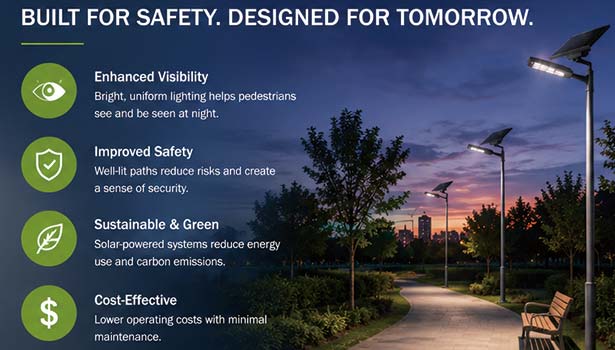
Through uniform, stable and non-blank area lighting effects, completely eliminate dark corners on the walkway, allowing pedestrians to clearly identify the road conditions, steps, obstacles and surrounding environment. This effectively avoids accidents such as falls, collisions and getting lost during the night, while the bright and standardized nighttime environment can deter outdoor safety hazards and provide comprehensive protection for pedestrian travel safety.
Uniform Pathway Illumination
Abandon the traditional lighting bead-like bright spots and the defect of excessive contrast between light and dark, relying on scientific light distribution and reasonable layout, achieve uniform light coverage throughout the walkway. There are no high-intensity dazzling areas or dark blind spots throughout the process, the light output is stable, and there will be no sudden changes in brightness. From the optical perspective, it completely eliminates the problem of misjudgment of road conditions.
Low-Glare Visual Comfort
Adopt low-glare, full-cut optical design, combined with 2700K-4000K comfortable color temperature, the light is soft and conforms to human visual habits. It effectively reduces visual fatigue caused by strong light direct exposure and alternating light and shadow, is suitable for the elderly, children, and people with sensitive vision, and takes into account the visual comfort and eye health during long walks.
Smart Energy-Saving Management
Equipped with intelligent systems such as human body sensing, light sensing dimming, and timed start/stop, it can automatically adjust the brightness and working state of the lights according to the intensity of environmental light and the frequency of pedestrian passage. During unmanned periods, it operates in low-power standby mode, and during certain periods, it is highly illuminated. While ensuring lighting safety, it significantly reduces energy consumption, and does not require manual control, adapting to the operation requirements of modern smart outdoor scenarios.
Key Safety Standards for Outdoor Pathway Lighting
Why Uniform Lighting Is More Important Than Brightness
Many people have a misconception: the higher the lighting brightness, the safer the pathway. In fact, brightness does not equal safety; the uniformity of illumination is the core indicator for measuring the safety of pathway lighting.
Overemphasizing single-point high brightness will create obvious dark blind spots and strong contrast between light and darkness, resulting in the "String of Pearls" effect. This visual contrast difference is very likely to cause visual fatigue in pedestrians and even misjudgment of the road conditions, leading to safety hazards.
Recommended Lux Standards for Pathway Lighting
Combined with international outdoor lighting industry standards, the illuminance specifications for different walking scenarios are as follows, which can precisely adapt to various pathway safety needs:
|
pathway Scenario Type |
Recommended Illuminance (fc) |
Recommended Illuminance (lux) |
|
Ordinary leisure pathways (community paths, park minor pathways) |
0.5–1.0 fc |
5–10 lux |
|
High-activity pathways (campus main roads, commercial pathways, scenic area main paths) |
≥1.0 fc |
≥10 lux |
How Low-Glare Lighting Improves Nighttime Safety
Unreasonable high-brightness lighting will reduce the safety of pedestrians' nighttime travel. Harsh glare will briefly block pedestrians' vision, preventing them from clearly identifying the road conditions, obstacles, and approaching pedestrians, significantly increasing the risk of accidents.
Among them, women, the elderly, and those with poor vision are highly sensitive to glare and are the main affected groups. Therefore, the core requirement of modern safe walking path lighting is to strictly control glare interference.
Benefits of Full Cutoff Pathway Lights
The mainstream solution is to use Full Cutoff lights. These lights can precisely control the angle of light projection, prevent light overflow and upward overflow, and avoid direct exposure to the eyes. The low-glare design not only improves walking comfort but also aligns with the Dark Sky protection concept of low-carbon cities and reduces light pollution.
Why Solar LED Pathway Lighting Is the Best Choice
No-Wiring Solar Pathway Lighting for Flexible Installation
Most outdoor walking paths are located in remote areas, such as park greenways, seaside trails, scenic pathways, and suburban bicycle paths, which are generally far from municipal power lines. Traditional mains-powered lighting requires trenching and wiring, which leads to long construction periods, large engineering volumes, and high overall construction costs. Moreover, the maintenance and repair of the lines in the future are extremely difficult.
Solar LED pathway lights can operate independently and do not rely on the mains power grid. They have no wiring requirements. Installation is not restricted by the terrain or lines, and they are suitable for various outdoor walking scenarios. Whether it is for new pathway lighting renovation or upgrading of old pathways, they can be quickly implemented.
Energy-Efficient Solar Pathway Lighting
In terms of long-term operating costs and environmental benefits, solar pathway lighting outperforms traditional lighting equipment and is the core choice for sustainable urban construction.
Compared with traditional halogen lights, LED light sources reduce energy consumption by about 80%. Combined with a solar power supply system, there is no electricity cost from the mains power grid throughout the process, completely eliminating long-term electricity costs.
Modern solar street lights with intelligent dimming systems can automatically adjust brightness according to environmental light and pedestrian traffic. The overall energy consumption can be further reduced by 70%-85%. At the same time, the equipment has no carbon emissions or grid losses, perfectly meeting the standards of green and low-carbon outdoor construction, and has extremely high long-term usage cost-effectiveness.
Best Solar Pathway Lights for Different Outdoor Applications
Solar Bollard Lights for Garden Pathways
Solar lawn street lights are the mainstream choice for lightweight pathway lighting, emphasizing both landscape aesthetics and practicality, and suitable for leisure lightweight walking scenarios.
The core application scenarios include garden pathways, community leisure paths, residential area landscape pathways, and small garden passages. The industry recommends an installation height of 450mm to 1100mm, which is in line with the human body's night vision height.
This light has very prominent advantages. It has a simple and elegant appearance and can be integrated into various garden landscapes; it comes with a glare prevention design, with soft and non-irritating light; the point distribution is clear, and the lighting guidance is strong, which can precisely outline the path direction of the pathway, taking into account both safety lighting and landscape decoration effects.
Pole-Mounted Solar Street Lights for Public Walkways
The pole-mounted solar street lights are high-power and widely-covered lighting equipment for pathways, suitable for large-traffic and long-distance public walking paths.
The main application scenarios include the main roads of campuses, the main pathways of large parks, commercial pedestrian streets, and urban public greenways. The standard height of the industry-standard light poles is 5-15 meters, which can be adapted to different widths of pathways.
For narrow and long pathways, the Type II light distribution mode is preferred. The light spreads horizontally evenly without any lighting dead zones, enabling the complete lighting of wide pathways at once, and meeting the frequent pedestrian passage requirements in public areas.
Smart Motion Sensor Solar Pathway Lights
The intelligent sensing model is the core lighting solution for modern smart pathways and smart city construction, focusing on dual upgrades of energy conservation and safety.
The equipment is equipped with high-precision human sensing sensors, enabling intelligent start-stop and dimming. When there is no pedestrian traffic, the equipment maintains low brightness in standby mode, significantly reducing energy consumption and extending battery life; when pedestrians or vehicles approach, it automatically switches to high-brightness mode to ensure clear visibility.
This intelligent operation mode not only solves the problems of traditional lighting that consumes high power throughout the night and has insufficient battery life, but also enhances the safety of nighttime walking through changes in lighting to alert pedestrians of the road conditions, further strengthening the sense of security during nighttime walking.
How to Design Safe Solar Pathway Lighting
Proper Solar Pathway Light Spacing
The spacing of lights directly determines the uniformity of lighting on the pathway and is a key aspect of lighting design. Inappropriate spacing can directly undermine the safety of the pathway.
For low-position solar path lights and lawn street lights, the industry recommends a standard installation spacing of 1.5-3 meters. At the same time, prefer staggered layout over traditional single-side layout.
Why Staggered Layout Improves Lighting Uniformity
The staggered layout allows the lights to cross-cover the entire pathway, completely avoiding the problem of single-sided over-brightness and single-sided darkness caused by single-sided lighting, eliminating the poor lighting effect of "bright spots + dark areas", and ensuring uniform and stable lighting throughout the journey.
Best Color Temperature for Pedestrian Lighting
Color temperature (CCT) directly affects the comfort of pedestrians' night vision. Inappropriate color temperature can cause visual fatigue and blurred vision, laying the foundation for safety hazards.
The recommended color temperature range for outdoor walking path lighting is 2700K-4000K, covering warm white light and natural white light. This range of light is soft and natural, aligning with human visual habits, and is less likely to cause fatigue during long walks.
Try to avoid using lights with a color temperature of 6000K or above. High color temperatures are harsh and cold, causing visual fatigue easily at night and intensifying glare effects, reducing walking safety.
Recommended IP Ratings for Outdoor Solar Lights
Outdoor pathway lights are exposed to natural environments for a long time, enduring rainstorms, sandstorms, humidity, dust erosion, and salt spray corrosion for seaside pathways. Therefore, the IP protection level is a core indicator of the durability of the equipment.
Industry safety design standards clearly state that outdoor solar pathway lighting should use a protection level of IP65 or above, with preferred specifications of IP65/IP67/IP68.
High protection levels can effectively prevent dust, water, moisture, and corrosion, adapting to various complex outdoor environments, avoiding equipment water ingress, dust accumulation, and faults, ensuring stable lighting throughout the year and all day long, and reducing the cost of later fault repair.
Common Solar Pathway Lighting Mistakes to Avoid
Many pathway lighting projects, after completion, still have problems such as poor lighting, insecurity, short battery life, and easy damage. Most of these problems stem from common design and selection mistakes. The core pitfalls to avoid are as follows:
Excessive Light Spacing
To save equipment costs, blindly increasing the spacing of lights will directly form large areas of lighting blind spots, with severe lighting discontinuities, completely losing the safety guarantee of the pathway at night.
Blindly Using High Brightness Lights
Ignoring uniformity and glare control, blindly choosing high-brightness lights, causing glaring light and excessive contrast, instead reducing the clarity of pedestrians' vision and triggering safety hazards.
Ignoring Glare Control
Choosing ordinary lights without cut-off design, allowing light to spread freely, directly shining on the eyes, is extremely unfriendly to the elderly, children, and people with sensitive vision, going against the original intention of safe lighting.
Solar Panels Blocked by Trees
When designing and installing, not avoiding shade from trees and buildings, resulting in insufficient charging of solar panels, reduced battery life, frequent lighting outages at night, and insufficient brightness.
Choosing Low-Quality Batteries and Materials
Only considering the lighting effect on sunny days, without reserving redundancy for rainy days and weak light environments, the equipment cannot work properly in long-term rainy weather. Cheap and low-quality batteries have a rapid decline in performance and poor power storage capacity. Poor-quality casings are prone to aging, cracking, and rusting, significantly shortening the lifespan of the equipment and increasing the maintenance costs in the long run.
Future Trends in Smart Solar Pathway Lighting
AI-Based Intelligent Dimming Systems
In the future, lighting will break away from the fixed dimming mode and rely on AI algorithms to real-time identify environmental light, weather changes, and pedestrian density, dynamically and precisely adjust the brightness of the lights, achieving the ultimate balance of safety and energy conservation.
Smart City Integration
Solar path lighting fixtures will no longer be simple lighting devices. They can be connected to the smart city system and link with security monitoring, environmental monitoring, and pedestrian flow statistics, becoming the basic terminal equipment of smart municipal services.
Low Light Pollution Design
With the popularization of the concept of dark night protection, low light pollution designs with full cutoff, low glare, and no external light spill will become the mandatory standard for all outdoor path lighting.
Advanced Solar and Battery Technology
High-efficiency monocrystalline silicon solar panels, large-capacity long-life lithium batteries are gradually becoming widespread. The charging efficiency, power storage capacity, and lifespan of the equipment have been comprehensively improved, adapting to more demanding outdoor environments.
Pedestrian Safety Monitoring Systems
The new type of intelligent path lighting will be equipped with pedestrian collision prevention, abnormal stay, and fall detection functions, linked with the background for early warning, providing comprehensive protection for nighttime walking safety.
Conclusion
Modern solar pedestrian lighting has long gone beyond its simple lighting function. It is a core infrastructure for enhancing urban public safety, optimizing living experience, and practicing low-carbon development. High-quality safe pathway lighting needs to take into account multiple performance aspects such as uniform lighting, low glare, stable power supply, intelligent energy saving, durability, and corrosion resistance.
Through scientific light selection, reasonable layout design, and standardized parameter configuration, a set of high-quality modern solar LED solutions can create a safe, comfortable, beautiful, and low-carbon night-time walking environment for various scenarios such as parks, communities, schools, and scenic areas, helping to upgrade the construction of smart cities and green cities.
FAQ About Solar Pathway Lighting
What Lux Level Is Recommended for Pedestrian Pathways?
The standard illuminance for ordinary leisure pathways is 5-10 lux. In areas with high foot traffic and activity, such as campuses and commercial pathways, the illuminance should be maintained at 10 lux or higher. The key is to ensure uniform lighting and avoid significant differences in brightness, rather than simply increasing the brightness.
What Is the Best Color Temperature for Pathway Lighting?
For outdoor pathways, warm white light with a color temperature of 2700K-4000K or natural white light is preferred. This color temperature range provides soft light, high visual comfort, and is less likely to cause fatigue, effectively reducing glare hazards and suitable for all age groups of pedestrians.
Are Solar Pathway Lights Reliable in Rainy Weather?
Yes. Select regular solar pathway lights with IP65 or higher high protection levels, which have perfect waterproof, moisture-proof, and dust-proof capabilities. They can calmly cope with outdoor complex environments such as heavy rain, humidity, dust, and seaside salt spray. In rainy weather, they can work normally and stably.
What Is the Ideal Spacing for Solar Pathway Lights?
For low-position lawn street lights and pathway lights, the recommended spacing is 1.5-3 meters, and the alternating layout is the best effect. For high-position pole-type solar street lights, the spacing can be adjusted appropriately according to the height of the light post and the light distribution range. The core is to ensure no lighting blind spots and uniform lighting throughout the area.
Can Solar Street Lights Improve Pedestrian Safety?
The solar street lighthas an appropriate height, soft light, good anti-glare effect, and evenly distributed positions. It can precisely outline the boundary of the pathway, eliminate dark blind spots, significantly reduce the risks of falls and collisions, and greatly enhance the sense of security for nighttime walking.How Long Do Solar Pathway Lights Last?
High-quality solar pathway lights, combined with lithium battery energy storage systems and high-quality LED light sources, can have an overall lifespan of 5-8 years in normal outdoor usage conditions. The lifespan of the LED light source is even over 50,000 hours, and the maintenance cost is extremely low.