Can Solar Street Lights Be Customized for Specific Scenarios?
Mar 25, 2026
Amid the global wave of energy transition and green development, solar street lights have become the lighting of choice for urban roads, rural lanes, industrial parks, and other settings, thanks to their energy-saving, eco-friendly, and low-maintenance advantages. However, lighting requirements and environmental conditions vary significantly across different application scenarios, making it difficult for standard solar street lights to fully address practical challenges. This raises a key question: Can solar street lights be customized for specific application scenarios? The answer is yes, and customization has become the mainstream trend in the solar street light industry, enabling precise adaptation to the unique needs of various scenarios.
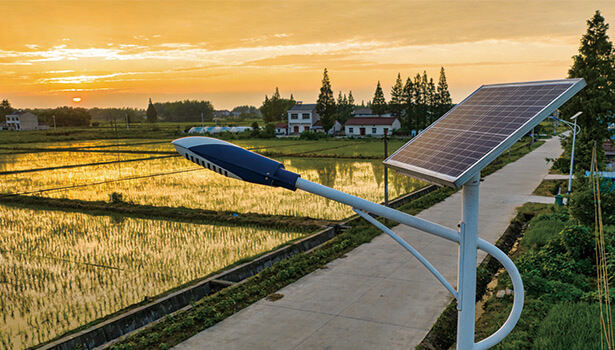
The Feasibility of Customizing Solar Street Lights
Customization of solar street lights is not a new concept but a natural outcome of industry development and market demand. From a technical perspective, the core components of modern solar street lights are highly flexible and adjustable, providing a solid technical foundation for customization. The varying needs of different application scenarios are the core drivers of customization. Rural roads prioritize battery life, highways emphasize brightness and coverage, coastal areas require salt fog resistance, and cold climates demand freeze protection—all of which standard models cannot fully address.
Looking at the current industry landscape, customized solutions have become a core business for companies. Mature manufacturing processes, supply chains, and R&D capabilities have made end-to-end customization possible, providing tailored lighting solutions for every scenario.
Core Dimensions of Solar Street Light Customization
Solar Panel Customization
Solar panels serve as the energy source, and their customization directly determines energy collection efficiency. This encompasses four key dimensions: type, power, size, and installation method. In terms of type, there are three options: monocrystalline silicon, polycrystalline silicon, and thin-film. Monocrystalline silicon has a conversion efficiency of 18%–24% and is suitable for well-lit urban thoroughfares. Polycrystalline silicon offers high cost-effectiveness and is suitable for rural roads. Thin-film panels are lightweight and flexible, making them suitable for narrow or irregularly shaped spaces.
Dimensions and installation are categorized into integrated and split-type designs. Integrated designs offer convenient installation and are suitable for small street lights, while split-type designs facilitate individual maintenance and are suitable for high-power street lights. Adjustable tilt angles maximize sunlight absorption and improve efficiency. For special environments, custom coatings resistant to high temperatures, low temperatures, and salt fog can be applied to ensure stable operation in various conditions.
Customizable LED Light Sources
The LED light source is the core of the lighting system, and its customization significantly impacts lighting performance and user experience. Key customization parameters include power, color temperature, beam angle, and smart dimming. Power and brightness must be tailored to the specific application: 10–30W is suitable for rural alleys and park paths; 50–80W is suitable for urban secondary roads; and 100W or higher is used for highways and plazas to meet high-brightness requirements over large areas. Color temperature is categorized into warm white (2700K–3500K), neutral white (4000K–5000K), and cool white (5000K–6500K). Warm white is suitable for residential areas and scenic spots; neutral white is ideal for schools and hospitals; and cool white enhances visual clarity on highways and in industrial parks.
Battery Customization
Batteries are the core of energy storage. Customization must balance runtime, environmental conditions, and lifespan, covering three key dimensions: type, capacity, and installation location. Battery types include lithium-ion, lead-acid, and lithium iron phosphate. Lithium-ion batteries are compact with a lifespan of 5–8 years, making them suitable for small street lights. Lead-acid batteries are cost-effective and suitable for rural settings with limited budgets. Lithium iron phosphate batteries offer high safety and resistance to extreme temperatures, making them suitable for harsh environments such as coastal areas and extremely cold regions.
Capacity ranges from 12Ah to 200Ah+. Capacities of 12–30Ah are suitable for small street lights, providing 3–5 days of runtime; 50–100Ah suits standard scenarios, offering 5–7 days of runtime; and capacities of 150Ah or higher are used in remote or rainy areas to ensure 7–15 days of stable operation.
Custom Light Poles
Light poles serve as the supporting structure. Customization must balance installation requirements, environmental adaptability, and landscape integration, encompassing three key dimensions: height, material, and design. Heights can be flexibly adjusted: 3–5 m for rural alleys and courtyards; 6–8 m for urban secondary roads and parks; and 8–12 m for highways and industrial parks, ensuring adequate lighting coverage. Material options include galvanized steel, aluminum alloy, and stainless steel. Galvanized steel offers corrosion resistance and low cost, making it suitable for standard outdoor settings; aluminum alloy is lightweight and easy to install, ideal for scenic roads; and stainless steel, with its superior texture, is used in scenic areas and high-end residential communities.
Designs include straight poles, curved poles, and decorative poles. Straight poles are suitable for standard roads; curved poles expand the illumination range and are ideal for curves and sidewalks; decorative poles can be crafted with wood-grain or antique finishes, making them perfect for historic districts and cultural tourism sites, where they seamlessly integrate lighting with the landscape.
Customized Additional Features
For specific scenarios, custom modules can be added to the core functionality to enhance practicality and value. These fall into three main categories: smart control, environmental adaptation, and additional features. Smart control features include customizable IoT connectivity, remote monitoring, fault alerts, and energy consumption tracking, making them ideal for large-scale campuses and smart cities to enable intelligent management and reduce maintenance costs.
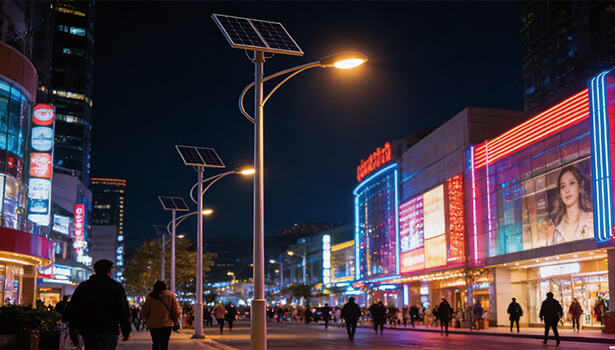
Environmental Adaptation allows for customization of IP65–IP67 waterproofing, wind resistance up to Beaufort scale 12, and freeze-proof modules, among others. This ensures stable operation in complex environments such as coastal areas, extremely cold regions, and areas with heavy rainfall. Additional features can be added as needed, such as integrated cameras for security, solar charging ports for emergency charging by pedestrians, and emergency lighting for unexpected situations, making them suitable for public areas and regions prone to natural disasters.
Typical Scenarios: Custom Solar Street Light Cases
Custom Solution for Rural Roads
Core requirements include low power consumption, long battery life, easy installation, and low cost. Designed to accommodate the characteristics of rural roads—narrow lanes with ample sunlight but frequent rain—the custom configuration features a 5m galvanized steel pole + 30W monocrystalline silicon solar panel + 50Ah lithium iron phosphate battery (7-day runtime) + 40W warm white LED (120° beam angle). + basic timed dimming. The advantages of this solution include controllable overall costs, simple installation requiring no complex construction, battery life sufficient for rural rainy weather, and warm lighting that complements the rural atmosphere while avoiding glaring brightness.
Customized Solution for Highways
Core requirements: high brightness, long-range illumination, smart dimming, and resistance to wind and corrosion. Suitable for highways with heavy traffic, high vehicle speeds, and complex environments. The custom configuration includes a 10m thickened galvanized steel pole + 180W monocrystalline silicon solar panel + 200Ah lithium iron phosphate battery (10-day runtime) + 150W cool white LED (20° beam angle) + motion-sensing dimming + IoT remote monitoring. Key advantages include narrow-beam precise coverage of lanes, cool white light for enhanced visibility, IoT monitoring to reduce manual inspections, and wind and corrosion resistance to ensure long-term stable operation.
Customized Solution for Scenic Areas
Core requirements include landscape integration, low glare, warm lighting ambiance, and waterproof/dustproof design. Tailored to meet the landscape and environmental needs of scenic area roads and trails, the customized configuration features a 6m curved decorative light pole (wood-grain finish / antique style) + 80W thin-film solar panel + 80Ah lithium-ion battery (5-day runtime) + 50W warm white LED (90° beam angle) + anti-glare design + IP67 waterproof and dustproof rating. Key benefits include the decorative poles seamlessly blending with the scenic landscape to enhance overall aesthetics, warm lighting creating a comfortable atmosphere, anti-glare features ensuring a positive visitor experience, and waterproof and dustproof construction extending service life.
Industrial Park Custom Solution
Core requirements include high brightness, smart monitoring, corrosion resistance, and easy maintenance. Designed to suit the characteristics of industrial parks—wide roads, dense equipment, and complex environments—the custom configuration features an 8m aluminum alloy pole + 120W monocrystalline silicon solar panel + 150Ah lithium iron phosphate battery (7-day runtime) + 100W cool white LED (60° beam angle) + IoT remote monitoring + fault alerts. Key advantages include the lightweight and easy-to-install aluminum alloy pole with corrosion resistance; smart monitoring ensures campus security; cool white light meets lighting requirements; and fault alerts reduce the frequency of manual inspections.
Core Advantages of Customized Solar Street Lights
Highly Adaptable to Specific Scenarios
Customized solar street light solutions allow for precise configuration of components based on the actual lighting requirements and environmental conditions of a given location, avoiding the waste of resources caused by “over-engineering.” For example, rural roads do not require high-power LEDs exceeding 100W. This approach not only meets basic lighting needs but also effectively reduces initial investment costs and long-term energy consumption expenses, leading to more efficient resource utilization. At the same time, it prevents energy idling caused by over-specification, ensuring that every investment is precisely matched to the specific needs of the location.
Enhanced Energy Utilization
Customized solar panels, batteries, and LED light sources ensure precise parameter matching, maximizing energy collection and storage efficiency. In areas with ample sunlight, high-efficiency monocrystalline silicon solar panels paired with appropriately sized high-capacity batteries can effectively boost energy utilization and reduce waste. Over the long term, this significantly lowers energy costs, aligns with green and energy-saving principles, and reduces reliance on grid power, achieving energy self-sufficiency.
Extending the Service Life of Solar Street Lights
Customizing materials and protective modules to suit the specific environmental conditions significantly enhances the product’s resistance to environmental erosion. In coastal areas, selecting lamp posts and batteries resistant to salt fog corrosion, and installing freeze-proof modules in cold regions, effectively extends the product’s service life. This reduces the frequency of maintenance and component replacements, lowering long-term maintenance costs and labor requirements. It also minimizes lighting interruptions caused by component failure, ensuring the continuity and stability of the lighting system.
Key Considerations for Customizing Solar Street Lights
Define Core Requirements
Before customizing, you must compile a clear list of requirements, including core information such as lighting brightness, battery life, installation environment (lighting conditions, temperature, humidity, wind conditions), and budget range. Refine these requirements by considering actual usage scenarios, foot traffic, and climatic conditions to avoid wasting resources by blindly pursuing high-end configurations, while also ensuring that overly scaled-back specifications do not compromise performance. Ensure the customized solution precisely matches actual needs, meeting current requirements while allowing for future scalability.
Selecting a Reliable Custom Manufacturer
Customizing solar street lights involves the integration of multiple components, so it is essential to select a manufacturer with extensive customization experience, mature manufacturing processes, and a comprehensive after-sales support system. Focus on evaluating the manufacturer’s R&D capabilities, the stability of their component supply chain, and product certifications (CE, FCC, IP ratings). Additionally, review the manufacturer’s past customization projects and customer feedback to ensure product quality and safety, prevent potential quality issues down the line, and guarantee timely responses for post-installation maintenance services.
Balancing Performance and Cost
Customized solutions must strike a balance between performance and cost, avoiding an excessive focus on performance or cost-cutting. In rural settings with limited budgets, lead-acid batteries—which offer better value for money—can be used as an alternative to lithium iron phosphate batteries. In areas where high brightness is not required, LED power can be appropriately reduced to control costs while meeting actual needs, thereby improving the return on investment. At the same time, this approach prevents performance degradation caused by excessive cost-cutting, which could affect product lifespan and effectiveness.
Ensuring Compliance with Standards
Customized products must comply with relevant national and international standards, including IP protection ratings, electrical safety standards, and energy efficiency standards. This is particularly important for products exported overseas, where it is essential to understand the certification requirements of the target market in advance—such as the EU’s CE certification or the U.S. FCC certification—to ensure products meet local compliance standards. This prevents products from being unable to be deployed due to compliance issues and ensures electrical safety and environmental requirements are met during product use.
Planning for Post-Installation Maintenance
Before customization, clarify the post-installation maintenance plan with the manufacturer, including component replacement procedures, response times for fault repairs, and warranty periods. Prioritize designs with easily maintainable components, such as external battery boxes and modular LED light sources, to reduce the difficulty and cost of maintenance. Additionally, clearly define the scope of the manufacturer’s after-sales support and responsibilities to ensure long-term, stable operation, minimize concerns during use, and prevent premature product failure caused by inadequate maintenance.
The customization of solar street lights for specific scenarios is an inevitable outcome driven by technological maturity and market demand. Through end-to-end customization—from core components to additional features—the lights can be precisely tailored to meet the needs of various scenarios, achieving an optimal balance between lighting performance, energy efficiency, and operating costs. For businesses, customization is a key strategy for enhancing market competitiveness; for end-users, it provides more suitable lighting solutions at a reasonable cost, aligning with the trend toward green and energy-efficient solutions.