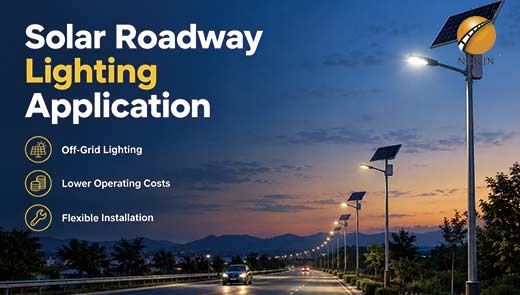
Advantages of 150-Watt Solar Street Lights and Their Role in Revitalizing Rural Areas
Mar 06, 2026
In some remote villages, traditional street lights rely on grid power, which not only incurs high wiring costs and heavy electricity burdens but also faces geographical limitations that hinder widespread adoption. Insufficient nighttime illumination not only compromises villagers' travel safety but also hampers the development of rural nighttime economies and public activities. Against this backdrop, energy-efficient, eco-friendly, and convenient 150-watt solar street lights have emerged. This article will thoroughly examine the core advantages of 150-watt solar street lights, along with their specific value and practical significance in rural revitalization.
Why Is the 150-Watt Solar Street Light So Popular?
Aesthetic Appeal Meets Practicality
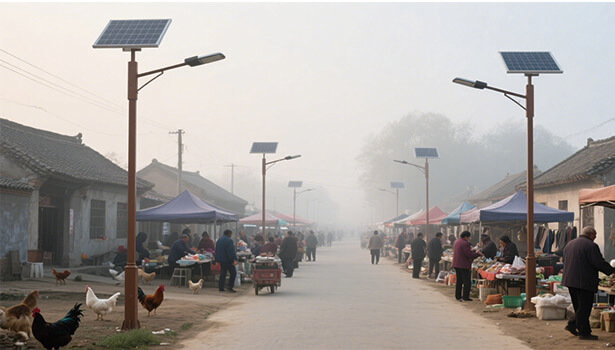
Compared to traditional street lights, the 150-watt solar street light boasts superior design aesthetics. Its sleek, minimalist form and diverse styles allow it to blend seamlessly into various environments. Whether illuminating rural paths, village squares, scenic tourist areas, or upscale homestays, these lights fulfill lighting needs while enhancing the surrounding aesthetics. This avoids the issue of traditional lights clashing with rural landscapes due to their uniform, uninspired designs.Beyond their striking appearance, these lights excel in practicality. With broad applicability, they suit not only urban main and secondary roads but also seamlessly adapt to diverse rural settings, offering comprehensive lighting solutions for rural areas.
Cost Savings
One of the most significant advantages of 150-watt solar street lights is their ability to effectively reduce long-term operating costs, delivering a “one-time investment, long-term benefit” effect. Their cost advantage is primarily reflected in electricity consumption and maintenance. Powered by solar energy, these lights incur no additional electricity costs during operation, whereas traditional grid-connected street lights generate ongoing electricity expenses.
Additionally, the 150-watt solar street light features a long-lasting light source and simple structure, requiring minimal maintenance. Its maintenance costs are significantly lower than traditional street lights, which necessitate regular circuit inspections and component replacements. Over the long term, only the initial equipment investment is required, with virtually no additional expenses afterward. In contrast, traditional street lights incur ongoing electricity and maintenance costs. For government departments or rural collectives, promoting the use of 150-watt solar street lights can significantly reduce long-term expenditure pressures. The funds saved can be invested in other rural construction projects, achieving efficient resource utilization.
|
Comparison Item |
150W Solar Street Light |
Traditional Grid Street Light (150W) |
|
Electricity Cost |
None, powered entirely by solar energy |
Continuous electricity expenses over time |
|
Maintenance Cost |
Low, long light lifespan and simple structure with minimal maintenance |
High, requires regular line inspections and component replacement |
|
Long-Term Investment |
Only initial equipment investment, with almost no additional costs later |
Ongoing electricity and maintenance expenses over the long term |
Benefits of Installing 150-Watt Solar Street Lights in Rural Areas
Energy Efficiency and Cost Savings
In many rural areas, particularly remote mountainous regions, inadequate grid coverage and unstable power supply remain persistent issues. Traditional street lights reliant on grid power not only incur high wiring costs but also frequently suffer from power outages and insufficient illumination. The 150-watt solar street light operates entirely on solar charging, eliminating dependence on external grids. This fundamentally avoids wiring hassles and electricity expenses.
During daylight hours, solar panels absorb sunlight, converting it into stored electricity. At night, the light automatically illuminates, meeting rural nighttime lighting needs. This approach not only resolves the challenge of inconvenient rural power supply but also achieves energy conservation, aligning with national policies promoting energy efficiency and reduced consumption.
Enhancing Nighttime Safety
Inadequate nighttime lighting is a major source of safety hazards in rural areas. Many village roads lack street lights, plunging them into darkness at night. This not only increases the risk of pedestrian and vehicle accidents but also elevates the likelihood of crimes like theft, undermining residents' sense of security.
After installing 150-watt solar street lights, public areas like village roads, entrance plazas, and residential courtyards experience significantly enhanced nighttime illumination. This effectively reduces nighttime traffic accidents and lowers crime rates, particularly in remote villages. The stable brightness of 150-watt solar street lights effectively guards against various dangers lurking in darkness, providing safety for villagers traveling at night or returning late from fieldwork. This tangibly enhances residents' sense of security and well-being.
Advancing Rural Green Development
Rural revitalization requires not only economic growth but also ecological conservation. Powered by clean, renewable solar energy, the 150-watt solar street light emits no exhaust, noise, or environmental pollution during operation, making it a truly green and eco-friendly product.
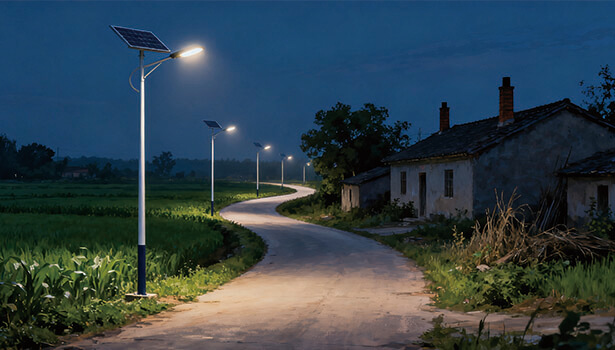
Compared to traditional street lights that consume conventional energy and emit carbon dioxide, the 150-watt solar street light significantly reduces carbon emissions, helping villages achieve low-carbon development goals. Promoting solar street lights also educates villagers on low-carbon environmental concepts, guiding them toward green, low-carbon lifestyles. This drives ecological revitalization in rural areas, creating livable and prosperous rural environments.
Easy Installation and Maintenance
Given limited construction resources and scarce professional maintenance personnel in rural areas, the simplicity of installing and maintaining lighting equipment is crucial. The 150-watt solar street light features a straightforward installation process requiring no complex wiring or specialized teams. Ordinary construction workers can complete setup quickly, significantly reducing construction time and labor costs.
Regarding maintenance, the 150-watt solar street light features a simple structure and long-lasting light source, requiring minimal routine upkeep. Only periodic checks for clean solar panels and functional batteries are needed. This convenient installation and maintenance approach effectively reduces operational burdens for rural management departments, making it highly suitable for widespread adoption in rural areas.
The Role of 150-Watt Solar Street Lights in Rural Revitalization
Enhancing Rural Infrastructure
Infrastructure development forms the foundation of rural revitalization, with lighting facilities being a crucial component. Currently, many rural areas suffer from outdated lighting systems that lag significantly behind urban counterparts, highlighting a key aspect of the urban-rural divide. Promoting the installation of 150-watt solar street lights can effectively address shortcomings in rural lighting infrastructure. By illuminating rural roads and public areas at night, these lights enhance the rural living environment and elevate the overall appearance of villages.
Simultaneously, improved lighting infrastructure facilitates the upgrading of rural public facilities, enabling villagers to enjoy public services comparable to those in urban areas. This tangibly narrows the urban-rural gap and lays a solid infrastructure foundation for rural revitalization.
Boosting Rural Economy
Beyond enhancing living conditions, 150-watt solar street lights directly stimulate rural economic growth by injecting new momentum into tourism and industrial development. For rural tourist attractions, these lights provide aesthetically pleasing and reliable nighttime illumination, extending visitor stay times and promoting nighttime tourism. This, in turn, boosts income for related industries like homestays and restaurants.
For rural industrial parks and mining enterprises, these lights ensure safe nighttime production operations, create favorable working conditions, attract business investment, drive industrial upgrading, boost villagers' employment and income, and provide robust support for rural economic growth.
Advancing Rural Ecological Revitalization
Ecological revitalization is a crucial component of rural revitalization, with low-carbon environmental protection serving as its core requirement. As a clean, renewable energy product, the promotion and use of 150-watt solar street lights can effectively advance improvements in the rural ecological environment. On one hand, solar street lights eliminate the need for traditional electricity consumption, reducing the use of fossil fuels, lowering carbon emissions and environmental pollution, and safeguarding the green mountains and clear waters of rural areas.
On the other hand, promoting solar street lights educates villagers on clean energy concepts, guiding them toward low-carbon lifestyles and advancing eco-village development. This “lighting + environmental protection” model synergistically advances rural economic growth and ecological conservation, supporting sustainable rural development.
With core advantages such as energy efficiency, low cost, easy installation, environmental friendliness, and strong geographical adaptability, the 150-watt solar street light not only solves the challenge of nighttime lighting in rural areas but also plays a vital role in improving rural infrastructure, driving rural economic development, promoting ecological revitalization, and enhancing rural governance.