Why 120W Solar Street Lights Are So Common in Engineering Projects
Mar 05, 2026
In global municipal projects, industrial parks, road renovations, and outdoor lighting upgrade projects, 120W solar street lights are always a highly frequent core product. It is neither the most powerful high-end model nor the cheapest economic option, but with a perfect balance of brightness performance, system stability, and overall cost, it has become the "gold standard" for medium-sized outdoor lighting projects. This article will comprehensively and meticulously analyze why 120W solar street lights can become the preferred solution for global engineering parties.
What Is a 120W Solar Street Light?
120W solar street lights belong to a medium-high power integrated solar lighting system. The core consists of a solar power generation module, an energy storage module, an LED lighting module, and an intelligent control system. It mainly relies on solar panels absorbing sunlight to convert it into electricity, storing the electricity in a lithium battery, and then using the LED light source to achieve night lighting. The entire system does not require external power supply and can operate independently, making it highly suitable for long-term stable outdoor use.
Key Specifications of 120W Solar Street Lights
- It belongs to the medium-large power range, clearly differentiating from small-power lights used in scenarios such as home gardens and rural roads, which better meet the high requirements of engineering-level lighting
- The typical brightness can reach 15,000–22,800 lumens, with specific values varying slightly due to the quality of LED chips and optical lens design
- Its brightness is significantly higher than small-power models such as 60W and 80W, and the illumination coverage range and light intensity can meet the core requirements of medium-sized outdoor scenarios
- It is mainly targeted at urban roads, industrial parks, large parking lots, etc., which require high brightness and wide-area lighting, and is compatible with the standardized design requirements of various projects
120W Solar Street Lights vs Other Power Options
The 120W solar street lights have significant differences in terms of brightness performance, light pole adaptation height, and road width compatibility compared to other wattages. These differences directly determine their applicable scenarios. The following table can visually compare the core parameters of each power model, facilitating engineering personnel to quickly select and precisely match project requirements:
|
Power |
Typical Lumens |
light Pole Height |
Street Width |
Main Application |
|
60W |
~6,000 LM |
6–7 m |
Small roads |
Rural roads, parks, walkways |
|
80W |
~10,000 LM |
6–8 m |
Community roads |
Residential areas, campuses, park branch roads |
|
100W |
~13,600 LM |
8–10 m |
Urban secondary roads |
Ordinary urban roads, town main roads |
|
120W |
15,000–22,800 LM |
8–12 m |
15-meter roads |
City roads, industrial parks, parking lots |
|
150W |
18,000+ LM |
10–15 m |
Highways / Primary roads |
Highways, urban main roads |
From the table, it is clear that 120W is the key power range for covering urban and industrial projects. It can take over the lighting needs of urban main roads and meet the basic lighting requirements of general urban roads, industrial parks, and park branches, with strong compatibility and versatility. This is also one of the reasons why it has become the mainstream in engineering.
Advantages of 120W Solar Street Lights
To understand why 120W solar street lights are widely used in engineering projects, it is important to examine their core advantages in lighting performance, installation compatibility, and system reliability.
Wide Lighting Coverage for Medium and Large Roads
Ordinary small-power lights (such as 60W and 80W) are limited by lumens and can only illuminate narrow roads, sidewalks, or small branches, unable to meet the lighting needs of city-level roads. However, 120W solar street lights have sufficient lumens, strong penetrating power, and a wider illumination range, which can easily meet the uniform lighting requirements for roads wider than 15 meters, ensuring the safety of night driving and pedestrian passage.
Compatible Pole Height for Standard Road Lighting Design
120W lights can be paired with 8–12-meter light poles, which perfectly meet the conventional design standards for urban roads, industrial parks, and main roads in towns. It neither increases installation difficulty and construction costs due to an excessively high light pole height nor limits the illumination range and causes light overlap and waste due to an excessively low light pole height, achieving a dual consideration of installation convenience and lighting effect.
Mature and Stable System Configuration
After years of market iteration and technological upgrading, the accessory combinations of 120W solar street lights have become very mature. The compatibility and stability of each component have been verified through a large number of engineering practices. The specific core configurations include:
- 120W solar panels (mostly monocrystalline silicon materials, with high photoelectric conversion efficiency, suitable for different lighting conditions in different regions)
- Large-capacity lithium batteries (mainly lithium iron phosphate batteries, with long cycle life and high safety, suitable for outdoor complex environments)
- High-lumen LED above 15,000 (energy-efficient, slow light decay, can maintain stable lighting brightness for a long time)
The three core modules of power generation, electricity storage, and lighting have an extremely high degree of compatibility. The failure rate of the entire system is much lower than that of small-power or high-power advanced models, making it highly suitable for engineering projects with high requirements for lighting stability and durability.
5 Major Applications of 120W Solar Street Lights
The widespread popularity of 120W solar street lights lies in its strong scene adaptability, which can meet the lighting needs of various types of outdoor projects. The following are the most commonly used and most suitable 5 project scenarios for it, facilitating engineering personnel to precisely match their own needs.
Urban Road Lighting
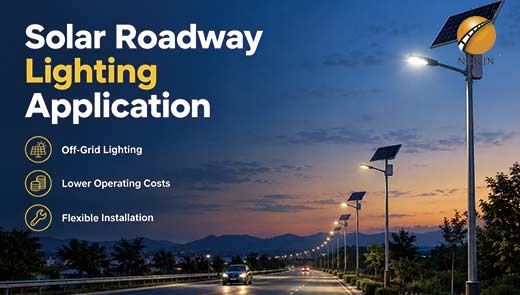
120W street lights are the main selection for urban secondary roads and connecting roads, and are also one of the most widely used models in municipal lighting projects.
- Adapt to 10–12-meter standard lightpoles, conforming to the standardized design specifications of municipal roads
- Brightness uniformity meets the national municipal lighting standards, with no obvious dark areas or glare
- Uniform brightness, high night driving safety, effectively reducing the incidence of night traffic accidents
Whether it is the lighting of newly built urban roads or the upgrading and renovation of old roads, a large number of municipal projects, road renovation projects will prioritize the use of 120W solar street lights.
Industrial Parks and Logistics Centers
Industrial parks and logistics centers have clear and strict requirements for lighting, needing to balance lighting range, brightness, and stability. The specific requirements are as follows:
- Wide coverage, needing to illuminate the surrounding areas of factories, storage areas, transportation channels, etc., a large area
- High brightness, high safety, ensuring the safety of night workers and cargo transportation
- 24-hour stable and reliable, no frequent maintenance, reducing the cost of park operation
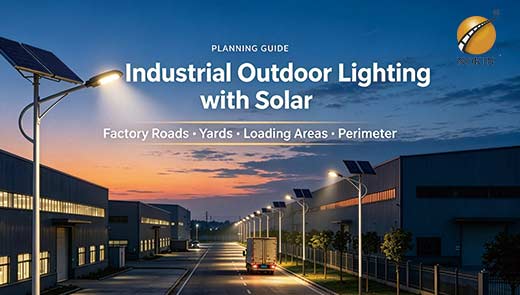
120W systems can stably provide an output of 15000+ lumens, with sufficient light and clear vision, fully meeting the lighting needs of large factories, logistics parks, and storage areas, and is the preferred lighting solution for industrial projects.
Large Parking Lots
Outdoor large parking lots and truck stations have core lighting requirements focusing on uniformity, coverage range, and cost control. The specific requirements are as follows:
- Uniform light, no obvious bright or dark corners, ensuring the safety of vehicle parking and personnel movement
- Wide coverage, reducing the number of lightpoles installed, optimizing the layout of the parking lot
- Reducing the number of lightpoles, lowering construction, wire, and labor costs, controlling the total project investment The spacing of 120W solar street lights can reach 30-40 meters, and the coverage area of a single light is much larger than that of low-power models. This can effectively reduce the number of lightposts installed and is an ideal lighting choice for outdoor parking lots and truck stations.
Rural Roads
With the advancement of the rural revitalization strategy, the width and lighting standards of rural main roads have been continuously improved. Traditional low-power street lights have been unable to meet the requirements. Rural roads are generally wider, and low-power street lights have insufficient brightness and limited coverage.
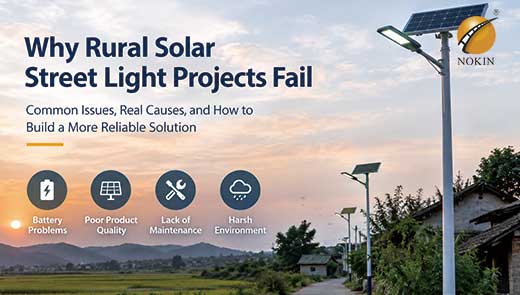
Compared with 60W and 80W products, 120W solar street lights can easily cover main roads over 15 meters in width, with significantly improved lighting effects. They can not only meet the villagers' night-time travel needs but also meet the requirements for the upgrading of road lighting in rural areas. It is a common choice for rural revitalization and road lighting projects.
Commercial Squares
In densely populated areas such as commercial centers, city squares, and stadium areas, lighting requirements not only need to meet basic lighting but also need to take into account aesthetics and safety. Specific requirements include:
- Higher brightness to enhance the overall recognition and nighttime atmosphere of the area
- Larger illumination range to cover the entire square or the periphery of the business district
- Enhancing image and safety to ensure the safety of pedestrian and vehicle traffic during the night and improving the overall grade of the commercial area
120W solar street lights can meet the high-standard lighting requirements of squares, pedestrian streets, and the periphery of business districts. At the same time, they do not require external power supply, are energy-saving and environmentally friendly, and can also reduce the operating costs of commercial areas.
Why Do Many Projects Prefer 120W Solar Street Lights?
Apart from strong scene adaptability, project designers also value the comprehensive advantages of cost, construction, and maintenance when selecting models. This is the core reason why 120W solar street lights have become a popular choice for engineering projects. The specific advantages are as follows:
Balance Between Brightness and Cost
The lumen value of 120W solar street lights is stable at 15,000-20,000, which can meet the high-brightness lighting requirements of urban roads, industrial parks, etc., without the need for significant hardware configuration upgrades that would increase product costs and procurement budgets as much as 150W and above high-power models.
In project budget control, it is the most cost-effective power range, which can maximize the control of project procurement costs while ensuring lighting effects.
Suitable for Most Road Grades
In outdoor lighting project design, there are clear industry conventions for the matching of road grades and street light power. The specific matching relationship is as follows:
- Small roads, walkways: 40W-60W, sufficient for basic lighting
- Community, park roads: 60W-80W, suitable for the lighting needs of medium-width roads
- Urban roads, main roads: 100W-120W, meeting the requirements for high-brightness and large-area lighting
- Expressways, rapid roads: 150W+, suitable for high-intensity lighting requirements of ultra-wide roads
From the distribution of global outdoor lighting projects, the vast majority of projects are concentrated in urban road grades. The requirements for brightness and stability in these projects exactly match the performance of 120W solar street lights, so 120W naturally becomes the mainstream choice for engineering projects.
Larger Coverage Area and Lower Installation Costs
The brightness and long illumination range of 120W solar street lights make it possible to achieve larger light post spacings compared to low-power models under the same lighting standards. The specific advantages are as follows:
- Expand lightpost spacing to optimize the overall layout of roads or parks
- Reduce the total number of lightposts, lowering the cost of lightpost procurement
- Reduce construction, wire, and labor costs, and also reduce the maintenance workload and maintenance costs in the future
For large-scale outdoor lighting projects, this advantage of 120W solar street lights can effectively control the total project investment, improve project cost performance, and this is also an important reason why project designers prefer it.
Typical Engineering Configuration of 120W Solar Street Lights
To ensure the lighting effect and system stability, regular engineering projects will adopt standardized product configurations. Here are the most common and mature 120W solar street light engineering parameters in the industry, which are suitable for outdoor lighting needs in most regions worldwide:
|
Parameter |
Typical Configuration |
|
LED Lumens |
15,000–22,800 LM |
|
Solar Panel |
120–130W (Monocrystalline Silicon, Photovoltaic Conversion Efficiency ≥ 18%) |
|
Battery |
60Ah LiFePO4 Lithium Iron Phosphate (Cycle Life ≥ 2000 Times) |
|
Lighting Time |
10–12 Hours (Adjustable According to Project Requirements) |
|
Rainy Day Battery Life |
3–5 Days (Meets the Lighting Needs of Most Rainy Areas) |
This standardized configuration can fully ensure: The solar panel charges efficiently during the day, the LED light source emits steadily at night, achieving continuous lighting throughout the night. Even in consecutive rainy days, it can operate normally, fully meeting the engineering lighting standards of most regions.
How to Determine If Your Project Needs 120W Solar Street Lights
The core of engineering selection is "matching requirements". If your project meets most of the following conditions, prioritize choosing 120W solar street lights, which can achieve the optimal balance between lighting effect and cost:
- Road width is over 15 meters, and low-power street lights cannot meet the uniform lighting requirements
- The planned pole height is 10–12 meters, suitable for the 120W lighting range
- Requires high brightness and high safety lighting, such as urban roads, industrial parks, etc.
- Is a municipal, industrial, or commercial project, with higher requirements for system stability and durability
- Hope to install fewer poles, control overall procurement and construction costs, and improve project cost-effectiveness
120W Solar Street Light FAQs
How Bright Is a 120W Solar Street Light?
Typically, they are 15000–22800 lumens. The specific brightness depends on the grade of the LED chip, the design of the optical lens, and the luminous efficiency of the light. The regular configuration can meet the uniform lighting of roads over 15 meters.
What Pole Height Is Suitable for 120W Solar Street Lights?
Conventionally, they are adapted to 8–12-meter poles. 10-meter and 12-meter are the most commonly used heights, which can ensure the lighting range while also considering installation convenience and cost control.
What Road Width Can 120W Solar Street Lights Cover?
It is recommended for urban roads over 15 meters, main roads in industrial parks, and rural main roads. If the road width is less than 15 meters, choosing 100W or lower power is more cost-effective.
How Much Does a 120W Solar Street Light Cost?
Affected by the light material, brand, and core component configuration (such as the power of the solar panel, battery capacity), the factory price of the complete set is generally in the range of 280–450 US dollars. The specific price can be determined by adjusting parameters such as battery capacity, solar panel power, and pole height according to project requirements.
Conclusion
The 120W solar street light falls within the core range of medium to high-power lighting. Compared to the 60W and 80W low-power products, it offers higher brightness, a higher installation height of the light pole, and a larger lighting range, meeting the core requirements of medium and large-scale outdoor projects. At the same time, compared to the 150W+ high-power products, its cost is more controllable, the system is more mature and stable, and there is no need to bear excessively high procurement and maintenance costs.
Therefore, in global solar street light projects, 120W is widely used in various outdoor scenarios, mainly including:
- Urban roads (secondary roads, connecting roads)
- Industrial parks (factories, warehouses, logistics parks)
- Large parking lots (outdoor parking lots, truck stations)
- Rural main roads (lighting projects for rural revitalization roads)
- Commercial squares (commercial centers, stadiums and surrounding areas)
Overall, the 120W solar street light is the most common and reliable power choice in municipal engineering, commercial lighting, and park projects. It can not only meet the lighting needs of the project but also control the project cost, and is one of the optimal choices for project owners.