200W+ Solar Street Lights: Engineering Challenges and Professional Solutions
Jun 05, 2026
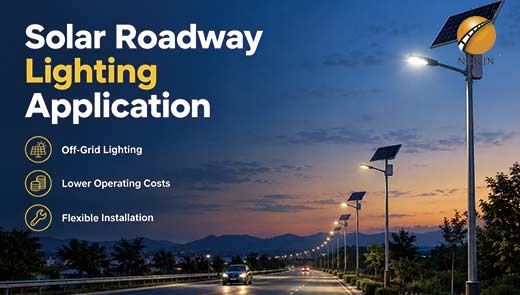
In the modern commercial and municipal outdoor lighting sector, 200W solar street lights, high-output solar street lights, and high-power solar street lights have become the mainstream solutions for high-brightness lighting scenarios. Compared to small solar street lights, solar lighting equipment with a power of 200W or more can provide stable and bright light, suitable for various harsh off-grid usage environments.
However, many engineering teams currently encounter various problems with solar street lights. For instance, the light output of the lights decays quickly, the lifespan is short, and the lights go out on rainy days. The core reasons for these faults are mostly the neglect of solar street light heat management design and mismatched system configuration.
NOKIN will comprehensively analyze the reasons for the widespread adoption of 200W+ high-power solar street lights, design challenges, core pain points, professional solutions, and applicable scenarios, helping everyone avoid common problems with 200W solar street lights and select reliable high-brightness lighting systems.
Why 200W+ Solar Street Lights Are Becoming Popular
In recent years, 200W+ high-output solar street lights have gradually replaced traditional city circuit lights and small-power solar street lights, becoming the preferred choice for large-scale outdoor lighting projects worldwide. Their popularity continues to rise mainly due to two core industry trends.
Growing Demand for High-Brightness Lighting
With the upgrading of urban infrastructure and industrial facilities, small-power solar street lights have been unable to meet the high-standard lighting requirements. 200W solar street lights are specifically designed for high-brightness lighting scenarios in commercial and municipal use.
|
Application Scenarios |
Lighting Requirements |
Core Advantages of 200W+ Solar Street Lights |
|
Highway |
Continuous high brightness, uniform light distribution, long-distance visibility |
Complies with traffic safety standards and supports all-night continuous lighting |
|
Port and Terminal |
24-hour lighting, strong anti-interference capability, high durability |
Adapts to all-weather operating environments and does not rely on the municipal power grid |
|
Industrial Park |
Wide lighting coverage, high lumen output, stable operation |
Meets the lighting demands of factory roads and large-scale industrial areas |
|
Large Parking Lot |
Uniform light distribution, no lighting blind spots, compatible with security monitoring |
Eliminates dark areas and improves traffic and pedestrian safety within the parking area |
|
Municipal Main Road |
Standardized illuminance, aesthetic appearance, long service life |
Complies with urban road construction requirements and green low-carbon standards |
Advantages of Off-Grid Solar Lighting
Traditional grid-powered street lights have the drawbacks of high long-term energy consumption and high maintenance costs. Driven by energy-saving and low-carbon policies, more and more projects are starting to adopt off-grid solar lighting systems. The comprehensive advantages of 200W+ high-power solar street lights are particularly prominent.
Significantly reduce electricity expenses
Off-grid systems do not consume power from the municipal grid, and each light can save hundreds to thousands of US dollars in electricity costs annually.
Reduce wiring and construction costs
Traditional grid-powered street lights require complex cable laying, trench excavation, and transformer matching, while solar off-grid street lights do not require wiring, significantly reducing upfront infrastructure investment.
Suitable for remote area use
Mountain roads, rural roads, and remote industrial areas generally have incomplete power grid support. 200W solar street lights can operate independently and do not require power grid support.
Align with global low-carbon policies
The system relies on solar power generation, and the operation process has zero carbon emissions, meeting the energy assessment standards of various countries.
Design Challenges of 200W+ Solar Street Lights
Many purchasers mistakenly believe that high-power solar street lights are just a simple "power parameter upgrade", but in fact, the design of high-power solar street lights is a professional system engineering project. The higher the power, the more prominent technical problems in terms of heat dissipation, energy consumption matching, and structural safety.
Heat Dissipation Challenges
Heat generation is the primary pain point of high-output solar street lights. The power of 200W+ LED lights is several times that of ordinary solar street lights, and during operation, it will generate a large amount of heat, which is very prone to heat accumulation.
LED chips generate a large amount of heat over a long period of operation
LED chips operate at full load for a long time and will continuously reach high temperatures. If the heat cannot be promptly dissipated, it will trigger three core faults.
Long-term high temperatures will cause severe light attenuation of LEDs, reduce lumen output, and weaken lighting effects; at the same time, accelerate the aging of internal drivers, causing unstable current and voltage output; moreover, high temperatures will shorten the service life of circuit boards and are prone to electrical short circuits and breakage faults.
Poor heat dissipation design will cause the lights to fail prematurely
Defects in heat dissipation design are the main cause of damage to high-power lights. High-temperature environments will significantly increase the failure rate of 200W solar street lights, especially in hot regions such as the Middle East, Africa, and Southeast Asia. Products with unqualified heat dissipation design may fail and be scrapped within less than a year.
High Energy Consumption
High brightness output corresponds to high energy consumption. The energy system design standard of 200W+ solar street lights is far higher than that of small-power products, and the configuration requirements for energy storage batteries and solar panels are more stringent.
Need larger-capacity energy storage batteries
High-power lighting requires larger Ah capacity batteries to support stable lighting throughout the night and reserve sufficient power to cope with continuous rainy weather conditions. 200W high-power solar street lights must be paired with large-capacity energy storage batteries to avoid insufficient power during weak light weather and sudden power outages.
Solar panels need to meet winter power generation requirements
Winter solar irradiation intensity is low, which is the core problem of high-power system design. The efficiency of solar panels will significantly decrease in winter. If the solar panel configuration is insufficient, the daytime power generation cannot cover the lighting energy consumption at night, which will lead to insufficient battery charging, reduced lighting brightness, and affect normal use.
Structural Safety and Wind Resistance
200W+ solar street lights are equipped with large-sized solar panels and have a heavier light body. The wind resistance stability and structural strength are the key factors determining the long-term operational safety, especially suitable for coastal and areas with frequent typhoons.
The large-sized solar panels increase the wind load on the light pole.
The size of the solar panels that are compatible with high-power single-crystal solar panels is larger, and the increase in the panel surface area will directly increase the wind resistance and the wind load on the light pole.
In typhoon and strong wind areas, lights with unreasonable structural designs are prone to panel shaking, frame deformation, and even light pole collapse, posing significant safety hazards.
The strength of the light pole and the structure of the installation frame determine safety
According to the Alibaba structural design specifications for high-power solar street lights, qualified 200W solar street lights must meet multiple structural standards.
The light pole needs to have sufficient wall thickness and compressive strength, the frame needs to be treated for anti-corrosion and rust prevention, and all fasteners must be made of stainless steel to avoid loosening and rusting in harsh environments.
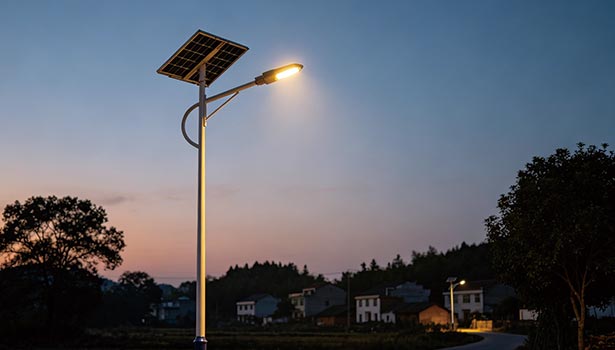
Common Problems with 200W Solar Street Lights
Based on actual engineering operation feedback, we have summarized the six core problems in the implementation of high-lumen solar street light solutions, covering heat dissipation, energy storage, parameter mislabeling, intelligent control, etc.
Insufficient Heat Dissipation
Heat dissipation is the primary technical bottleneck restricting the lifespan of 200W+ lights.
High temperatures shorten the lifespan of LEDs
Long-term high-temperature operation accelerates LED light degradation. lights with unqualified heat dissipation design will have a lifespan reduced from the standard 50,000 hours to less than 20,000 hours.
Currently, high-quality mainstream solutions include cast aluminum heat dissipation, fin-type heat dissipation structure, and high thermal conductivity silicone filling, which can quickly discharge the heat inside the light.
Battery heat accumulation affects system stability
Batteries and drivers generate heat during charging and discharging, and the accumulation of heat will cause battery thermal runaway, shortening the battery's cycle life.
High-end products adopt compartmental isolation design, placing the battery, driver, and light source separately to avoid cross-conduction of heat and ensure the stable operation of core components.
Battery Failure on Rainy Days
The battery power reserve capacity directly determines the operational reliability of solar street lights on highways and industrial roads.
Insufficient battery capacity leads to frequent light outages
Many low-priced 200W solar street lights are designed to compress costs and are equipped with small-capacity batteries. During continuous rainy weather, the stored electricity cannot support the entire night lighting, resulting in frequent light outages. High-power solar street light projects need to reserve 3-4 days of battery power storage to cope with continuous adverse weather.
Deep discharge significantly shortens battery life
Frequent deep discharge will cause irreversible damage. Incompatible system energy consumption will make the battery remain in a deep discharge state for a long time, significantly reducing the number of battery cycles and shortening the lifespan of the entire equipment.
Power Mislabeling
Power mislabeling is a common phenomenon in the solar street light industry and is the key reason why many users encounter problems with 200W solar street lights.
Most labeled 200W products cannot reach the actual power.
Many manufacturers falsely label 150W, 180W lights as 200W to lower the price and attract customers.
Lighting brightness depends on the system engineering, not the label parameters.
The actual brightness of solar street lights is determined by the matching engineering of the entire system, not the labeled parameters. Most mislabeled products have problems such as insufficient lumen, false battery capacity, and mismatched photovoltaic panel power, and the actual lighting effect is far inferior to that of genuine 200W high-output solar street lights.
PV Efficiency Decline
photovoltaic panels are extremely sensitive to temperature. High-temperature environments significantly reduce their power generation efficiency.
The increase in panel surface temperature leads to a decrease in power generation.
In high-temperature conditions, the surface temperature of the photovoltaic panels rises sharply, resulting in a 15%-25% decrease in power generation efficiency compared to normal temperature conditions.
Ventilation design can improve charging efficiency.
According to relevant papers on solar thermal management, a reasonable ventilation gap design can accelerate the cooling of photovoltaic panels, effectively reduce energy loss caused by high temperatures, and ensure the stability of power generation in hot summer weather.
Poor Energy Management
Energy management capabilities determine the battery life and energy-saving effect of high-power solar street lights, and the solar lighting-specific MPPT controller is a core component.
Traditional PWM controllers waste a lot of energy.
Traditional PWM controllers have low charging efficiency and cannot accurately track the maximum power point of the solar panel, resulting in a large amount of energy waste.
For high-power systems with high energy consumption, insufficient charging efficiency will directly lead to insufficient battery capacity and shortened lighting duration.
MPPT controllers significantly improve charging efficiency.
MPPT controllers can track the maximum power of the photovoltaic panel in real time, and have a charging efficiency 20%-30% higher than PWM controllers, maximizing the utilization of solar resources.
Smart dimming extends equipment battery life
High-quality high-power solar street lights are equipped with adaptive dimming technology, which can automatically adjust brightness according to time periods, traffic flow, and pedestrian flow, and significantly extend the overall operating time of the system through intelligent energy-saving modes.
Environmental Reliability Issues
Most commercial and industrial high-power lighting scenarios are in outdoor environments, and the equipment needs to withstand various harsh weather conditions for a long time.
Dust, moisture, salt fog, and high temperatures
Outdoor solar street lights are subject to dust, rain, high humidity, and high temperatures for a long time. Dust covering the panel surface will reduce power generation efficiency, and moisture and salt fog will corrode the internal circuits and structures of the equipment.
Special protection designs are required for coastal and desert environments
Coastal and desert projects require customized protective solutions. Most short-lived products lack anti-salt fog, dust-proof, and high-temperature resistance designs, and cannot adapt to extreme outdoor environments.
Professional Solutions for 200W Solar Street Lights
To address the above six core problems, the industry has developed a mature standardized engineering solution, which comprehensively upgrades from component selection to structural optimization to achieve long-term stable operation of 200W+ high-power solar street lights.
Monocrystalline Solar Panels
The efficiency of solar panels is the foundation for the stable operation of the system. Monocrystalline panels have an absolute advantage in high-power systems.
The performance of monocrystalline panels far exceeds that of polycrystalline panels
Monocrystalline silicon photovoltaic panels have higher photovoltaic conversion efficiency, and their weak light performance and temperature resistance are far superior to polycrystalline panels.
In winter with weak irradiation and summer with high temperatures, monocrystalline panels can maintain stable power generation, avoiding the problem of insufficient energy supply.
Dual-sided photovoltaic panels increase power generation
The backside of dual-sided solar panels can absorb reflected light from the ground and road surface. According to data from research papers on dual-sided components, their power generation efficiency is 10%-18% higher than that of single panels.
Perfectly compatible with 200W high-power high-energy consumption lighting systems, effectively solving the pain point of insufficient power generation.
Upgrade to LiFePO4 Batteries
Special lithium iron phosphate batteries for solar street lights have become the standard for high-power solar systems, replacing traditional lead-acid batteries.
Longer cycle life
The cycle life of lithium iron phosphate batteries can reach more than 2,000 times, with a lifespan 3-5 times longer than that of lead-acid batteries, significantly reducing the cost of later replacements.
Better thermal stability
Lithium iron phosphate batteries have extremely strong heat resistance, and will not experience thermal runaway at 60℃ high-temperature environments, perfectly adapting to the outdoor high-temperature operation scenarios of solar street lights.
Far superior safety to lead-acid batteries
Lithium iron phosphate batteries have no leakage, no explosion, and no fire risk. With a compartmentalized isolation design, they can operate safely and stably in harsh environments for a long time, and this advantage has been verified by the Taiwan Mountain Off-grid System case.
Advanced Heat Management
Optimizing the heat management of solar street lights is a core measure to solve high-temperature failure and extend equipment lifespan.
Integrated die-cast aluminum light body
The light adopts an integrated die-cast aluminum shell, with a high thermal conductivity material that can quickly transfer the heat generated by the LED chip to the outside of the light body.
Battery and driver separated compartments
Using a separate partition structure, the light source, driver, and battery are physically isolated, eliminating cross-conduction of heat between components and eliminating local hotspots.
Advanced finned cooling structure
Combined with finned heat sinks and high-conductivity silicone grease, multi-dimensional improvement of heat dissipation efficiency ensures that the internal temperature of the light remains stable within the safe range during full-load operation.
Intelligent Lighting Control
The intelligent control system can improve energy utilization and the intelligence level of equipment, completely solving the problems of energy waste and insufficient battery life.
Human body sensing function
Built-in human and vehicle sensors automatically brighten the lighting when there is human or vehicle passage, and automatically reduce power when there is no one, achieving on-demand lighting and maximizing energy conservation.
Adaptive brightness adjustment mode
Supports timed dimming and light sensing automatic switching, which can intelligently adjust brightness according to day and night, weather changes, and balance lighting effect and energy consumption.
Remote monitoring and operation system
Based on LoRa Internet of Things technology, it can remotely monitor the power generation, storage capacity, and operation status of the equipment, support fault early warning, and significantly reduce manual operation costs.
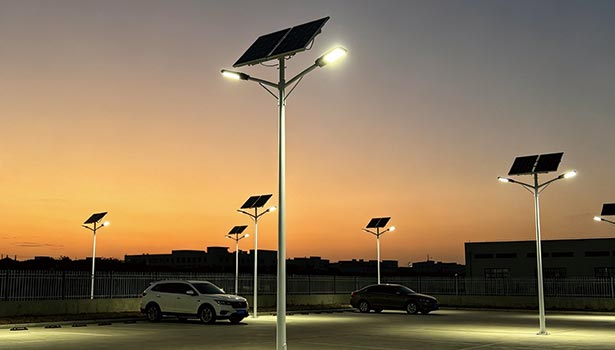
Best Applications for 200W+ Solar Street Lights
200W+ high-output solar street lights belong to high-end commercial high-power lighting equipment and are not suitable for small household scenarios. They are mainly adapted for large public areas and industrial sites.
Highways and Main Urban Roads
Highways and main urban roads have extremely high requirements for brightness, uniformity of illuminance, and all-weather stability. 200W solar street lights meet the traffic safety standards and the off-grid design can avoid the lighting paralysis caused by power grid outages, ensuring road traffic safety.
Industrial Parks
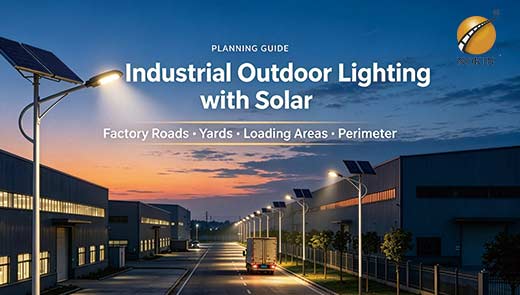
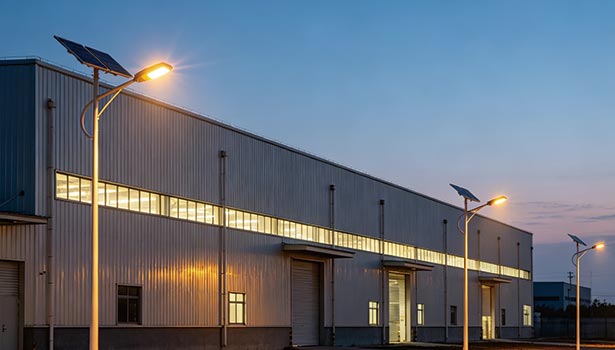
Industrial park roads have a large area and require high lighting brightness. High-power solar street lights can meet the all-night lighting needs of factory roads and logistics channels, saving the enterprise a lot of electricity costs from the grid.
Port and Logistics Center
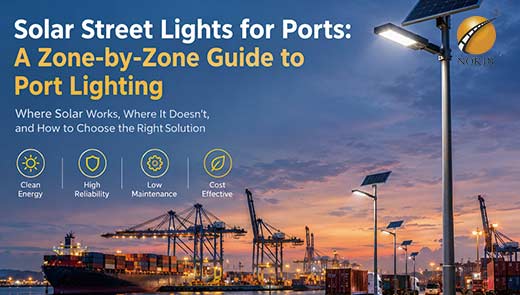
Ports and logistics centers operate 24 hours without interruption, and the lighting intensity requirements are high. 200W high-output solar street lights can be adapted to the high humidity and salt fog environment along the coast, providing stable lighting for cargo handling and vehicle passage.
Airport Surrounding Area
The lighting requirements for the periphery of the airport are extremely strict regarding equipment stability and anti-interference. The high-power solar street light system has strong stability and can operate continuously for a long time, meeting the high-standard lighting requirements of airport facilities.
Large Parking Lots
Large outdoor parking lots have wide areas and no fixed lighting facilities. 200W solar street lights have high lumen values and wide coverage, which can completely eliminate lighting blind spots and improve parking and traffic safety.
How to Choose a Reliable 200W Solar Street Light Supplier
At present, the quality of 200W solar street lights in the market varies greatly. NOKIN summarizes four core acceptance standards to help you avoid inferior products.
Verify Lumen Test Reports
Do not blindly believe the nominal power parameters. You need to ask the supplier to provide an official luminance test report and complete IES light source files.
Through the report, you can verify the actual lumen value, light distribution curve, and illumination uniformity of the product, effectively avoiding products with false power marking.
Check Battery Quality
Confirm the regular brand of battery cells and the actual capacity. Focus on checking the battery cycle life parameters.
High-quality 200W solar street lights must be equipped with genuine high-cycle lithium iron phosphate batteries. Inferior small-capacity batteries are prone to frequent failures on rainy days.
Review Heat Dissipation Design
Check the thickness of the light body aluminum material and the rationality of the cooling system structure.
Qualified products must adopt thick-cast aluminum shells and complete finned cooling structures. Thin and inferior aluminum materials will lead to poor heat dissipation and accelerated light attenuation.
Examine Real Engineering Cases
Ask the supplier to provide real engineering case materials, including project scenes, operation years, customer feedback, etc.
Quality-stable suppliers have mature implementation cases in highways, industrial parks, ports, etc., which are the most direct proof of product reliability.
FAQ About 200W Solar Street Lights
What is the standard lumen value of a 200W solar street light?
The standard lumen output of a 200W high-output solar street light with genuine quality is 180-200 lm/W. The total lumen output can reach 18,000-24,000 lumens. The high-quality optimized model can even reach up to 25,000 lumens.
lights with a lumen value lower than 16,000 are basically power-mislabeling products and cannot meet the commercial high-brightness lighting standards.
How long can a 200W solar street light last in rainy days?
The high-quality 200W solar street light with a standard energy storage system can support continuous full-lighting for 3-5 days in rainy days. The customized large-capacity model can last up to 6-7 days.
Products with reduced battery configuration can only last 1-2 days. In severe weather conditions, they will directly turn off.
Do 200W solar street lights necessarily use LiFePO4 Battery?
Yes,LiFePO4 Battery is a necessary configuration for 200W+ high-power solar street lights. Traditional lead-acid batteries have short cycle life, poor thermal stability, and low safety, and cannot meet the operating requirements of high-power equipment.
Phosphate iron batteries are resistant to high temperatures, have a long lifespan, and can withstand deep discharging, which can be adapted to long-term high-intensity operation of large-power systems and significantly reduce the later maintenance and replacement costs.
Why do some 200W solar street lights fail quickly?
The main four core reasons for the rapid failure of 200W solar street lights are: First, the heat dissipation design is not qualified, causing LED light decay and component aging; Second, power mislabeling, system configuration mismatch, and insufficient power generation; Third, poor-quality batteries are frequently deeply discharged, causing permanent damage; Fourth, there is no IP67 protection and anti-corrosion design, and they are eroded and damaged in harsh environments.
The vast majority of short-lived products are low-priced, low-quality, and poorly designed assembly products.
What is the optimal pole height for 200W solar street lights?
The optimal installation height of standard 200W solar street lights is 6-8 meters. Narrow municipal roads and small parking lots are suitable for 6-meter poles.
Wide highways, urban main roads, and large industrial parks are recommended to be equipped with 7-8-meter poles to ensure uniform light, no blind spots, and maximum coverage.
Conclusion
The 200W+ high-power solar street lights are not merely a simple power upgrade of low-power products; they are a professional commercial lighting system covering multiple fields.
The core of high-quality commercial solar street lighting does not lie in the nominal power parameters, but in five key engineering capabilities: professional thermal management system, matching energy storage system, intelligent energy management, reliable structural engineering, and scientific system adaptation.
Only products that have undergone standardized engineering design can avoid various problems in the use of solar street lights and operate stably for a long time in harsh environments such as high temperatures, rain, strong winds, and salt fog, bringing high-quality long-term investment returns to the engineering projects.