Why Solar Street Lights Are the Key to Long-Term Savings
Dec 03, 2025
Against the backdrop of persistently fluctuating and rising global energy prices, public and commercial lighting face increasingly burdensome long-term expenditure pressures. Traditional grid-connected Street lights not only require ongoing electricity payments but also incur hidden costs like line installation and frequent maintenance, placing significant strain on many entities responsible for lighting projects.
However, many hold a misconception about solar street lights, assuming their “higher initial investment” makes them uneconomical. In reality, from a long-term usage perspective, solar street lights represent a strategic choice for reducing lighting costs. This article comprehensively deconstructs the long-term cost-saving logic of solar street lights across four core dimensions—cost comparison, operational advantages, policy subsidies, and energy efficiency—using real-world case studies to provide decision-making references for entities with lighting needs.
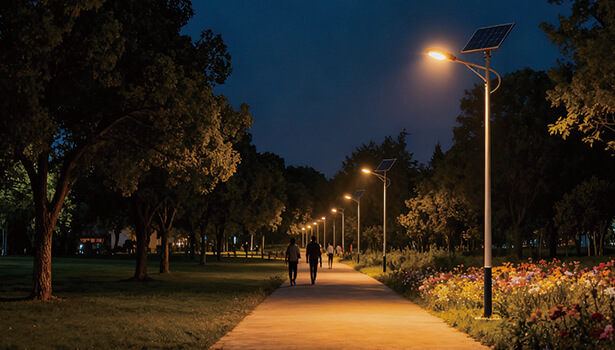
Solar Street Light Initial Investment vs. Long-Term Benefits
Initial Investment Comparison
When selecting street lights, many prioritize upfront costs. While it's true that the initial purchase price of a single solar street light typically exceeds that of a traditional grid-connected light, the situation reverses when considering subsequent long-term expenditures. Taking a common 6-meter, 30W street light as an example, the initial investment comparison is as follows:
|
Street Light Type |
Single-Unit Purchase Cost |
Wiring Installation Cost (Per Unit) |
Initial Total Investment (Per Unit) |
|
Traditional Grid-Powered Street Light |
Medium–Low |
Medium–Low |
Medium–Low |
|
Solar Street Light |
Medium–High |
None (no complex wiring required) |
Medium–High |
As shown in the table, while the initial total investment for solar street lights is slightly higher, this represents a one-time expense. In contrast, the costs associated with traditional grid-connected street lights continue to increase over time during subsequent use.
Long-Term Benefits
The hidden costs of traditional grid-connected Street lights manifest in two primary areas: First, electricity bills, which rise annually with increasing energy prices. Second, wiring installation and renovation expenses, requiring additional funding for maintenance during road renovations or when wiring ages. Solar Street lights, powered by sunlight, offer free energy for life with no electricity bills. Moreover, they eliminate the need for complex wiring installations, fundamentally reducing maintenance expenditures.
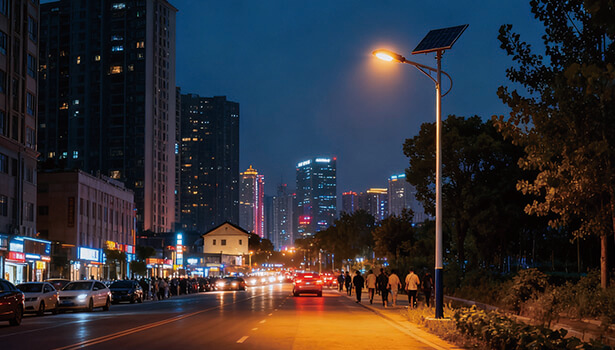
Operational Cost Advantages of Solar Street Lights
High Maintenance Burden of Traditional Street Lights
Maintenance costs for conventional grid-connected Street lights stem from two primary sources: First, line failure repairs. Extensive underground wiring is prone to faults caused by water damage or road construction. Each repair incurs labor costs alongside replacement materials like cables and components, falling within standard maintenance expense ranges.
Second, light source replacement. Traditional Street lights predominantly use high-pressure sodium lamps with a lifespan of only 2-3 years. Every 2-3 years, 100 Street lights require simultaneous light source replacement. Combined with labor costs, the cumulative expenditure is extremely high.
Low Maintenance Characteristics of Solar Street Lights
The core components of solar Street lights (LED light sources, lithium batteries) have lifespans far exceeding those of traditional Street lights. LED light sources last 10-15 years, while lithium batteries endure 8-12 years, requiring extremely infrequent replacements. Furthermore, solar Street lights eliminate complex wiring, reducing the likelihood of circuit failures. Routine maintenance involves only simple cleaning of solar panels (removing dust, leaves, or other obstructions) and periodic battery status checks. This streamlined process keeps maintenance costs exceptionally low.
Case Study
A 500-acre industrial park previously operated 120 conventional grid-connected Street lights, incurring high annual maintenance costs (covering wiring repairs, light source replacements, and labor expenses). In 2022, the park replaced all traditional lights with solar Street lights. Since then, annual O&M costs have dropped to an extremely low range (limited to solar panel cleaning and periodic inspections), achieving direct annual savings exceeding 90% of the original O&M expenses.
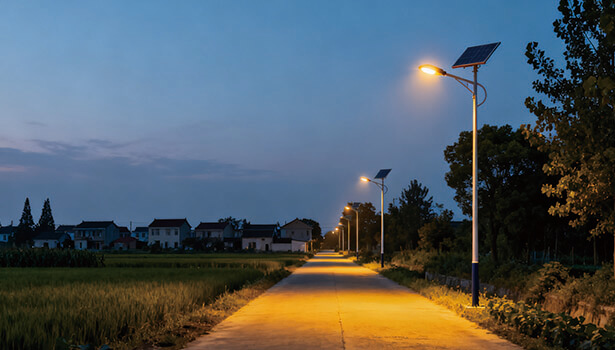
Solar Street Light Policy Subsidies
Policy Support Directions in Major Global Countries
To promote the development of the new energy industry, numerous countries worldwide have introduced supportive policies for solar products. These primarily include new energy subsidies (providing a certain percentage of financial subsidies to entities purchasing solar Street lights), special funds for energy conservation and emission reduction, and green procurement incentives.
Analysis of Common Subsidy Forms
Subsidy formats vary by region but primarily fall into four categories: First, direct cash subsidies covering 10%-30% of solar Street light procurement costs. Second, tax incentives allowing purchasers to enjoy corporate income tax and VAT reductions. Third, low-interest loans for solar projects at rates below market levels. Fourth, installation subsidies providing per-unit funding based on deployment volume.
Energy Efficiency Upgrades in Solar Street Lights
Photovoltaic Technology Advancements
With continuous improvements in photovoltaic technology, the conversion efficiency of solar panels in street lights has significantly increased, with mainstream products now achieving conversion efficiencies exceeding 20%. More importantly, new-generation solar panels maintain high power generation efficiency even in low-light conditions (such as overcast or rainy days). This ensures reliable daily power supply for street lights even in regions with average sunlight, eliminating the issue of lights failing to illuminate during cloudy periods.
Energy Storage and Smart Control
The storage capacity of solar street light batteries (lithium batteries) has been continuously upgraded. Mainstream products now offer sufficient storage to support continuous operation for 5-7 days during prolonged rainy periods, ensuring stable lighting.Simultaneously, the application of smart control systems further enhances energy efficiency: light-sensing control, time-based scheduling, and remote monitoring effectively prevent unnecessary power consumption, minimizing energy waste.
Moving beyond the misconception of high initial investment, solar street lights deliver core advantages of zero electricity costs and low operational expenses. Combined with policy subsidies and technological advancements, they achieve extreme long-term cost compression. For entities pursuing sustainable development and long-term savings, choosing solar street lights transcends simple lighting replacement. It represents a strategic decision balancing economic benefits, environmental responsibility, and operational efficiency—delivering a more cost-effective long-term solution for public and commercial lighting sectors.