Are Solar Street Lights Worth It?
Mar 09, 2026
As global sustainability awareness deepens, solar street lights have emerged as a popular choice for municipal projects, rural revitalization, and park planning as a green lighting solution. Yet many remain skeptical about their cost-effectiveness, with “Are solar street lights worth the investment?” becoming a central question. This article comprehensively analyzes the value of solar street lights from multiple perspectives—including foundational knowledge, core advantages, potential drawbacks, comparisons with traditional street lights, and cost-benefit assessments—to provide readers with objective, professional insights.
What Are Solar Street Lights?
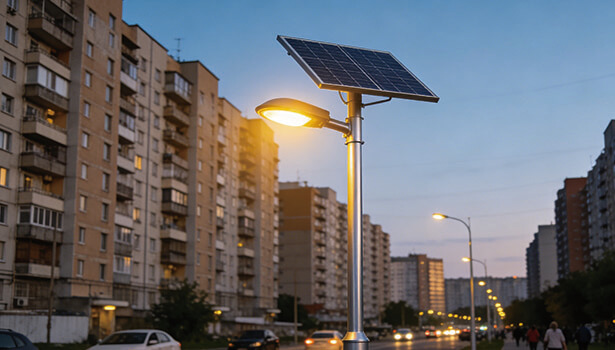
Solar street lights constitute an autonomous lighting system that relies on converting solar energy into electricity for nighttime illumination. Requiring no connection to municipal power grids, they serve as versatile green lighting solutions for diverse scenarios. Their core components consist of four main parts: First, solar panels absorb sunlight and convert it into electricity. Second, energy storage batteries store the electricity generated during the day to power nighttime illumination.
Third, LED lighting fixtures provide efficient, stable nighttime illumination with significantly lower energy consumption than traditional fixtures. Fourth, an intelligent control system integrates functions like light sensors, timers, and motion sensors to automatically adjust lighting based on environmental conditions. The operational logic is straightforward: During daylight hours, solar panels absorb light energy, converting it into electricity stored in the energy storage battery. At nightfall, when light levels decrease, the control system automatically activates, drawing power from the storage battery to illuminate the LED fixtures. The cycle repeats the following day with recharging, ensuring continuous operation.
Core Advantages of Solar Street Lights
Environmental Impact
The environmental value of solar street lights lies in their green attributes throughout their entire lifecycle. Operating solely on solar energy, they eliminate the consumption of fossil fuels like coal and natural gas, fundamentally reducing emissions of greenhouse gases such as carbon dioxide and sulfur dioxide, along with pollutants.
Industry data indicates that each 100W solar street light reduces approximately 150kg of carbon dioxide emissions annually—equivalent to the carbon sequestration effect of planting three mature trees. For regions promoting green cities and beautiful villages, solar street lights serve not only as lighting fixtures but also as vital vehicles for implementing sustainable development goals, accelerating the low-carbon transformation of urban and rural areas.
Energy Savings
The core economic advantage of solar street lights lies in zero operational electricity costs. Traditional street lights require continuous connection to municipal grids, incurring fixed monthly electricity bills. Solar street lights, however, require only a one-time installation, with no ongoing electricity expenses afterward, as they achieve self-sufficiency in both energy storage and power generation.
For municipal departments, large-scale deployment of solar street lights significantly reduces electricity expenditure pressures on fiscal budgets. For private property owners like industrial parks and rural communities, substantial long-term operational cost savings are achievable. Combined with their extended lifespan, the overall lifetime cost is substantially lower than traditional street lights.
Low Maintenance
Solar street lights feature extremely low maintenance costs, primarily due to their durable components and simple structure. Solar panels are engineered with weather-resistant materials to withstand extreme conditions like wind, rain, snow, and high temperatures, boasting a lifespan exceeding 25 years. Routine maintenance involves only simple surface dust cleaning.
LED fixtures have a lifespan exceeding 50,000 hours. Assuming 8 hours of daily operation, they can function continuously for approximately 17 years—far surpassing the 1-2 year bulb replacement cycle of traditional street lights. The system features a straightforward overall structure without complex grid connection components, minimizing potential failure points. Routine maintenance involves only an annual comprehensive inspection of the energy storage battery and battery replacement every 5-7 years, resulting in total maintenance costs approximately 1/5th of traditional street lights.
Easy Installation
Solar street lights require no connection to municipal power grids, eliminating geographical constraints and offering significant installation advantages. Installation requires no underground grid trenching. The process is straightforward: simply secure the light pole and connect the components. Installation efficiency exceeds traditional street lights by over 60%, significantly reducing labor and construction costs. They are particularly suited for grid-unconnected areas like remote villages, mountainous regions, and pastoral zones. They also serve temporary lighting needs in industrial parks, outdoor scenic lighting in tourist attractions, and construction site illumination—addressing lighting demands beyond traditional street lights' reach. Additionally, the equipment can be easily disassembled and relocated. Should site planning change, units can be effortlessly moved to new locations for reuse, preventing resource wastage.

Potential Drawbacks of Solar Street Lights
Higher Initial Investment Costs
Compared to traditional street lights, solar street lights incur higher upfront purchase and installation costs. Traditional street lights only require purchasing the luminaire, pole, and grid connection accessories, with a per-unit cost of approximately $80–200. Solar street lights, however, necessitate additional components such as solar panels, energy storage batteries, and smart control systems, resulting in a per-unit cost range of $150–500. The overall investment for large-scale projects will be higher. Nevertheless, this cost gap gradually narrows over time, offering a significant cost advantage in the long term.
Impact of Weather Conditions
Solar street lights rely on solar charging for operation, making them susceptible to weather variations. In regions experiencing prolonged rainy periods, frequent cloud cover, or short daylight hours during winter, solar panel charging efficiency decreases. This may lead to insufficient energy storage in batteries, resulting in reduced nighttime brightness or shorter illumination durations.
However, current technological advancements have addressed this challenge. Mainstream solar street lights are equipped with high-capacity storage batteries capable of holding 3-5 days' worth of energy. This ensures reliable illumination even during prolonged rainy periods, significantly mitigating the negative impact of weather conditions.
Solar Street Lights vs. Traditional Street Lights: A Comparison
|
Comparison Dimension |
Solar Street Lights |
Traditional Street Lights (Grid-Powered) |
|
Energy Type |
Solar energy (renewable energy) |
Fossil-fuel-based electricity (non-renewable) |
|
Initial Cost |
Higher ($150–$500 per unit) |
Lower ($80–$200 per unit) |
|
Operating Cost |
No electricity cost, only minimal maintenance |
Monthly electricity bills + frequent bulb replacement costs |
|
Maintenance Cost |
Low (annual maintenance about 1/5 of traditional lights) |
High (regular bulb replacement and grid maintenance required) |
|
Installation Difficulty |
Simple, no grid connection required, fast installation |
Complex, requires trenching and grid wiring with longer construction time |
|
Application Scenarios |
Suitable for all scenarios, especially areas without grid access |
Only suitable for areas covered by the power grid |
|
Environmental Impact |
Zero emissions, low-carbon and environmentally friendly |
Produces pollutants and greenhouse gas emissions |
As shown in the table, solar street lights demonstrate comprehensive advantages in long-term operation, environmental attributes, and scenario adaptability, with only initial costs as a drawback—a shortcoming that can be offset by long-term returns.
Solar Street Light Costs and Payback Period
The cost of solar street lights requires comprehensive evaluation considering long-term benefits, with the payback period serving as a key indicator of cost-effectiveness. The cost per unit ranges from $150 to $500, depending on brand, wattage, battery capacity, and additional features. Large-scale projects can benefit from bulk purchase discounts, reducing the per-unit cost by 10%-20%. From a payback perspective, traditional street lights incur annual electricity and maintenance costs of approximately $50–80, while solar street lights require only minimal annual maintenance fees (around $10–15), yielding annual savings of $35–70.
Industry data indicates a payback period of approximately 3-5 years for solar street lights. This means that after 3-5 years of operation, the accumulated savings cover the initial cost difference, with all subsequent usage generating pure profit. Taking a 100W solar street light as an example: the initial cost per unit is $200 higher than traditional lights, but it saves $50 annually in electricity and maintenance fees. The investment pays off in just 4 years, yielding a net profit of $50 per year starting from the 5th year, making it highly cost-effective for long-term use.
Which Scenarios Are Most Suitable for Installing Solar Street Lights?
Municipal Public Infrastructure
Urban roads, parks, plazas, scenic areas, and other public spaces form the core application scenarios for solar street lights. Municipal authorities can deploy solar lighting to reduce fiscal electricity expenditures while aligning with green urban development plans and enhancing city aesthetics. For rural roads and township public spaces, solar street lights solve lighting challenges in off-grid areas, improving rural living and transportation environments.
Private Properties
Industrial parks, logistics zones, large communities, farms, and ranches with extensive lighting needs can significantly reduce operational costs by installing solar street lights. This is especially true for remote farms and ranches without grid access, where solar lighting is the only viable solution, ensuring nighttime livestock monitoring and safe site operations.
Special Emergency Scenarios
At disaster relief sites, temporary construction areas, outdoor exhibitions, and other scenarios requiring temporary lighting, solar street lights enable rapid deployment without grid dependency. Their reusability reduces costs and resource consumption for temporary illumination.
While solar street lights have minor drawbacks like higher initial costs and slight weather sensitivity, their core advantages—environmental sustainability, long-term energy savings, low maintenance, and easy installation—along with their superior long-term cost-effectiveness compared to traditional lights, make them an excellent lighting choice across various scenarios. For municipal departments, private property owners, and rural communities, solar street lights represent not just lighting equipment but an investment yielding both economic returns and environmental value. As solar technology continues to evolve, with improvements in battery storage efficiency and charging rates, the performance and cost-effectiveness of solar street lights will further enhance. They are poised to become the mainstream choice in the lighting sector.