Smart Street Lighting: Sensor-Driven Solar Street Light
Mar 13, 2026
As smart city development accelerates today, outdoor lighting—a vital component of urban infrastructure—is undergoing a transformation from “passive illumination” to “intelligent response.”Sensor-driven solar street lights leverage the combined advantages of renewable energy, intelligent sensing, and IoT connectivity to effectively address the pain points of traditional street lighting—such as grid dependency, high energy consumption, cumbersome maintenance, and severe light pollution.
They have emerged as the mainstream solution for next-generation smart city illumination. This article provides a comprehensive analysis of smart street lights, covering their definition, technical components, core value, and development trends, offering professional guidance for project planning and product understanding.
Introduction to Smart Street Lighting
What are Smart Street Lights?
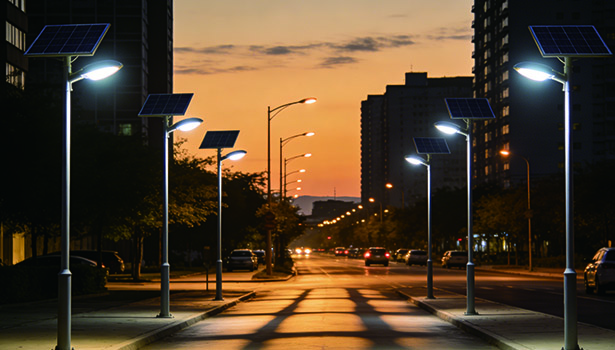
Smart street lights represent a modern outdoor lighting system integrating solar power, sensor perception, IoT control, and high-efficiency LED illumination. Their defining distinction from traditional street lights lies in autonomous sensing, automatic adjustment, remote management, and data interaction capabilities. These systems operate stably off-grid while dynamically adjusting illumination based on ambient brightness, pedestrian/vehicle activity, and management requirements—truly achieving demand-based power supply and intelligent energy conservation.
Simultaneously, they offer sustainability, low cost, and high adaptability, making them widely applicable to urban roads, campuses, communities, rural areas, and various public spaces. They represent the most iconic product form within the solar-powered smart street light ecosystem.
The Evolution of Street Light Systems
Lighting systems have undergone a complete upgrade from basic functionality to intelligent control, with each generation addressing the core shortcomings of its predecessor. First-generation grid-connected street lights relied on municipal power supply, featuring fixed brightness, high energy consumption, complex wiring, limited coverage in remote areas, and significant energy waste from constant illumination.
Second-generation solar street lights eliminated grid dependency by utilizing solar panels and batteries for autonomous power, but lacked intelligent control modules. They couldn't adjust brightness based on environmental changes, resulting in limited endurance and energy efficiency during cloudy days.
Third-generation sensor-driven solar street lights integrate multiple sensors and IoT technology with solar power. They automatically illuminate when people approach, dim when people leave, turn on at dusk, and turn off at dawn. They also support remote monitoring, fault alerts, and multi-system coordination. This comprehensively addresses the shortcomings of the first two generations, making them a vital component of smart city lighting infrastructure.
|
Core Type |
Key Features |
Main Pain Points |
|
Traditional Grid-Powered Street Lights |
Fixed brightness, dependent on the power grid, designed only for basic lighting |
High energy consumption, high maintenance costs, and significant energy waste |
|
Standard Solar Street Lights |
Independent from the power grid, powered by solar energy, fixed brightness |
Lack of intelligent control, continued energy waste, unable to adapt to dynamic lighting needs |
|
Sensor-Driven Solar Street Lights |
Integrates sensors + IoT + LED technology, on-demand lighting, remote control, off-grid operation |
No major drawbacks; solves the core issues of the previous two generations and supports smart city applications |
Components of Sensor-Driven Solar Street Lights
Fundamental Technology and Core Components of Solar Street Lights
|
Core Component |
English Name |
Core Function |
Core Advantages |
|
Solar Panel |
Solar Panels |
Capture sunlight during the day and convert solar energy into electricity |
Suitable for various outdoor environments, operates without grid dependency, and provides sustainable power |
|
LED Light |
LED Fixtures |
Convert electrical energy into light to provide outdoor illumination |
High brightness with low energy consumption; lifespan of 50,000–100,000 hours, saving about 60% energy compared to traditional high-pressure sodium lamps |
|
Charge Controller |
Charge Controllers |
Regulate energy flow and manage the charging and discharging process |
Prevents battery overcharging and over-discharging, extends battery lifespan, and ensures stable system operation |
|
Battery |
Batteries |
Store the electricity generated during the day for nighttime lighting |
Supports operation during cloudy or rainy weather, ensuring uninterrupted lighting |
Role of Sensors in Smart Street Lighting
Sensors are the key components enabling solar-powered smart street lights to achieve “intelligence.” By continuously gathering environmental data, they transform street lights from fixed illumination to proactive responsive lighting, significantly enhancing energy efficiency and user experience. Motion-sensing solar street lights detect pedestrian and vehicle movement, maintaining low-level illumination when unoccupied and automatically brightening to full power during passage. This ensures safety while minimizing unnecessary energy consumption. Radar sensors, with their strong anti-interference capabilities, remain unaffected by small animals or wind-induced vibrations, offering stability ideal for complex outdoor environments.
Ambient light sensors continuously monitor natural light intensity, accurately discerning dusk and dawn to enable automatic switching on and off. This eliminates energy waste or lighting gaps caused by delayed manual adjustments. Environmental sensors further monitor air quality, temperature, humidity, and other data, uploading environmental information to management platforms. This provides data support for urban governance, environmental monitoring, and public safety, transforming smart street lights from simple lighting fixtures into urban sensing nodes.
Integration of IoT in Street Lighting Solutions
IoT technology serves as the core enabler for centralized management, remote control, and system coordination of street lights. By connecting dispersed lights into a unified network via cloud platforms, it significantly enhances operational efficiency and management capabilities. Through IoT-enabled smart street light systems, administrators can monitor real-time operational status, energy consumption, battery levels, and on/off status for each light via backend interfaces. Remote adjustments to brightness, scheduled on/off times, and group controls eliminate manual field inspections, making this solution particularly suitable for large-scale deployments on urban thoroughfares, industrial parks, and expansive new developments.
Benefits of Smart Solar Lighting
Cost Reduction & Efficiency Gains with Significant Long-Term Returns
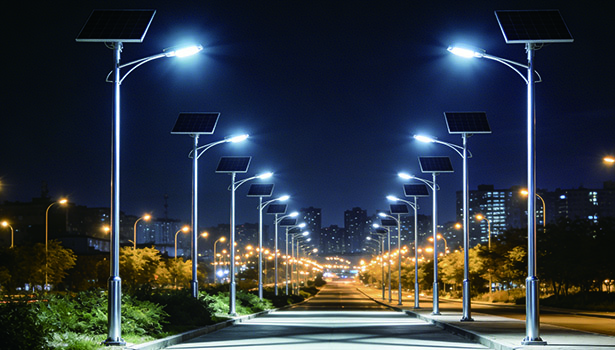
Sensor-driven solar street lights offer substantial cost advantages throughout their entire lifecycle, delivering stable and substantial economic benefits for governments, enterprises, and industrial parks. The system relies entirely on solar power generation, eliminating electricity expenses. It is particularly suitable for mountainous areas, rural villages, and remote roads without grid coverage, saving significant costs on cable laying and transformer construction. After a one-time investment, long-term operation incurs virtually no energy costs.
LED lighting combined with intelligent control modes drastically reduces maintenance frequency. Coupled with IoT remote management, this minimizes investments in manual inspections, elevated maintenance, and equipment replacement. Maintenance costs for some projects can be reduced by over 90%. Additionally, solar smart street lights align with global green and low-carbon policy directions. Many countries and regions offer subsidies and support for renewable energy projects, further lowering initial user investment and shortening the overall investment return cycle.
Green and Eco-Friendly, Supporting Sustainable Development
Amid growing emphasis on environmental protection and ecological conservation, smart street lights offer distinct eco-friendly attributes. Through precise sensing and directional light distribution, the system prevents light scatter, effectively reducing light pollution while safeguarding night skies and preserving nocturnal rhythms of flora and fauna. Utilizing solar energy—a clean, fossil-fuel-free source—it emits no carbon dioxide, sulfur compounds, or other greenhouse gases and pollutants. This approach meets lighting demands while contributing to carbon peak and carbon neutrality goals.
Multi-Scene Adaptability
Sensor-driven solar street lights feature flexible structures, easy installation, and modern aesthetics, seamlessly adapting to diverse environments including urban roads, rural highways, industrial parks, residential communities, parks, scenic areas, and parking lots. Their sleek, minimalist design integrates harmoniously with surrounding landscapes without compromising visual appeal. Select models offer adjustable brightness and ambient lighting modes to meet special visual requirements for festivals, events, and other occasions.
Smart sensing modes significantly enhance nighttime safety. In remote areas, residential entrances, and park pathways, lights automatically brighten when people pass by and dim to energy-saving levels when unoccupied. This boosts security while avoiding discomfort from constant glare. Its off-grid operation and rapid deployment capabilities make it particularly suitable for rural revitalization projects, new district construction, and emergency temporary lighting applications. Requiring no complex installation, it can be quickly put into use—a key reason for the widespread adoption of this multifunctional smart solar street light in real-world scenarios.
The Future of Smart Street Lighting
Continuous Technological Advancements
Future smart street lights will evolve toward greater intelligence, extended lifespan, and enhanced integration. Deep integration of AI algorithms and sensors enables predictive analysis of pedestrian and vehicle traffic, along with automated optimization of lighting strategies, further boosting energy efficiency and user experience. Modular design emerges as the mainstream approach, allowing solar panels, batteries, sensors, and control modules to be independently removed and replaced, thereby reducing maintenance complexity and long-term costs.
More efficient photovoltaic components, longer-cycle-life lithium batteries, and more stable charging management technologies are maturing, enabling street lights to operate reliably in regions with prolonged rainy weather and poorer light conditions. Sensor types continue to diversify, integrating functions beyond lighting control—such as security monitoring, noise detection, WiFi coverage, and emergency broadcasting—to enhance the comprehensive value of each lamp.
Expanding Application Scenarios
Solar street lights will gradually evolve from single-purpose lighting fixtures into multifunctional terminal nodes for smart cities, undertaking more public service functions. Future street lights may integrate electric vehicle charging interfaces, becoming key components of distributed charging networks. Equipped with WiFi hotspots and signal amplifiers, they can provide stable network coverage in public areas.
Combined with cameras and intelligent analysis algorithms, they enable security and management functions such as crowd monitoring, abnormal behavior alerts, and traffic flow statistics. In rural areas, scenic spots, and industrial parks, IoT smart street lights can integrate with environmental monitoring, disaster warning, and information dissemination systems to form small-scale smart management networks. This truly achieves the development goal of “one lamp, one network, one smart city terminal node.”
Industry Opportunities Continue to Emerge
Governments worldwide are increasing investments in green infrastructure, smart cities, and rural development. Off-grid lighting, low-carbon retrofits, and intelligent management have become essential requirements. Compared to traditional street lights, smart street lights offer distinct advantages in energy efficiency, environmental sustainability, deployment costs, and operational efficiency, making them more likely to receive policy support and project preference. Whether upgrading urban thoroughfares, renovating back alleys, achieving full coverage of rural roads, or advancing smart infrastructure in industrial parks and scenic areas, these initiatives provide abundant implementation opportunities for the industry, showcasing immense long-term growth potential.
Sensor-driven solar street lights represent a quintessential integration of lighting technology, new energy solutions, and smart control systems. They not only address the energy consumption, cost, and pollution issues of traditional lighting but also serve as critical infrastructure for smart city illumination and low-carbon society development. Powered by solar energy, enabled by sensors, and connected through IoT, these systems deliver multiple benefits—energy efficiency, environmental sustainability, safety, high performance, and aesthetic appeal—making them widely applicable across urban and rural settings, public and commercial spaces, and both industrial and residential environments.