How to Choose Rural Integrated Solar Street Lights
Apr 21, 2026
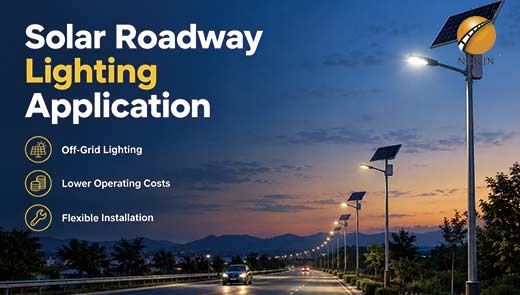
Solar street lights, with their advantages of being clean, environmentally friendly, zero electricity cost, and off-grid power supply, are gradually replacing traditional municipal street lights. Integrated solar street lights, as the mainstream category of solar street lights, are widely used in various scenarios such as rural roads, squares, and village entrances due to their convenient installation, simple maintenance, and strong adaptability.
However, most rural purchasers, lacking professional selection knowledge, tend to fall into the misunderstanding of "only considering power" and "choosing low-end configurations for bargains", resulting in solar street lights purchased having problems such as insufficient brightness, poor battery life, high failure rates, and short lifespan. This not only wastes funds but also fails to meet the actual lighting needs. Next, NOKIN will combine authoritative industry data to systematically analyze the core key points for selecting rural integrated solar street lights, providing professional references for rural lighting projects and helping more rural areas use efficient, stable, and durable integrated solar street lights.
Why Rural Areas Prefer Integrated Solar Street Lights
The geographical environment and power conditions in rural areas are significantly different from those in cities. Remote villages have insufficient power grid coverage, unstable power supply, and high costs for cable laying. These factors determine that integrated solar street lights are the optimal solution for rural lighting. Compared with traditional municipal street lights and split-type solar street lights, their advantages mainly lie in three aspects:
Off-Grid Power Supply Advantages
In rural remote areas (mountainous areas, islands, and remote villages), the power grid coverage is incomplete, and some areas are not connected to the municipal power supply. Even if there is power grid coverage, there are problems such as unstable voltage and frequent power outages. Integrated solar street lights adopt the "solar power generation + energy storage power supply" off-grid mode, without the need for cable laying or connection to the municipal power grid, enabling flexible deployment "wherever lighting is needed, install there".
The infrastructure construction cost for a single traditional municipal street light (cable excavation, transformer installation, etc.) is as high as $300 - $800, while integrated solar street lights only require the installation of a light post, significantly reducing the initial investment, especially suitable for rural areas with limited funds. According to industry reports, the usage rate of off-grid solar lighting products in rural remote areas has been increasing year by year, with integrated solar street lights accounting for over 70% of the total, fully demonstrating their scene adaptability.
Low Cost and Easy Maintenance
Rural lighting projects generally face problems of limited funds and insufficient maintenance manpower. Integrated solar street lights' "zero electricity cost, low maintenance" characteristics precisely meet these needs. Each street light can save $150 - $200 in electricity costs per year, with a cumulative savings of $750 - $1,000 over 5 years; high-quality lithium batteries have a lifespan of 5 - 8 years, and the LED light source has a lifespan of over 50,000 hours. Daily maintenance only requires cleaning the photovoltaic panel, with an annual maintenance cost of less than $30, much lower than that of traditional municipal street lights (annual maintenance cost of $100 - $150).
Compared with traditional municipal street lights, the initial investment of integrated solar street lights is slightly higher, but the total holding cost over 5 years can be reduced by more than 40%. The long-term cost performance is higher, and the average lifespan is over 6 years, requiring no large-scale maintenance, effectively reducing the maintenance pressure in rural areas.
Fast Installation and Flexible Deployment
Rural lighting projects often require large-scale rapid deployment. Integrated solar street lights integrate photovoltaic panels, batteries, LED lights, and controllers into one unit, without the need for on-site assembly. Each installation only takes 1 - 2 hours, with a construction efficiency that is over 80% higher than that of traditional municipal street lights. They do not require unified planning of power grid lines and can be flexibly deployed according to different scenarios such as main roads, side roads, and squares, suitable for large-scale batch deployment, which can significantly shorten the lighting project cycle and quickly achieve the goal of "making the countryside 'lit at night'".
7 Key Selection Points for Rural Integrated Solar Street Lights
The core of integrated solar street light selection is "scene matching, parameter adaptation, and system balance". Its performance is determined by core modules such as LED light sources, photovoltaic panels, batteries, intelligent controllers, and protection grades. The choice of each module directly affects the lighting effect, battery life, and service life. Here are 7 key selection points:
Scene Matching and Application-Based Selection
The first step in selection is to clearly define the lighting requirements and application scenarios. Different rural scenarios have different requirements for brightness, coverage range, and lighting duration. The specific adaptation suggestions are as follows:
Main roads in rural areas (5-7 meters wide):
Frequent pedestrian and vehicle traffic, need medium brightness, lighting radius 12-15 meters, 10-12 hours of lighting per night, recommend choosing 30-50W integrated solar street lights.
Rural paths (3-4 meters wide):
Fewer traffic flows, need basic brightness, lighting radius 8-10 meters, 8-10 hours of lighting per night, recommend choosing 15-30W integrated solar street lights.
Village squares/activities centers:
Need high brightness and wide coverage, lighting radius 15-20 meters, support for continuous lighting or sensor mode, recommend choosing 50-100W integrated solar street lights.
Village entrances/intersections:
Frequent pedestrian and vehicle intersections, need high brightness + wide-angle lighting (angle ≥ 120°), recommend choosing 40-60W integrated solar street lights to avoid lighting dead zones.
Core judgment indicators: Lumen (brightness), illumination angle, lighting duration, rainy-day battery life. Rural areas should prioritize products that support normal lighting for 2-3 days of rainy weather. According to industry data, improper scene matching of solar street lights in rural areas leads to 40% of usage problems. Scene matching is the core prerequisite for selection.
LED Light Source Selection (Lumens, CRI & Efficiency)
The LED light source is the "lighting core" of solar street lights. The selection should focus on 4 parameters:
- Lumens (lm/W): Prioritize LED light sources with 140-210 lm/W. The higher the lumens, the stronger the brightness and energy efficiency at the same power, avoid choosing products with a lumens below 120 W.
- Chip brand: Preferwell-known brand chips such as Philips and Cree, with low light attenuation (5 years < 5%), strong stability, and a lifespan over 50,000 hours. Avoid using inferior chips.
- Color temperature: 6000-6500K for rural roads (clear vision), 5000-6000K for village squares (soft and comfortable).
- Color Rendering Index (CRI): ≥ 80, can clearly reproduce the true colors of objects, improve night visibility, and ensure travel safety.
High-quality LED light sources not only enhance lighting effect but also reduce energy consumption and maintenance costs. Rural selection should not choose inferior light sources to lower prices; otherwise, it will increase the later usage costs.
Solar Panel Selection and Power Matching
The photovoltaic panel is the "energy entrance" of solar street lights. Its conversion efficiency and power directly affect charging capacity. Rural areas need to select the appropriate type and power based on lighting conditions:
Type selection: Single-crystal silicon is preferred
|
Type |
Conversion Efficiency |
Cost |
Adapted Scenarios |
|
Single-crystal silicon |
20%–22% |
Medium-high |
Mainstream in rural areas; preferred for low-illumination or overcast regions |
|
Polycrystalline silicon |
17%–19% |
Low |
Suitable for regions with sufficient sunlight and limited budget |
Rural areas should prioritize single-crystal silicon photovoltaic panels, especially in mountainous areas and overcast regions, where the conversion efficiency is high and can ensure sufficient charging even in low-light conditions; regions with sufficient lighting and limited budget can choose polycrystalline silicon.
Power matching: Follow the formula "LED power × 1.8-2.5 = photovoltaic panel power"
- 30W LED → 60-75W single-crystal silicon panel
- 50W LED → 100-120W single-crystal silicon panel
- 15-20W LED → 40-50W monocrystalline silicon panel
The power of the photovoltaic panel is 1.8 times lower than that of the LED, which may lead to insufficient charging and power-off on rainy days; if it is higher than 2.5 times, it will result in cost waste. A reasonable match is the key to stable operation.
Battery Selection and Capacity Design
The battery is the "energy storage heart" of the solar street light. Rural areas have more rainy days and inconvenient maintenance, so high-quality lithium batteries are preferred. The specific selection suggestions are as follows:
Battery type: Lithium iron phosphate battery is the first choice
|
Type |
Life |
Cost |
Advantages and Disadvantages |
|
Lithium Iron Phosphate Battery (Recommended) |
5–8 years |
Medium |
Long cycle life, wide temperature tolerance, high safety (no leakage), low maintenance |
|
Lead-Acid Battery |
2–3 years |
Low |
Short lifespan, poor temperature tolerance, prone to leakage, requires regular maintenance (not recommended) |
For rural solar street lights using lithium iron phosphate batteries, the average lifespan is over 6 years, while lead-acid batteries only last 2-3 years, and the replacement cost is high. When selecting, prioritize avoiding lead-acid batteries.
Capacity design: configured for 2-3 consecutive rainy days
- 30W LED → 12V 30-40Ah lithium iron phosphate battery
- 50W LED → 12V 60-80Ah lithium iron phosphate battery
- 15-20W LED → 12V 20-30Ah lithium iron phosphate battery
- Low sunlight / rainy areas → Capacity increase by 20%-30%
Intelligent Controller and Energy Optimizatione
The intelligent controller is the "brain" of the solar street light. In rural areas, a product with the three core functions should be selected, and the MPPT (Maximum Power Point Tracking) function should be prioritized:
- Light control: automatically turns on at night and turns off at dawn, no need for manual operation, suitable for unmanned scenarios in rural areas.
- Time control + dimming: full power in the early morning and 50%-70% power in the late evening, saving 20%-30% energy and extending battery life.
- Human body / radar sensing: low brightness (30% power) for no one, full brightness for someone, saving up to 60%, suitable for small roads and village entrances.
The MPPT controller can increase charging efficiency by 15%-20%, which is more suitable for rural lighting conditions and can significantly improve the battery life on rainy days.
Protection Level and Environmental Adaptability
Rural areas have more rain, dust, large temperature differences, and strong winds. The protection level directly determines the durability of the street light. When selecting, pay attention to 4 points:
- IP protection: ≥IP65 (fully dust-proof, resistant to low-pressure water spray), select IP66/IP67 for coastal/high-humidity areas.
- Temperature adaptation: working temperature -40°C to 60°C, suitable for extreme high and low temperature environments.
- Material: lightbody uses die-cast aluminum / aviation aluminum (anti-rust and corrosion-resistant), lightpole uses hot-dip galvanizing spray (wall thickness ≥ 3mm).
- Wind resistance: ≥12-level wind resistance, suitable for open and windy rural terrain.
System Matching and Configuration Balance
The major mistake in selection is "only looking at power and ignoring system balance". The core logic is "photovoltaic panel power + battery capacity + LED power + controller efficiency = system balance":
- Reject falsely labeled products: avoid labeling power that does not match the actual value (e.g., 50W is actually only 30W), choose regular products with test reports.
- Ensure parameter matching: for 30W LED, it needs to be paired with 60-75W photovoltaic panel, 30-40Ah lithium iron phosphate battery, and MPPT controller.
- Pay attention to overall quality: prioritize products with matching components, good reputation, and complete after-sales service to ensure stable operation throughout the year.
Optimization Strategies for Different Rural Scenarios
Rural lighting, budget, and deployment scenarios vary, so targeted optimization and configuration are needed to improve cost-effectiveness:
Low Sunlight Areas
- Photovoltaic panel: 100% select monocrystalline silicon (efficiency ≥ 21%), power increase by 20%.
- Battery: capacity increase by 30%, ensuring 3-5 days of battery life on rainy days. • Controller: Choose an MPPT controller, enable the dimming mode, and reduce energy consumption at night.
- Installation: Adjust the angle of the photovoltaic panels (consistent with the local latitude or 5° higher), and avoid obstructions.
Budget-Limited Projects
- Priority: Battery quality > Photovoltaic panel efficiency > LED brightness. Preferentially select lithium iron phosphate batteries and monocrystalline silicon photovoltaic panels.
- Recommended configuration: 30W standard model (60W monocrystalline silicon + 30Ah lithium battery), unit price $600 - $800, meets basic lighting needs.
- Avoid pitfalls: Do not choose inferior lead-acid batteries and falsely labeled products. Bulk purchase (more than 100 units) can reduce the unit price by 10% - 15%.
Distributed Deployment Projects
- Prefer to select integrated lights, with efficient installation and simple maintenance.
- Choose general models for easy replacement of accessories and unified management.
- Bulk purchase of the same model, unified configuration, to improve management efficiency.
Recommended Solar Street Light Configurations for Rural Areas (2026)
|
Application Scenario |
Recommended LED Power |
Battery Type / Capacity |
Photovoltaic Panel Type / Power |
Core Features |
|
Rural Path |
15 – 30W |
LiFePO₄ (Lithium Iron Phosphate) 20 – 30Ah |
Monocrystalline Silicon 40 – 60W |
Low cost, basic lighting, supports 2–3 days autonomy in rainy conditions |
|
Rural Main Road |
30 – 50W |
LiFePO₄ (Lithium Iron Phosphate) 30 – 60Ah |
Monocrystalline Silicon 60 – 100W |
Stable performance, equipped with intelligent dimming function |
|
Village Square |
50 – 100W |
LiFePO₄ (Lithium Iron Phosphate) 60 – 100Ah |
Monocrystalline Silicon 100 – 150W |
High brightness, wide coverage, supports motion sensing mode |
|
Remote Mountainous Areas |
40 – 60W |
LiFePO₄ (Lithium Iron Phosphate) 60 – 80Ah |
Monocrystalline Silicon 100 – 120W |
Suitable for low sunlight areas, supports 3–5 days autonomy in rainy weather |
Summary of Rural Solar Street Light Selection
The selection of rural integrated solar street lights is based on four core principles: "scene matching, system balance, environmental adaptation, and full life cycle cost". The optimal selection priority in 2026 is: lithium iron phosphate battery > efficient monocrystalline silicon photovoltaic panel > intelligent control system > IP65 + high protection structure.
When selecting, it is necessary to avoid the misunderstandings of "only considering power" and "choosing low-end products for low prices", and choose products from reputable manufacturers with a reasonable system matching.
Combine local sunlight, budget, and scene-specific optimization for configuration. Following these key points can not only meet the lighting needs of rural areas, but also achieve long-term low-cost stable operation, making integrated solar street lights a reliable choice for rural lighting projects.