Choosing Quality Solar Outdoor Lighting: Factors to Consider
Mar 18, 2026
In recent years, solar outdoor lights have evolved from a niche eco-friendly option into a mainstream lighting solution for residential, commercial, and public spaces. As the concept of sustainability gains widespread acceptance, consumer and business demand for eco-friendly, energy-efficient products continues to grow, driving rapid expansion in the solar outdoor lighting market. However, with such a wide variety of products available—ranging from high-quality to subpar—consumers often find themselves overwhelmed when making a selection. This article breaks down the key factors to consider when selecting high-quality solar outdoor lights, helping you make an informed decision that balances performance, durability, aesthetics, and value for money.
Brightness
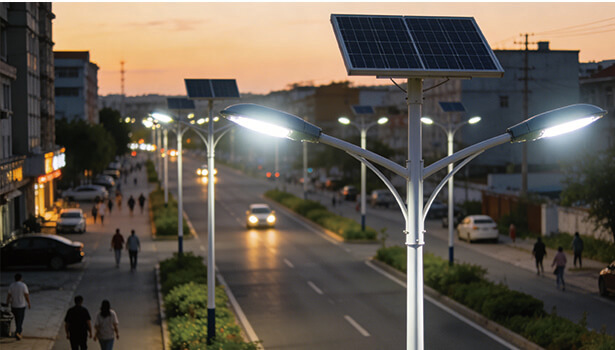
Brightness is a fundamental factor when selecting solar outdoor lights. Inappropriate brightness levels not only waste energy but can also result in insufficient lighting or overly glaring light, negatively impacting the user experience. Solar outdoor lights offer a wide range of brightness levels, from soft ambient lighting to intense direct light, so the specific choice should be based on the requirements of the intended application.
The brightness requirements for different scenarios are as follows:
|
Application Scenario |
Recommended Brightness (Lumens) |
Lighting Effect & Purpose |
|
Garden Paths, Narrow Walkways |
100–300 lumens |
Soft ambient lighting that creates a warm atmosphere, saves battery power, and meets basic illumination needs |
|
Patios, Courtyards, Driveways |
500–1500 lumens |
Sufficient brightness for clear visibility, enhancing safety and practicality of the space |
|
Commercial Parking Lots, Public Parks |
2000+ lumens |
Wide, high-intensity illumination suitable for large areas, meeting safety requirements in public spaces |
When selecting solar-powered outdoor lights, you should first assess the area of the space and the frequency of use to avoid overestimating or underestimating brightness requirements, striking a balance between practicality and energy efficiency.
Durability
Solar-powered outdoor lights are exposed to the elements over long periods, and factors such as wind, rain, sunlight, extreme cold, and intense heat can cause wear and tear. Therefore, durability is one of the key indicators of product quality. Low-quality solar lights, often made from inferior materials and featuring poor craftsmanship, frequently develop issues such as rust, damage, and malfunction within a short period, ultimately increasing long-term operating costs.
Key Durability Indicators
High-quality solar lights are typically constructed from aluminum alloy, stainless steel, or heavy-duty waterproof plastic. These materials are corrosion-resistant, age-resistant, and fade-resistant, effectively withstanding harsh outdoor environments. It is also recommended to choose products with an IP65 or higher waterproof rating, which effectively prevents rain and dust from entering the internal circuitry and avoids short-circuit damage.
Combined with a sturdy housing, sealed electrical components, and reinforced mounting hardware, these lights can withstand wind impacts and minor physical collisions, extending their service life. High-quality products typically come with a 2- to 5-year manufacturer’s warranty, which reflects the brand’s confidence in the product’s durability and provides consumers with reliable after-sales protection.
Design
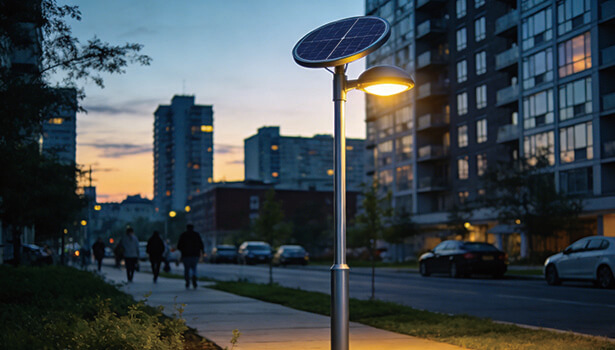
Solar outdoor lights are not only lighting tools but also decorative elements for outdoor spaces; their design style must harmonize with the overall aesthetic of the space to enhance its ambiance. Currently, the market offers a diverse range of design styles for solar outdoor lights, from minimalist modern to classic vintage, and from practical simplicity to highly decorative options, catering to the aesthetic needs of various settings.
Design Selection Tips
Modern minimalist homes are well-suited to solar lights with smooth lines and clean colors, while traditional courtyards and Chinese-style gardens pair best with brass or bronze finishes featuring vintage patterns. Decorative fixtures can be used in leisure areas such as gardens and patios to enhance the ambiance, whereas functional fixtures (such as wall sconces and spotlights) prioritize lighting effectiveness and feature a simple, elegant design.
For commercial spaces such as hotels and shopping malls, lighting selections should align with the brand’s identity. For example, upscale hotels may opt for elegant warm-light wall sconces, while retail complexes may choose modern, high-efficiency LED solar lights.
Types of Solar Panels
Solar panels serve as the “power source” for outdoor solar lights, and their type directly impacts charging efficiency, battery life, and overall performance. Currently, there are two mainstream types on the market: polycrystalline silicon panels and monocrystalline silicon panels.
The key differences between the two types of panels are shown in the table below to facilitate comparison and selection:
|
Comparison Dimension |
Polycrystalline Solar Panels |
Monocrystalline Solar Panels |
|
Appearance |
Blue with a speckled pattern |
Uniform black color |
|
Efficiency |
15%–17%, relatively lower efficiency |
18%–22%, higher efficiency |
|
Low-Light Performance |
Average performance in cloudy or low-light conditions |
Maintains efficient charging even in low-light environments |
|
Price |
More affordable and cost-effective |
20%–30% more expensive than polycrystalline panels |
|
Lifespan |
Moderate, 10–15 years |
Longer lifespan, 15–25 years |
For applications with limited budgets and good sunlight conditions, polycrystalline silicon solar panels are a suitable choice. For applications with insufficient sunlight where long-term, high-efficiency performance is desired, monocrystalline silicon solar panels are the better option.
Battery Capacity
The battery serves as the “energy storage core” of outdoor solar lights, responsible for storing the energy collected by the solar panels during the day to power nighttime illumination. The battery capacity directly determines the lamp’s runtime at night. High-quality batteries for solar outdoor lights must meet the requirements of “sufficient energy storage and long-lasting durability” to prevent the light from turning off mid-night.
Key Considerations for Battery Selection
The industry standard stipulates that the runtime of a solar outdoor light should reach 6–8 hours, though this may vary depending on brightness settings. Higher brightness reduces runtime, so a battery with corresponding capacity must be selected; Prioritize lithium-ion batteries, which offer high energy density, a high number of charge/discharge cycles (over 500), low self-discharge rates, and are lightweight and cold-resistant—making them the optimal choice for solar lights today. Avoid lead-acid batteries whenever possible, as they are heavy, have a short lifespan (only about 300 charge/discharge cycles), and experience a significant drop in performance in cold environments, resulting in higher long-term costs.
Price vs. Value
Price is a key consideration for many consumers when choosing solar outdoor lights, but it’s important to understand that solar lights are a long-term investment. Don’t focus solely on the initial price; instead, prioritize the “total cost of ownership” and choose products that offer “high value for money” rather than just “low prices.” Low-priced solar lights may seem like a bargain, but they often suffer from poor materials, low energy efficiency, and short lifespans. Frequent replacements in the short term will actually increase your overall expenses.
The Core Logic of Price and Value
While high-quality, premium solar lights have a higher upfront cost, their high energy efficiency and durability save on electricity bills and eliminate the need for frequent replacements, making them more cost-effective in the long run. Some high-end solar lights come with practical features such as motion sensors and remote control, enhancing the user experience—their added value makes them a worthwhile investment.
Practical Features
Beyond core considerations, certain additional features can significantly boost the practicality and convenience of solar outdoor lights. Selecting features that align with your specific needs can enhance your overall user experience.
Must-Have Practical Features
Motion sensing is one of the most practical features of solar lights. It illuminates only when human movement is detected, conserving battery power while serving as a deterrent against theft. This makes it ideal for paths, driveways, gardens, and similar settings. Remote control allows you to adjust brightness and set timers from a distance, eliminating the need for manual operation. This is ideal for installations in high or hard-to-reach locations.
An adjustable lamp head enables precise control over the lighting direction, such as for illuminating garden landscapes or wall decorations; smart networking features are well-suited for commercial settings, allowing centralized control via Wi-Fi or Bluetooth to conveniently manage multiple lights and improve operational efficiency.
When selecting a high-quality solar outdoor light, you should comprehensively consider brightness, durability, design, solar panel type, battery capacity, price, and additional features. The key is to “match your specific application needs,” prioritizing long-term performance and value for money over short-term cheapness. A high-quality solar outdoor light not only provides safe and comfortable lighting for outdoor spaces but also saves on electricity bills, reduces maintenance costs, and promotes environmental sustainability. We hope the recommendations in this article will help you accurately select the solar-powered outdoor light that best suits your needs from the many available options, ensuring that every dollar you invest delivers long-term value.