Top 5 Reasons Why Sensors on Street Lights Are An Important Consideration for a City
Jan 27, 2026
In the global wave of smart city development, the intelligent upgrade of urban infrastructure has become a core issue. As fundamental hardware scattered throughout every corner of the city, streetlights have long transcended their basic lighting function to become key carriers for urban data collection and service extension. The integration of sensor technology is the core enabler for streetlights to achieve an “intelligent leap,” transforming traditional lighting from “passive illumination” to “active sensing and intelligent response,” thereby becoming a vital tool for empowering urban governance.
What are Smart Street Lights?
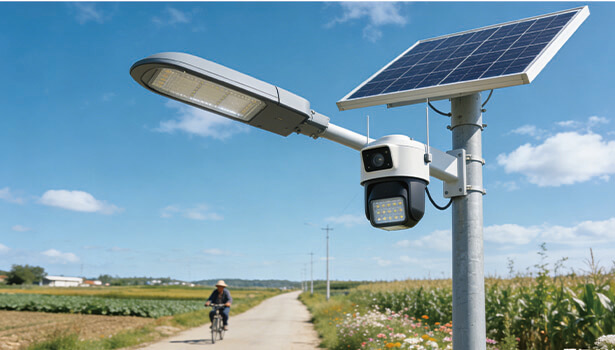
Smart street lights are not merely upgraded versions of traditional streetlights. They are smart city terminal devices that integrate micro-sensors, network communication modules, and data processing capabilities. Their core strengths lie in “perception” and “interconnection.” Micro-sensors serve as the central brain, determining the precision of responses to urban demands—the key component distinguishing them from conventional lights. Through data collection and transmission, they enable demand-based regulation and intelligent, multi-scenario coordination.
The Core Role of Sensors in Smart Street Lights
Smart street lights build distributed perception networks via sensors, functioning as the “nerve endings” of smart cities. Various sensors continuously gather multidimensional data from the surroundings. This data is rapidly uploaded via networks to the city management platform. After analysis and processing, the platform issues commands. Streetlights execute corresponding actions while enabling cross-system coordination, enhancing urban governance efficiency.
How do Smart Street Lights Work?
Core Workflow
Sensors perform perception and data collection, capturing real-time environmental data, pedestrian flow, traffic flow, and other metrics—the foundation for intelligent operation. The collected data is rapidly transmitted via wireless or wired networks to the city's central control system. The system analyzes and processes the data, makes judgments, and issues corresponding commands. After executing actions, the streetlights provide feedback, forming a complete closed-loop management system.
Practical Application Case
At 2 a.m., traffic on the city's main thoroughfare is sparse. Motion sensors detect no pedestrian or vehicle activity, while light sensors simultaneously monitor ambient light levels. Upon receiving both data types, the control system instructs the lights to dim to 30% brightness, entering energy-saving mode. When an emergency vehicle approaches, traffic sensors track its path and trigger the streetlights to flash green signals, creating a green corridor for the emergency vehicle.
What Types of Sensors Can be connected to a Smart Street Light?
The diversity and adaptability of sensors provide robust technical support for smart street lights' multi-scenario applications. Different sensor types perform distinct functions while working in concert, collectively building a comprehensive and efficient “perception system” for streetlights that lays the foundation for subsequent intelligent responses.
Light Sensors
Light sensors are the core components enabling adaptive lighting in smart streetlights. They precisely capture real-time variations in outdoor natural light intensity and can even distinguish light differences under special weather conditions like overcast or rainy days. Based on this perception data, streetlights automatically adjust brightness levels.
During daylight hours with ample illumination, they dim to low-light mode or shut off entirely. As evening light gradually diminishes, brightness increases incrementally, precisely matching lighting needs across different time periods. This achieves demand-based lighting at the source, significantly reducing energy waste.
Motion Sensors
Primarily utilizing infrared or microwave detection technology, motion sensors capture the movement trajectories and distances of pedestrians, non-motorized vehicles, and motor vehicles within a defined perimeter in real time. They offer rapid detection response and high recognition accuracy. During nighttime periods with sparse pedestrian and vehicle traffic, streetlights maintain a low-brightness energy-saving mode. Upon detecting approaching people or vehicles, they rapidly increase to standard illumination levels within seconds. After the subjects depart, they gradually return to energy-saving mode. This approach maximizes energy savings while ensuring safe visibility for nighttime travelers.
Traffic Sensors
Traffic sensors continuously and accurately monitor road traffic density, vehicle speeds, and lane occupancy through radar and video analysis, while also tracking traffic flow patterns. Collected traffic data is transmitted in real time to urban traffic management platforms, providing data support for optimizing traffic signal timing and planning traffic diversion strategies. These sensors promptly detect road congestion and illegal parking, helping alleviate urban traffic pressure and enhance overall transportation efficiency.
Environmental Sensors
Environmental sensors are pivotal in transforming smart streetlights into urban environmental monitoring nodes. They simultaneously collect multiple environmental metrics within their monitoring zones, including air quality, temperature, humidity, and PM2.5/PM10 concentrations. Some high-precision sensors can also detect noise levels, wind speed, and wind direction.
This data is transmitted in real-time to the city's environmental monitoring system, providing environmental authorities with authentic, continuous field data references for urban environmental management, pollution source tracing, and environmental alert issuance. This transforms streetlights into vital components of the city's environmental monitoring network.
Security Sensors
Security sensors integrate multiple functions including vibration, displacement, flame, and sound detection. They can keenly identify various abnormal situations such as deliberate damage to streetlights, traffic accidents, or fires in the vicinity. Upon detecting an anomaly, they immediately send precise alert information—including the location and type of abnormality—to relevant departments like municipal management and emergency response teams. Simultaneously, sensors coordinate with streetlight control systems to activate rhythmic flashing of lights around malfunctions or incidents. This promptly alerts pedestrians and vehicles to potential hazards, enhancing emergency response efficiency.
Five Core Benefits of Sensor-Equipped Street Lights
Energy Efficiency and Cost Savings
Energy waste and high operational costs have long plagued traditional streetlights. Sensor integration fundamentally resolves these issues. Light sensors and motion sensors work together to enable dynamic dimming, eliminating the need for constant high brightness. Traditional streetlights consume an average of 3,000 kWh per lamp annually, while smart versions consume only 800 kWh—a 73% reduction in energy consumption. Overall costs decrease by 74%, generating significant long-term savings for municipalities and substantially easing fiscal pressure.
Enhanced Public Safety
Inadequate nighttime illumination is a major contributor to traffic accidents and public safety incidents. Sensor-enabled smart streetlights comprehensively enhance public safety. Motion and light sensors work in tandem to ensure sufficient brightness in areas with pedestrian and vehicle activity. Remote sections automatically brighten when proximity is detected, eliminating blind spots. Safety sensors enable proactive alerts, rapidly coordinating with relevant departments upon detecting anomalies while simultaneously warning surrounding areas through light signals, thereby shortening emergency response times.
Environmental Impact
Under dual carbon goals and ecological conservation demands, sensor-based streetlights provide an effective pathway for urban green development. Reduced energy consumption directly lowers carbon emissions—each lamp saves an average of 2,200 kWh annually, with 1,000 lamps reducing emissions by approximately 1.76 tons per year. Simultaneously, sensors precisely regulate illumination range and brightness, effectively mitigating light pollution. This prevents disruption to residents' sleep and nocturnal wildlife habitats, safeguarding urban ecological balance.
Improved Urban Aesthetics and Functionality
Beyond practicality, sensor-based streetlights elevate urban nighttime aesthetics. Synchronized sensors enable dynamic, customized lighting effects—adjusting brightness and hues for festive celebrations to create immersive lights capes that invigorate nighttime economies. Commercial districts maintain optimal brightness to enhance shopping ambiance, while residential areas switch to softer illumination, transforming streetlights into visual signatures that shape the city's nocturnal identity.
Data Collection and Smart City Integration
The value of sensor-equipped street lights extends far beyond illumination, positioning them as core data collection hubs for smart cities. Installed throughout urban areas, their sensors gather vast amounts of anonymous data on traffic, pedestrian flow, and environmental conditions, constructing a dynamic portrait of the city. This data provides precise insights for traffic optimization, commercial district planning, and environmental management, connecting multiple urban domains and driving governance from experience-based decision-making toward data-driven approaches.
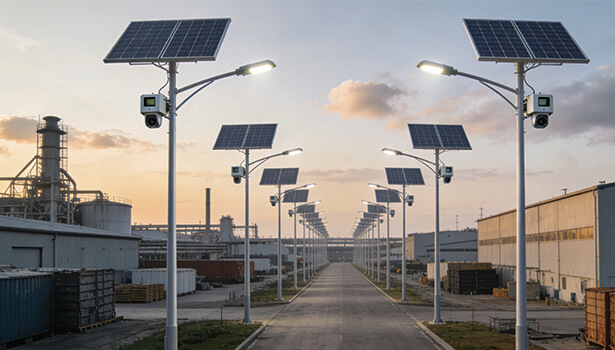
Installing sensors on urban streetlights is far more than a simple technological overlay; it represents a comprehensive upgrade of city infrastructure. Its five core values precisely align with the fundamental needs of modern cities for sustainable development and refined governance, serving as a vital pillar for smart city construction. As sensors integrate deeply with AI and the Internet of Things, streetlights will evolve into central hubs within smart cities, becoming an inevitable choice for high-quality urban development.